New Empirical Study in Comparative Law: “The Reasons Highest Courts Give: England, France, Germany; 1880–89 and 2007–16”
This post has kindly been provided by Markus Lieberknecht (University of Osnabrück).
It is our great pleasure to bring to readers’ attention the publication of the article “The Reasons Highest Courts Give: England, France, Germany; 1880–89 and 2007–16”, co-authored by Holger Spamann (Harvard Law School), Stefan Vogenauer and Jasper Kunstreich (MPI Hamburg), Heinrich Nemeczek (Scalable Capital) and Markus Lieberknecht (Osnabrück University), in The Journal of Legal Studies.
One of the core debates in comparative law concerns the characteristics, extent, and development of the common/civil law divide. In this context, it is a familiar trope that common and civil lawyers reason differently, but that the systems are converging. However, the empirical basis for such claims is thin to nonexistent. To address this paucity of data-backed research, we present the first systematic quantitative comparison of three paragon jurisdictions of common law (England) and civil law (France and Germany), and across two centuries (1880–89 vs. 2007–16). Specifically, we analyze the use of legal authorities (cases, statutes, and literature) in 40 representative opinions of each apex court in each of the two decades we surveyed.
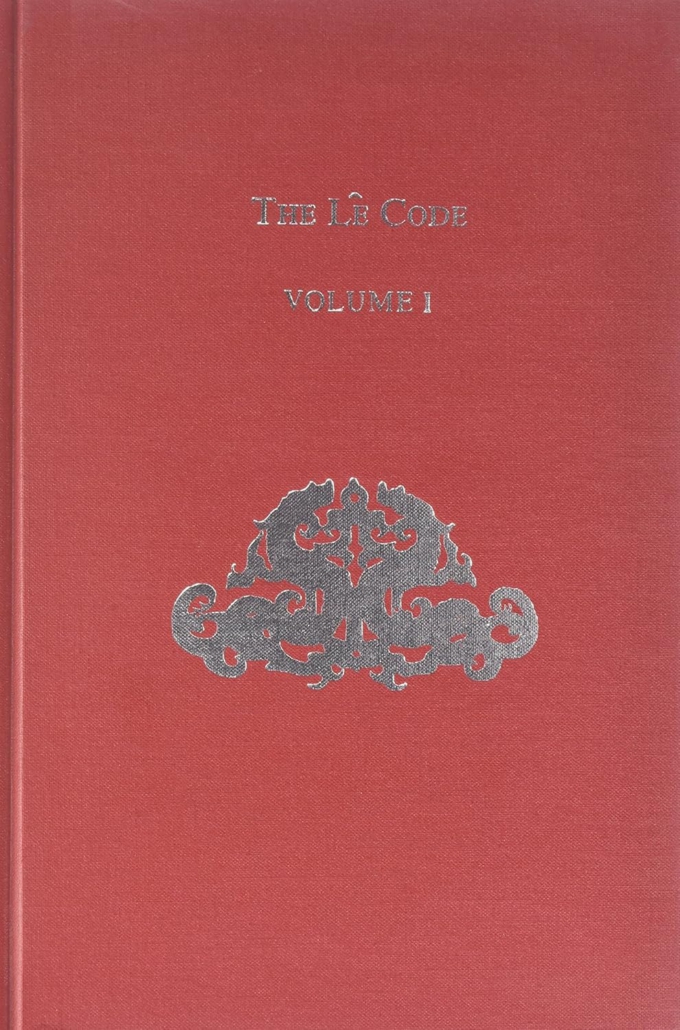 For those (like myself) who view private international law as we know it today as essentially a European invention of the 19th century it is fascinating to see examples of earlier and non-European regimes. One example is Article 48 (on ‘Infringements between peoples outside civilization’) of the Tang Code (653 CE) which reads:
 The latest volume (Volume 4) of the
  On Thursday, January 23, 2025, at 5 pm, the Société de législation comparée will present the Box Set