


Views
Speaking for the Dead: Idziski and the Forum for Post-Mortem Likeness Claims
by Marta Liduma, LLB candidate in International and European Law, University of Groningen
A Dutch actor dies in March. By April, his likeness starts to appear widely. Generated videos show him promoting a supplement, and one clip ends with a link to a shop selling shirts printed with his face. A single man in Germany creates all of this, in large quantities, using a dozen deceased performers.
Who can sue, and in which court?
Dutch law answers the first question readily. Article 21 of the Auteurswet allows publication to be resisted when a reasonable interest of the portrayed person, or after his death of one of his surviving relatives, opposes it. Article 25a, in the same paragraph of the Act, identifies those relatives as the parents, the spouse or registered partner and the children, each of whom may act independently of the others. Article 21 addresses whoever holds the copyright for the portrait, which poses a problem for a generated video that may have no author at all. However, Article 35 makes the publication of a portrait without entitlement an offence for anybody, and Dutch practice has long read the two provisions together. German law follows a similar design. Section 22 of the Kunsturhebergesetz (KUG) requires the consent of the family of the deceased (Angehörige) for ten years after death, and defines them as the surviving spouse or registered partner and the children, failing whom the parents.
The second question leads to the Court of Justice and its judgment on 18 June 2026 in Idziski (C-232/25). The concentrating head of Article 7(2) Brussels Ia puts two questions to a single individual. Does the content identify you, and where are your interests centred? Death creates separation between these questions, and current case law keeps them apart.
Book Review: Andrew Dickinson and Alexander Thompson, The State Immunity Act 1978 (OUP, 2025)
This review concentrates principally on the private international law dimensions of Andrew Dickinson and Alexander Thompson’s The State Immunity Act 1978. Although state immunity is fundamentally a subject of public international law, the legislation operates at the point where public and private international law intersect. It determines whether the English courts may adjudicate disputes involving foreign states, how proceedings may be served, and whether judgments or arbitral awards may be recognised and enforced against state property. These questions are of direct importance to private international lawyers, particularly in transnational commercial, employment, property and arbitration disputes.
The authors bring considerable practical expertise to the subject. As the preface indicates, their analysis is informed not only by academic study but also by professional experience of state-immunity litigation. The result is a specialist and authoritative treatment of a technically demanding statute. The chapters generally combine legislative history, an overview of the relevant statutory provisions, and a detailed examination of their judicial application.
Political Immobilisation of Iranian Diaspora Property: Lex Situs, Human Rights and Public Policy
Iran’s use of property measures against critics abroad is no longer hypothetical. In March 2026, Iran’s Prosecutor-General’s Office warned Iranians living abroad that support for, or cooperation with, states regarded by Iran as hostile could result in confiscation of their property. Reuters reported the warning on the basis of statements carried by Iranian state media.
The policy has since acquired a more concrete form. In May 2026, Amnesty International reported judicial orders to identify, freeze and seize bank accounts, properties and other assets belonging to persons accused of cooperating with “enemy states” or “hostile media”. Iranian authorities had reportedly announced measures affecting more than 750 persons inside and outside Iran, including journalists living abroad.
Administrative measures adopted in 2026 have also brought security screening into the use of consular powers of attorney. A circular concerning power of attorney issued abroad required inquiries where such instruments were presented in Iran and contemplated prosecutorial action where the grantor was identified as an opponent of the Islamic Republic abroad.
For present purposes, this situation can be described as political immobilization. Ownership may formally remain intact, while access to the legal mechanisms required to sell, mortgage, partition or administer the property is conditioned by political or security considerations.
The immediate concern is one of human rights. A separate question arises in private international law once the consequences of such measures are relied upon before courts outside Iran.
News
Virtual Workshop (in English) on October 6, 2026: Sandrine Brachotte and María Julia Ochoa Jiménez on “Conflicts of Worldviews and Private International Law”

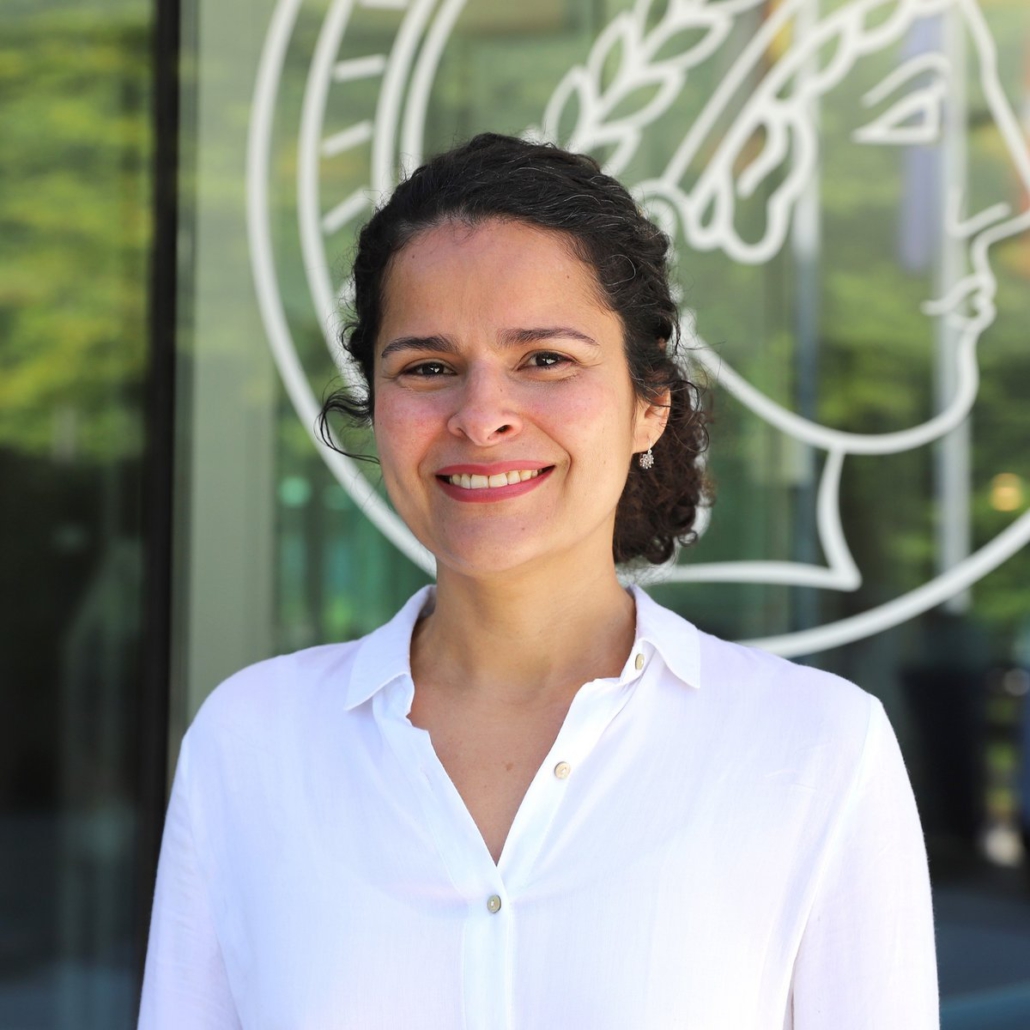
On Tuesday, October 6 2026, the Hamburg Max Planck Institute will host its monthly virtual workshop Current Research in Private International Law at 11:00 a.m. – 12:30 p.m. (CEST).
Sandrine Brachotte (University of Antwerp) and María Julia Ochoa Jiménez (Comillas Pontifical University) will speak, in English, about the book
“Conflicts of Worldviews and Private International Law” (Hart Publishing, 2026).
This book brings together European private international law and decolonial thinking. It examines how European courts deal with conflicts between legal frameworks and postcolonised worldviews. Through three case studies—religious arbitration, Indigenous sacred land, and sexual minorities in the Global South—it shows that these conflicts are often overlooked. This results in the inadequate protection of the claims and identities of formerly colonised peoples. The book therefore proposes a more pluralist approach to jurisdiction, choice of court, and foreign law, giving greater weight to postcolonised worldviews. Prof. Ochoa Jiménez will comment on it, while focusing on private international law.
The presentation will be followed by open discussion. All are welcome. More information and sign-up here.
If you want to be invited to these events in the future, please write to veranstaltungen@mpipriv.de.
Out now: Brachotte on ‘Conflicts of Worldviews and Private International Law’
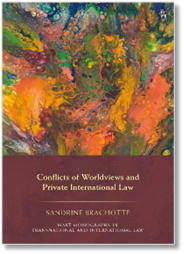
The publisher’s blurb is as follows. Readers of the blog may use the discount code indicated below to get 20% off.
Conflicts of Worldviews and Private International Law
Sandrine Brachotte
This book develops a decolonial theory of European private international law. To do so, it begins with Western court cases involving what the author terms a ‘conflict of worldviews’: a clash between the legal frameworks governing the dispute and the worldviews of the formerly colonised parties involved, referred to here as ‘postcolonised worldviews’.
Praxis des Internationalen Privat- und Verfahrensrechts (IPRax) 5/2026: Abstracts
The latest issue of the „Praxis des Internationalen Privat- und Verfahrensrechts“ (IPRax) features the following articles: