


Views
The WTO TRIPS Agreement and Conflict-of-Laws Rules in Intellectual Property Cases
By Marketa Trimble, Samuel S. Lionel Professor of Intellectual Property Law, Co-Director of the IP Law Concentration, William S. Boyd School of Law, University of Nevada, Las Vegas
It is neither new nor surprising that international treaties affect the design and application of conflict-of-laws rules; not only international conventions on private international law but also other international treaties shape conflicts rules, with human rights treaties being the primary example. But a recent decision concerning the interpretation of the WTO’s Agreement on Trade-Related Aspects of Intellectual Property Rights (“TRIPS Agreement”) could have profound and arguably unprecedented effects on the conflict rules that are applied in intellectual property (“IP”) cases, such as cross-border cases concerning copyright infringement, trademark ownership, and patent licenses.
Kairos Shipping II LLC (appellant) v Songa Product and Chemical Tankers III AS (respondent), The interpretation of natural language on charter contracts
Written by Nicolás Preus Miranda, student at Universidad Carlos III in Getafe, Spain, specializing in maritime, international law and international commercial arbitration
The decision in Kairos Shipping II LLC v Songa Product and Chemical Tankers III AS [2025] EWCA Civ 1227 represents a pivotal clarification in the interpretation of repossession clauses within standard-form bareboat charterparties, particularly under the BIMCO Barecon 2001 framework. Arising from a dispute over the early termination of a charter for a 49,708 DeadWeight Tonnage (DWT) chemical/oil tanker, the case underscores the English courts’ commitment to contextual and purposive contract interpretation, balancing textual fidelity with commercial practicality. This analysis expands on the case’s significance, the interpretive principles it embodies, and its ultimate resolution, drawing from judicial reasoning and industry commentary.[1] Read more
Digital Governance, Regimes Theory and Private International Law. A tech diplomacy perspective
By Juliano Alves Pinto, Brazilian tech diplomat; former Deputy Consul of Brazil in San Francisco (2013–2016); State Undersecretary of Science, Technology, and Innovation (2019–2021); HCCH expert on digital economy (2023–2024); and Government Affairs Director at the Digital Cooperation Organization (DCO) (2024–2025)
Could Private International Law be an answer to digital governance? Though this idea has already been debated among PIL scholars, it must be said that it has not yet broken the bubble of the PIL niche. Diplomats usually overlook PIL as a small part of the larger International Law realm, which embraces Public International Law as the standard bearer of the multilateral framework that has been established ever since the Westphalia Peace in 1648. Read more
News
Foreign Judgment Enforcement: Zimbabwean High Court holds that a Confirmed Mareva Injunction is a Final Judgment
Virtual Workshop (in German) on May 5, 2026: Thomas Pfeiffer on „Anwaltliche Erfolgshonorare im Internationalen Privatrecht“
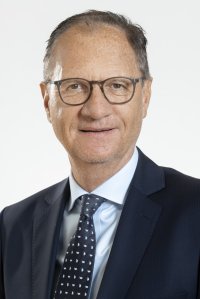
On Tuesday, May 5, 2026, the Hamburg Max Planck Institute will host its monthly virtual workshop Current Research in Private International Law at 11:00 a.m. – 12:30 p.m. (CEST).
Prof. Dr. Dr. h.c. Thomas Pfeiffer (Universität Heidelberg) will speak, in German, about the topic
“Anwaltliche Erfolgshonorare im Internationalen Privatrecht”
In Deutschland dürfte zum juristischen Allgemeinwissen zählen, dass anwaltliche Erfolgshonorare in den USA (und manchen anderen Rechtsordnungen) zulässig und vielfach sogar üblich sind, in Deutschland hingegen früher generell als unzulässig galten und auch heute noch deutlichen rechtlichen Grenzen unterliegen. Im IPR wird meist angenommen, dass sich diese Grenzen auch international zwingend durchsetzen, soweit es um deutsche Anwälte geht. Die schon früher relevante Frage nach Differenzierungen im Einzelnen hat durch die spürbaren Lockerungen der maßgebenden sachrechtlichen Regeln in jüngerer Zeit nochmals an Bedeutung gewonnen.
The presentation will be followed by open discussion. All are welcome. More information and sign-up here.
If you want to be invited to these events in the future, please write to veranstaltungen@mpipriv.de.
Stigma in the Lives of Refugees Living in Turkey
You are invited to the next Migration Talk organized by the Jean Monnet Chair in Legal Aspects of Migration Management in the European Union and in Türkiye.
Speakers: Dr. Hamed Abdollahpour Ranjbar (Istinye University), Khaled Elazab, MA (Clark University), Yomna Nassar, MA (Koç University), Farah Amayreh (Koç University), Dr. Ibrahim Yigit (Florida State University), Prof. Dr. Janet Molzan Turan (Koç University), and Prof. Dr. Bülent Turan (Koç University)
Title:Stigma in the Lives of Refugees Living in Turkey
Date and Time: Monday, May 4, 2026 – 12:30 PM – 1:20 PM (Turkish Time)
Event Location: via Zoom (The Zoom link shall be provided upon request: migration@bilkent.edu.tr)
The event will be held in English.
Abstract
The research is conducted with Syrian and Afghan refugees living in Istanbul, Turkiye to explore and examine effects of stigma and microaggressions in these populations.
It is based on 8 focus groups separately for men and women, four groups with Syrian refugees and four with Afghan refugees, with 4-10 participants in each group. Participants shared that stigma and microaggressions were central forces shaping every dimension of their daily life, well-being, and future plans. The intensity and ubiquity of these experiences appeared to exceed what is commonly documented in other stigmatized populations, owing in part to the visibility and politicization of refugee identity in the current sociopolitical climate in Türkiye, which allows and condones stigma and microaggressions against these populations. Refugees described that they and their children experienced mental and physical health problems not only due to trauma and difficulties faced before and during migration, but also due to post-displacement stigma and microaggressions that they experienced on a daily basis. Refugees employed a range of coping strategies to deal with these challenges, avoidance of interactions with Turks, forms of identity concealment (e.g., not revealing nationality, changing names, or not speaking their native language in public), avoidance of confrontation, and in some cases educating their neighbors to confront and correct stereotypes.
In the quantitative phase of the research, the research group developed the Refugee Stigma Scale (RSS) informed by the literature and qualitative and quantitative data. The scale includes four theoretical dimensions of stigma: perceived community stigma, experienced stigma, anticipated stigma, and internalized stigma. In a sample of 404 Syrian and 447 Afghan refugees in Türkiye, confirmatory factor analysis supported the hypothesized four-factor structure of the RSS. Results also supported convergent validity of the four subscales showing correlations with validated measures of depression, anxiety, post-traumatic stress disorder (PTSD), somatic symptoms, post-migration difficulties, and contact experiences.
The research group also developed a subscale assessing microaggressions (subtle/ambiguous discriminatory remarks or behaviors). Convergent validity of the Microaggression Scale for Refugees (MSR) was supported by high correlations between microaggressions and experienced stigma, somatic symptoms, post-migration difficulties, and contact experiences with the host country. Importantly, both experienced stigma and microaggressions contributed independently to explaining variance in psychological and somatic symptoms.
It is also explored the concept of identity denial in the context of refugee stigma using the new scales. Even after many years of immigrating, immigrants can have their new cultural identity (in this case, their Turkish identity) denied or unacknowledged. Based on a survey of 156 young Syrian adults living in Türkiye for many years, the research found that Turkish identity denial was associated with higher depressive symptoms and lower psychological well-being, mediated by perceived and anticipated stigma. Furthermore, a challenged sense of belonging was an independent parallel mediating mechanism by which identity denial was associated with psychological well-being and depressive symptoms.