


Views
The New Zealand Supreme Court’s judgment in Kea Investments Ltd v Wikeley on anti-enforcement relief
In Kea Investments Ltd v Wikeley [2026] NZSC 97, the New Zealand Supreme Court recently delivered its reasons for reinstating world-wide anti-enforcement orders in relation to a fraudulently obtained default judgment from Kentucky. The judgment, given by Kós J, contains a useful analysis of the principles on anti-suit and anti-enforcement injunctions and offers guidance on the interrelationship between fraud and comity.
The background to the case is set out in previous posts (here, here and here). In summary, Kea Investments Ltd (Kea), a British Virgin Islands company, alleged that the default judgment obtained by Wikeley Family Trustee Ltd (WFTL), a New Zealand company, was based on fabricated claims intended to defraud Kea. The New Zealand High Court found that the defendants had perpetrated a tortious conspiracy. The Court of Appeal upheld the findings of fraud but allowed an appeal against the grant of the injunction, concluding that an injunction could only be granted as a step of last resort, which required Kea to pursue its right of appeal against the Kentucky judgment.
It was not in issue before the Supreme Court that the claim in the Kentucky court formed part of a conspiracy to defraud Kea (at [102]). It was also not in issue that New Zealand was the proper jurisdiction to deal with the claim of fraud (at [102]). In these circumstances, the Court found that comity did not stand in the way of anti-enforcement relief.
Beyond Domicile: The BHP Litigation and the Functional Interconnection of Public and Private International Law
from Marcel Vitor de Magalhães e Guerra
On 14 November 2025, the English High Court handed down its Stage 1 judgment in Município de Mariana and others v. BHP Group Plc and BHP Group Limited [2025] EWHC 3001 (TCC), finding the defendants liable — under Brazilian law — for the 2015 collapse of the Fundão tailings dam: over 600,000 claimants, an estimated £36 billion, the largest group litigation in English legal history. This post argues that Mariana exposes a functional interconnection between public and private international law at the stage of determining jurisdiction itself: although doctrinally distinct, the court’s application of a private international law rule required engaging questions of corporate organisation, adjudicatory legitimacy, and transnational responsibility that traditionally belong to public international law. Read more
Conflicts of jurisdiction in Senegal: lesson from the Senegalese Supreme Court on Lis Pendens and the Exequatur of foreign judgments
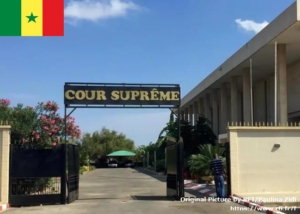
This post was kindly prepared by Véronique Carole Ngono, Professor of Private Law (agrégée), University of Douala, Cameroon.
I. Introduction
The recognition and enforcement of foreign judgments in French-speaking sub-Saharan Africa has not been the subject of many studies. Although a few such studies do exist, this is in contrast to the field of conflict of laws and personal status law in particular. Consequently, the two rulings issued by the Supreme Court of Senegal on August 12, 2020, in connected disputes went practically unnoticed, even though they offer valuable insights into determining the jurisdiction of Senegalese courts in international disputes and the enforcement of foreign judgments.
The purpose of this note is therefore to shed light on the law and practice of conflict jurisdictions in Senegal.
News
Call for DPhil Applications
The following post has kindly been shared with us Roxana Banu (University of Oxford).
The Conflict of Laws/Private International Law academic team at the University of Oxford invites applications from students interested in pursuing a doctorate (DPhil, corresponding to a PhD) in the field. The Oxford Conflict of Laws team is one of the largest at any academic institution in the UK. It comprises four full-time faculty members (Associate Professor Roxana Banu, Professor Andrew Dickinson, Associate Professor Brooke Marshall and Dr Johannes Ungerer).
International accountability mechanisms of multilateral development banks: lessons drawn from the Cambodia micro-finance cases
Written by Dr. Rishi Gulati, Associate Professor of International Law at UEA Law School and a Barrier specializing in international law
1 Introduction
Multilateral development banks (MDBs) such as the World Bank, the Asian Development Bank, and the African Development Bank finance large-scale public projects globally and regionally to promote sustainable development and reduce poverty. MDBs require the adherence to environmental and social standards to mitigate harm. However, during project implementation these standards are not always respected and communities may be harmed. Without timely access to justice for affected individuals, basic rights would be compromised, severely undermining the accountability of MDBs as public international organizations (IOs).
Internships at the HCCH
Applications are now open for three- to six-month legal internships at the headquarters of the Permanent Bureau of the HCCH in The Hague, for the period from March to September 2027!
Interns work with our legal teams in the Family and Child Protection Law Division, the Transnational Litigation and Apostille Division, and the Commercial, Digital and Financial Law Division.
Duties may include carrying out research on particular points of private international law and/or comparative law, taking part in the preparation of HCCH meetings, and contributing to the promotion of the HCCH and its work.
Applications should be submitted by Monday, 9 November 2026 at 18.00 (CET). For more information, please visit the Internships Section of the HCCH website.
This post is published by the Permanent Bureau of the Hague Conference of Private International Law (HCCH).