


Views
Financial Hardship and Forum Selection Clauses
The U.S. Supreme Court has long held that a forum selection clause should not be enforced when “trial in the contractual forum will be so gravely difficult and inconvenient” that the plaintiff “will for all practical purposes be deprived of his day in court.” The financial status of the plaintiff is obviously a factor that should be considered as part of this inquiry. Large corporations can usually afford to litigate cases in distant courts. Individual plaintiffs frequently lack the resources to do so. Nevertheless, the lower federal courts in the United States have repeatedly held that financial hardship on the part of the plaintiff is not enough to make an otherwise valid forum selection clause unenforceable. Read more
Revised Canadian Statute on Judgment Enforcement
Two years ago, the Uniform Law Conference of Canada (ULCC) released a revised version of the Court Jurisdiction and Proceedings Transfer Act (CJPTA), model legislation putting the taking of jurisdiction and staying of proceedings on a statutory footing. The statute is available here.
The ULCC has now released a revised version of another model statute, the Enforcement of Canadian Judgments Act (ECJA). The original version of this statute was prepared in 1998 and had been amended four times. It has now been consolidated and substantially revised. It is available here and background information is available here and here.
New Proposed Rules on International Jurisdiction and Foreign Judgments in Morocco
Last Thursday, November 9, Draft No. 02.23 proposing the adoption of a new Code of Civil Procedure (al-musattara al-madaniyya) was submitted to the Moroccan House of Representatives. One of the main innovations of this draft is the introduction, for the first time in Moroccan history, of a catalogue of rules on international jurisdiction. It also amends the existing rules on the enforcement of foreign judgments.
News
Virtual Workshop (in English) on June 3, 2025: Michael Karayanni on “Voice and Exit in Private International Law: The Case of the Israeli Inter-religious Regime”
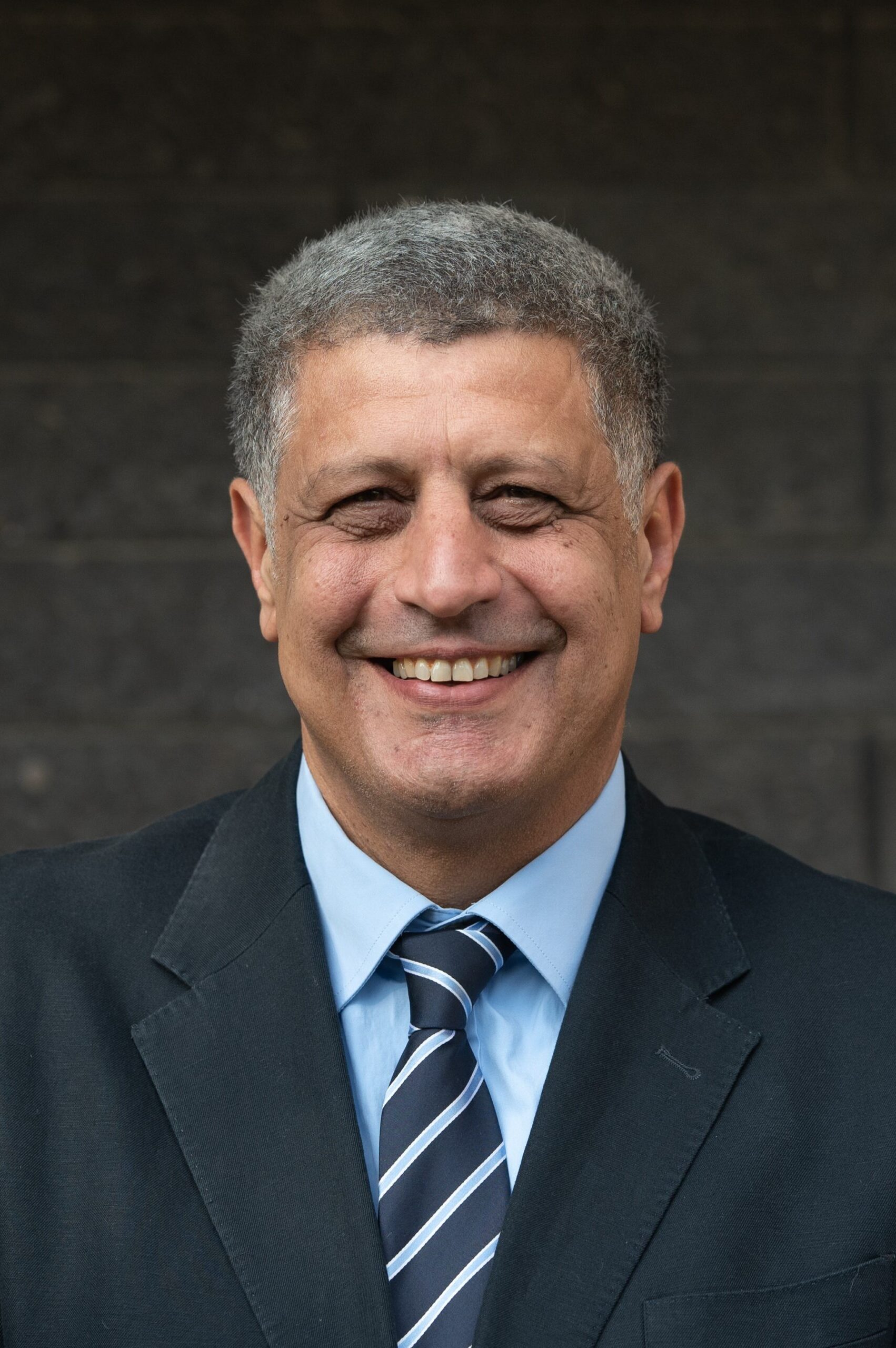
On Tuesday, June 3, 2025, the Hamburg Max Planck Institute will host its monthly virtual workshop Current Research in Private International Law at 11:00 a.m. – 12:30 p.m. (CEST). Professor Michael Karayanni (Hebrew University of Jerusalem) will speak, in English, about the topic
“Voice and Exit in Private International Law: The Case of the Israeli Inter-religious Regime”
Private international law can play a significant role in countries with inter-religious legal regimes by offering individuals an option to “exit” their personal religious law in favor of secular law in effect in a foreign country. My presentation will examine the development of the lex loci celebrationis choice of law rule within Israel’s inter-religious regime. Additionally, it will investigate whether this development has empowered individuals with an adequate “voice” to challenge community-based religious norms.
The presentation will be followed by open discussion. All are welcome. More information and sign-up here.
If you want to be invited to these events in the future, please write to veranstaltungen@mpipriv.de.
RabelsZ: New issue alert
 Issue 2 of RabelsZ 89 (2025) is out. All content is Open Access: CC BY 4.0 and more articles are available Online First. The full table of contents is available here.
3rd Postgraduate Law Conference at the Centre for Private International Law and Transnational Governance
The 3rd Postgraduate Law Conference of the Centre for Private International Law is now open for registration.
The theme is “New Dimensions in Private International Law” and the conference will take place online on 6 June 2025 in the morning. Topics include commercial, family and maritime law, as well as law in the digital age and sustainability and corporate responsibility.