


Views
„El clásico“ of Recognition and Enforcement – A Manifest Breach of Freedom of Expression as a Public Policy Violation: Thoughts on AG Szpunar 8.2.2024 – Opinion C-633/22, ECLI:EU:C:2024:127 – Real Madrid Club de Fútbol
By Madeleine Petersen Weiner, Research Fellow and Doctoral Candidate at Heidelberg University
Introduction
On 8 February 2024, Advocate General (AG) Szpunar delivered his Opinion on C-633/22 (AG Opinion), submitting that disproportionate damages for reputational harm may go against the freedom of expression as enshrined in Art. 11 Charter of Fundamental Rights of the European Union (CFR). The enforcement of these damages therefore may (and at times will) constitute a violation of public policy in the enforcing state within the meaning of Art. 34 Nr. 1 Brussels I Regulation. The AG places particular emphasis on the severe deterring effect these sums of damages may have – not only on the defendant newspaper and journalist in the case at hand but other media outlets in general (AG Opinion, paras. 161-171). The decision of the Court of Justice of the European Union (CJEU) will be of particular topical interest not least in light of the EU’s efforts to combat so-called “Strategic Lawsuits Against Public Participation” (SLAPPs) within the EU in which typically financially potent plaintiffs initiate unfounded claims for excessive sums of damages against public watchdogs (see COM(2022) 177 final).
Dubai Supreme Court Admits Reciprocity with the UK and Enforces an English Judgment
Introduction:
I have been reporting on this blog some recent cases from the Dubai Supreme Court (DSC) regarding the recognition and enforcement of foreign judgments (see here, here and here). Reading these posts may have given the legitimate impression that the enforcement of foreign judgments in the UAE, and especially in Dubai, is particularly challenging. This post aims to mitigate that perception by shedding light on a very recent case in which the Dubai courts, with the approval of the DSC, ruled in favor of the enforcement of an English judgment. As the comments below indicate, this is probably the very first case in which the DSC has positively ruled in favor of the enforcement of an English judgment by declaring that the judgment in question met all the requirements set out in UAE law, and in particular, the reciprocity requirement.
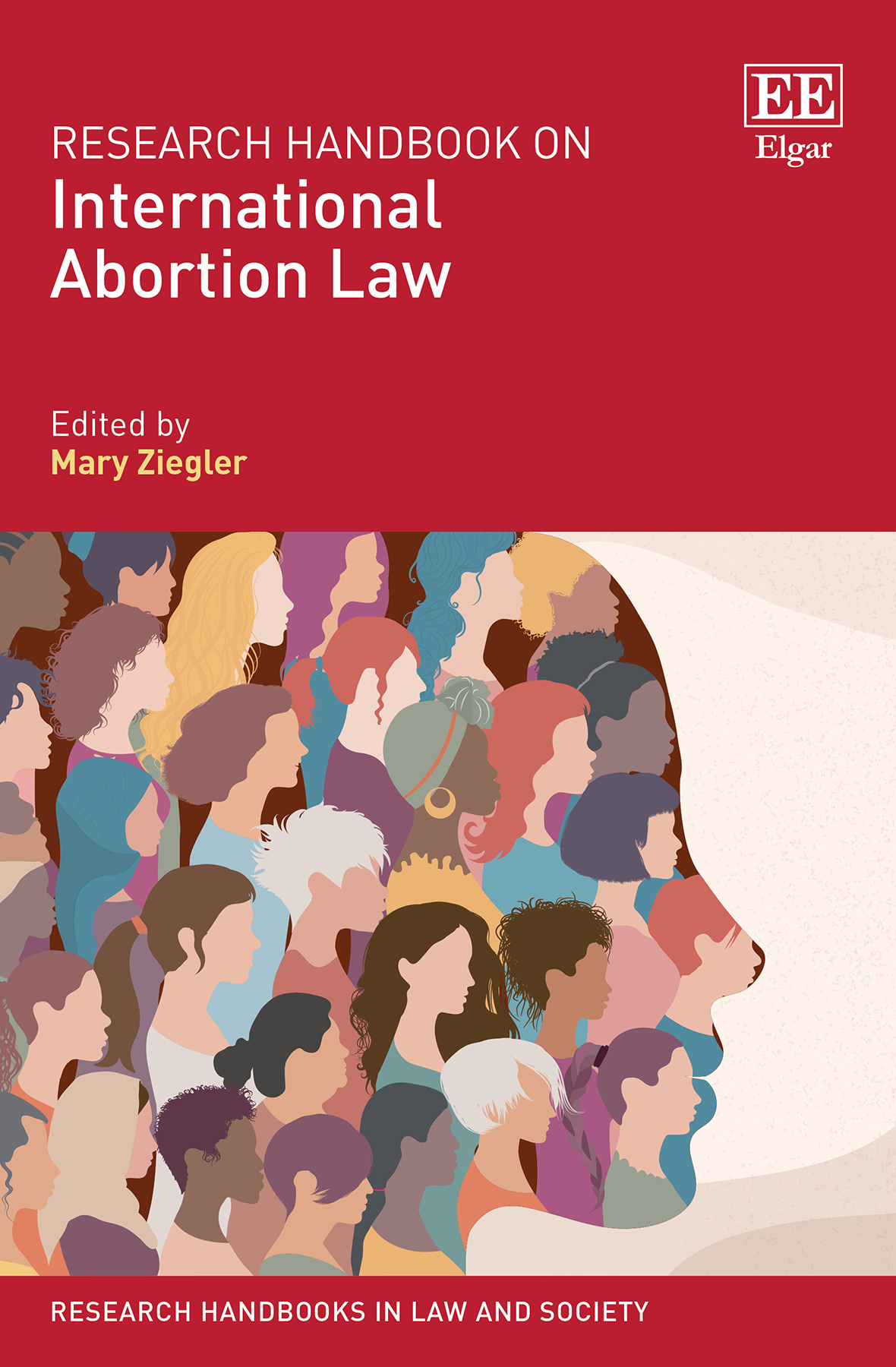
Book review: Research Handbook on International Abortion Law (Cheltenham: Edward Elgar Publishing, 2023)
Written by Mayela Celis
Undoubtedly, Abortion is a hot topic. It is discussed in the news media and is the subject of heated political debate. Indeed, just when one thinks the matter is settled, it comes up again. In 2023, Elgar published the book entitled “Research Handbook on International Abortion Law”, ed. Mary Ziegler (Cheltenham: Edward Elgar Publishing Limited, 2023). For more information, click here. Although under a somewhat misleading name as it refers to international abortion law, this book provides a wonderful comparative overview of national abortion laws as regulated by States from all the four corners of the world and internal practices, as well as an analysis of human rights law.
This book does not deal with the conflict of laws that may arise under this topic. For a more detailed discussion, please refer to the post Singer on Conflict of Abortion Laws (in the U.S.) published on the blog of the European Association of Private International Law.
In this book review, I will briefly summarise 6 parts of this book (excluding the introduction) and will provide my views at the end.
News
The Establishment of the International Organization for Mediation (IOMed)
On 30 May 2025, the signing of the Convention on the Establishment of the International Organization for Mediation (IOMed) in Hong Kong marked an advancement in the field of international dispute resolution. Attended by representatives from over 85 countries and 20 international organisations – including the United Nations – the event introduced a treaty-based institutional framework dedicated specifically to mediation.
The IOMed Convention – with equally authentic texts in Arabic, Chinese, English, French, Russian, and Spanish – outlines a structured, treaty-based model of mediation whose scope is deliberately broad, encompassing disputes between States, between a State and nationals of other States, as well as disputes between private parties involved in international commercial relationships (Article 24).
A defining feature of the IOMed Convention is its treatment of the legal effect and enforceability of mediated outcomes. Articles 40 and 41 affirm both the binding nature of settlement agreements resulting from IOMed-facilitated mediation and their enforceability within the domestic legal systems of contracting States. This model of consensual yet normatively binding dispute resolution finds a compelling parallel in – and complements – the United Nations Convention on International Settlement Agreements Resulting from Mediation (the Singapore Convention). The Singapore Convention – which, as of 3 July 2025, counts 58 signatories and 18 parties – reinforces party autonomy while requiring the good faith implementation of mediated settlements. Particularly significant is Article 3 of the Convention, which obliges courts in contracting States to recognise international commercial settlement agreements and to enforce them in accordance with domestic procedures, provided the agreement satisfies the Convention’s requirements. While the Singapore Convention offers a uniform and efficient framework for the enforcement and “invocation” (see Art. 3(2)) of international settlement agreements resulting from mediation, the IOMed Convention contributes by establishing the institutional and procedural framework necessary for the conduct of mediation itself. Together, these instruments enhance both the normative foundation and the practical viability of cross-border mediation, thereby reinforcing its legitimacy in complex international commercial contexts.
Beyond its dispute resolution functions, IOMed also assumes a broader mandate to promote mediation (Art. 5). This includes fostering best practices (Art. 5(b)), organising conferences and training initiatives (Art. 5(c)), and implementing targeted capacity-building programmes (Art. 5(d)). A dedicated Mediation Fund (Art. 44), financed through voluntary contributions, is intended to promote equitable access to services, while a Capacity Building Committee (Art. 43) provides strategic oversight in this domain.
Ultimately, the IOMed Convention does not seek to alter the fundamental character of mediation. Rather, it aims to provide a coherent legal and institutional foundation at the international level. By anchoring mediation within a treaty-based framework, the IOMed Convention offers States and other actors a structured yet flexible environment in which to pursue dialogue-based resolution, with greater predictability, neutrality, and institutional support – while preserving the essential consensual nature that distinguishes mediation from adjudication. While its practical impact will depend on how States and other actors engage with its mechanisms over time, the Convention offers a new platform for exploring the potential of mediation in a variety of international contexts.
The HCCH 2019 Judgments Convention enters into force for the United Kingdom

Today the HCCH 2019 Judgments Convention entered into force for the United Kingdom. The UK signed this Convention on 12 January 2024 and filed its instrument of ratification on 27 June 2024.
On 26 March 2025, the UK extended the 2019 Judgments Convention to Scotland and Northern Ireland. Initially, the UK had extended this Convention to England and Wales only. These declarations will take effect on the day the Convention enters into force for the UK in accordance with Articles 25 & 30(3)(4) of the said Convention. For more information, click here. Read more
Praxis des Internationalen Privat- und Verfahrensrechts (IPRax) 4/2025: Abstracts
The latest issue of the „Praxis des Internationalen Privat- und Verfahrensrechts“ (IPRax) features the following articles: