


Views
Paris, the Jurisdiction of Choice?
 On January 17th, the President of the Paris Commercial Court (Tribunal de commerce) inaugurated a new international division.
The new division, which is in fact the 3rd division of the court (3ème Chambre), is to be staffed with nine judges who speak foreign languages, and will therefore be able to assess evidence written in a foreign language. For now, the languages will be English, German and Spanish, as one juge speaking Spanish and two speaking German are currently on the court.
In an interview to the Fondation de droit continental (Civil law initiative), the President of the Court explained that the point was to make French justice more competitive and attract international cases. It also made clear that France was following Germany’s lead, where several international divisions were established in 2009 in Hamburg and Cologne.
French Commercial Courts
It should be pointed out to readers unfamiliar with the French legal system that French commercial courts are not staffed with professional judges, but with members of the business community working part-time at the court (and for free). In Paris, however, many of these judges work in the legal department of their company, and are thus fine lawyers.
Also, French commercial courts (and French civil courts generally) virtually never hear witnesses, so the issue of the language in which they may address the court does not arise.
Some issues
So, the new international division will be able to read documents in several foreign languages. However, nothing suggests that parties or lawyers will be able either to speak, or to write pleadings, in any other language than French. Lawyers arguing these cases will still need to file their pleadings in French, and thus to translate them in English beforehand for their clients. Furthermore, the interview of the Court’s President seems to suggest that using a foreign language will not be a right for the parties. Quite to the contrary, it seems that it will not be possible if one of the parties disagrees, and demands documents be translated in French.
Will that be enough to attract additional commercial cases to Paris?
I wonder whether introducing class actions in French civil procedure would have been more efficient in this respect.
For the full interview of the Court’s President, see after the jump.
News
Virtual Workshop (in German) on July 4: Robert Freitag on The Overdue Reform of the International Law on Names in Germany
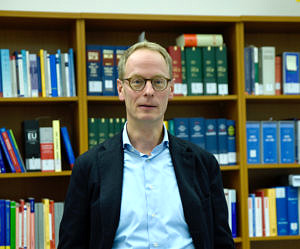 On Tuesday, July 4, 2023, the Hamburg Max Planck Institute will host its 35th monthly virtual workshop Current Research in Private International Law at 14:00-15:30 CEST. Robert Freitag (FAU Erlangen-Nürnberg) will speak, in German, about the topic
The Overdue Reform of the International Law on Names in Germany
The presentation will be followed by open discussion. All are welcome. More information and sign-up here.
If you want to be invited to these events in the future, please write to veranstaltungen@mpipriv.de.
XVI Conference of the American Association of Private International Law
XVI CONFERENCE OF THE AMERICAN ASSOCIATION OF PRIVATE INTERNATIONAL LAW – ASADIP
The American Association of Private International Law – ASADIP is pleased to announce that the registrations for its annual event are now open. The XVI ASADIP Conferences: “Private international law between the innovation and the disruption” will take place on August 10-11, 2023 in the city of Rio de Janeiro, at the premises of PUC Rio and University of State of Rio de Janeiro – Uerj.
PhD positions at Humboldt University of Berlin
 Professor Dr. Giesela Rühl, LL.M. (Berkeley) is currently seeking to fill three PhD positions at her Chair at Humboldt University of Berlin ( https://www.rewi.hu-berlin.de/en/lf/ls/rhl/index.html).
The successful candidate should have a keen interest in issue of private international law, international civil procedure and/or civil procedure (including access to justice and digital justice). Since the positions come with teaching obligations, knowledge of the German language (and German law) is required.
The official call for applications will be out soon. In the meanwhile if you are interested (or have any questions) please do not hesitate to get in touch: sekretariat.ruehl.rewi@hu-berlin.de.