Views
Patience is a virtue – The third party effects of assignments in European Private International Law
Written by Leonhard Huebner, Institute for Comparative Law, Conflict of Laws and International Business Law (Heidelberg University)
The third-party effects of the assignment are one of the “most discussed questions of international contract law” as it concerns the “most important gap of the Rome I Regulation”. This gap is regrettable not only for dogmatic reasons, but above all for practical reasons. The factoring industry has provided more than 217 billion euros of working capital to finance more than 200,000 companies in the EU in 2017 alone. After a long struggle in March of 2018, the European Commission, therefore, published a corresponding draft regulation (COM(2018)0096; in the following Draft Regulation). Based on a recent article (ZEuP 2019, 41) the following post explores whether the Draft Regulation creates the necessary legal certainty in this economically important area of law and thus contributes to the further development of European private international law (see also this post by Robert Freitag). Read more
Belgian Court of Cassation and Ryanair’s forum clauses
On 8 February 2019 the Belgain Court of Cassation decided the case Happy Flights v Ryanair. The Dutch version of the decision is available here.
At issue was the validity of the clause in Ryanair’s general terms and conditions that the Irish courts have jurisdiction over disputes. The Court of Cassation quashed the decision of the Commercial Court of Brussels, which had considered only the formal validity of the choice-of-court clause.
The Court of Cassation confirmed that the consumer protection provisions of Brussels Ia do not apply (the contracts concern transport). It further found that according to Art. 25(1) of Brussels Ia the substantive validity of the clause (in a non-negotiated contract) was subject to Irish law (specifically the Irish implementation in Act 27/1995 of Directive 93/13/EEG on unfair terms in consumer contracts). The Court did not explicitly refer to Irish private international law (according to Consideration 20 of Brussels Ia), but directly to Act 27/1995.
It sent the case back to the Commercial Court of Leuven for a new assessment.
Anti-Semitism – Responses of Private International Law
Prof. Dr. Marc-Philippe Weller and Markus Lieberknecht, Heidelberg University, have kindly provided us with the following blog post which is a condensed abstract of the authors’ article in the Juristenzeitung (JZ) 2019, p. 317 et seqq. which explores the topic in greater detail and includes comprehensive references to the relevant case law and literature.
In one of the most controversial German judgments of 2018, the Higher Regional Court of Frankfurt held that the air carrier Kuwait Airways could refuse transportation to an Israeli citizen living in Germany because fulfilling the contract would violate an anti-Israel boycott statute enacted by Kuwait in 1964. The Israeli citizen had validly booked a flight from Frankfurt to Bangkok with a layover in Kuwait City. However, Kuwait Airways hindered the Israeli passenger from boarding the aircraft in Frankfurt. According to the judgment of the Frankfurt Court, Kuwait Airways acted in line with the German legal framework: specific performance of the contract of carriage was deemed to be impossible because of the Kuwait boycott statute. Read more
News
HCCH Monthly Update: November 2023
Conventions & Instruments
On 1 November 2023, Canada deposited its instrument of ratification of, and Kyrgyzstan its instrument of accession to, the 2007 Child Support Convention. At present, 48 States and the European Union are bound by the Convention. More information is available here.
University of Geneva: Executive Training on Civil Aspects of International Child Protection (ICPT) – from December 2023 to April 2024
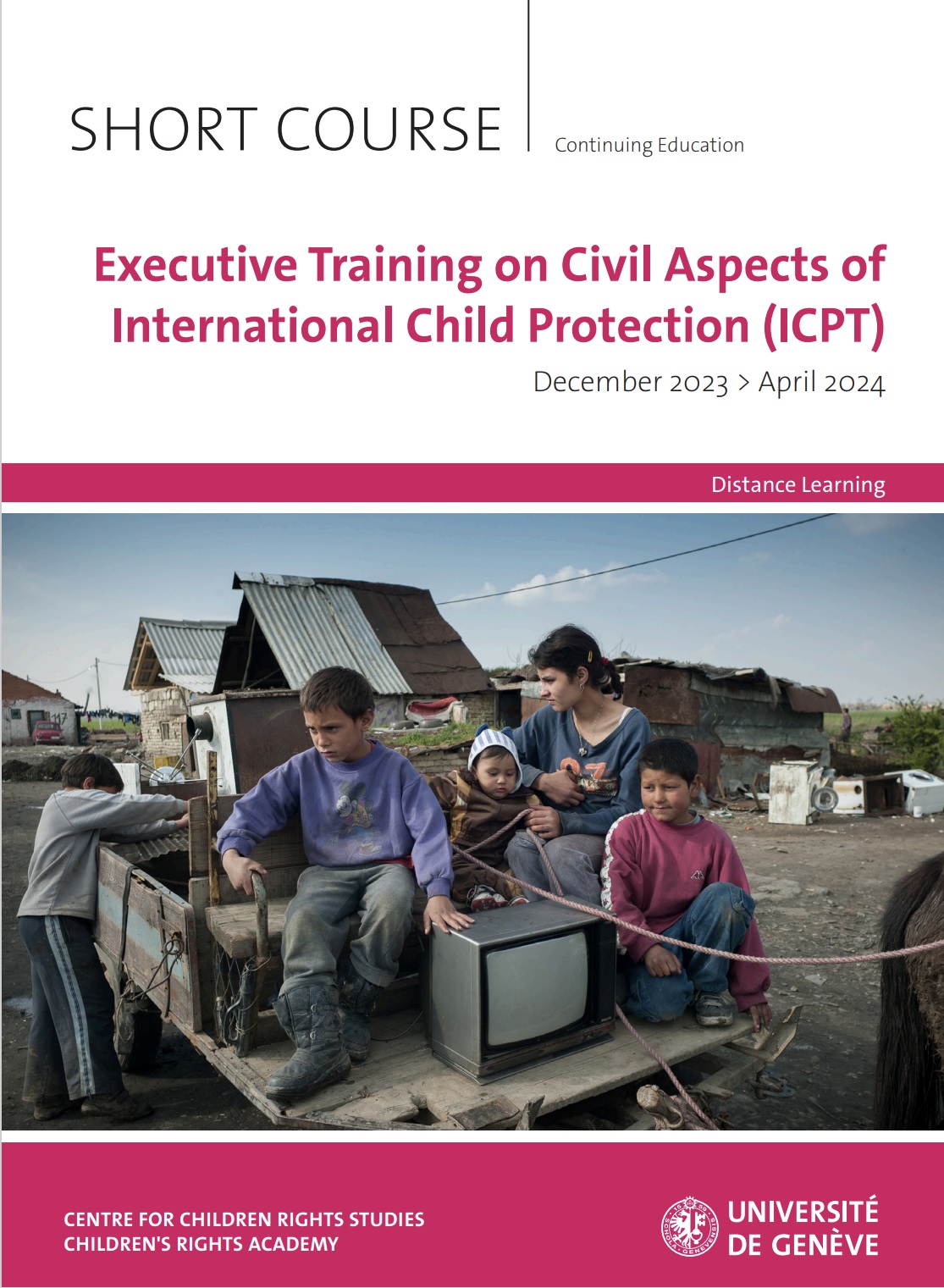
The Children’s Rights Academy of the University of Geneva is organising an online Executive Training on Civil Aspects of International Child Protection (ICPT) from December 2023 to April 2024. For more information, click here.
The training is divided into four modules and is being coordinated by Dr. Vito Bumbaca. There is a registration fee (for the full programme or per module). Click here to register (registration is possible until 18 January 2024).
Call for Papers: 2nd International Congress of Civil Procedural Law (15/16 Dec 23; hybrid)
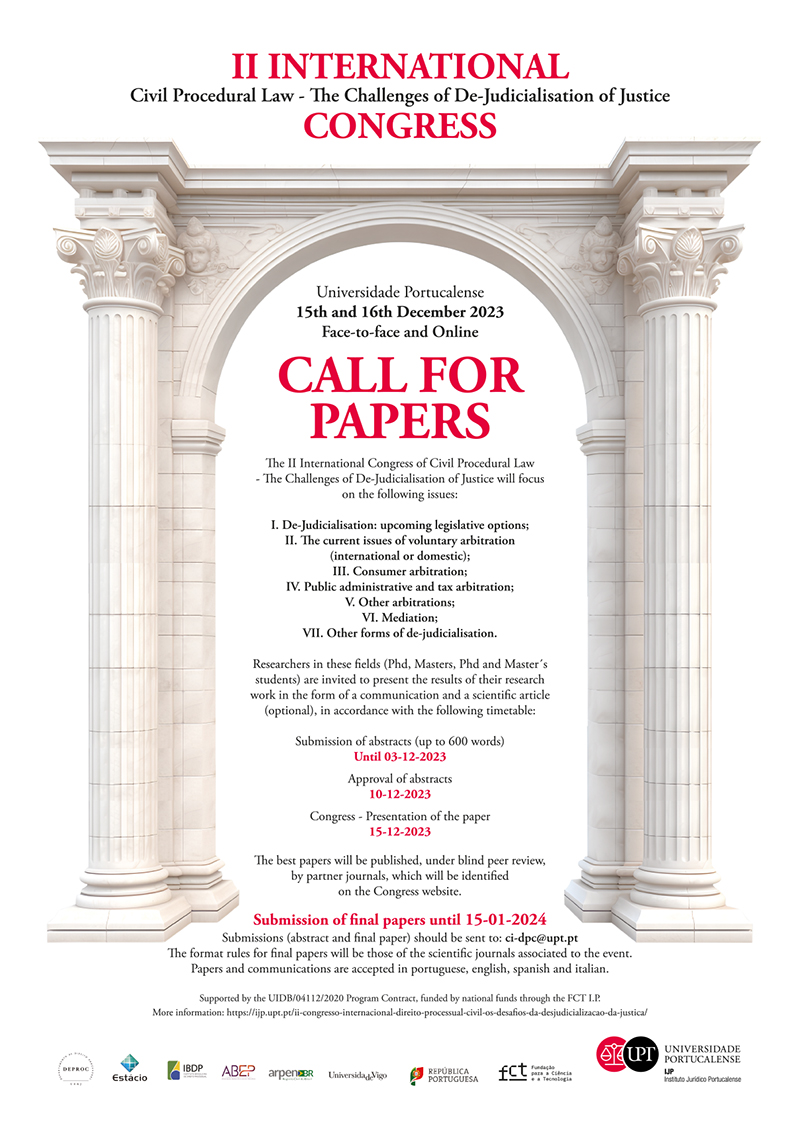
The Universidade Portucalense (UPT) will be hosting the 2nd International Congress of Civil Procedural Law on 15 and 16 December 2023. The hybrid event will focus on “The Challenges of De-Judicialisation of Justice”.
The organizers have been so kind as to share the call for papers with us. Further information can also be found here.