


Views
Dubai Supreme Court Admits Reciprocity with the UK and Enforces an English Judgment
Introduction:
I have been reporting on this blog some recent cases from the Dubai Supreme Court (DSC) regarding the recognition and enforcement of foreign judgments (see here, here and here). Reading these posts may have given the legitimate impression that the enforcement of foreign judgments in the UAE, and especially in Dubai, is particularly challenging. This post aims to mitigate that perception by shedding light on a very recent case in which the Dubai courts, with the approval of the DSC, ruled in favor of the enforcement of an English judgment. As the comments below indicate, this is probably the very first case in which the DSC has positively ruled in favor of the enforcement of an English judgment by declaring that the judgment in question met all the requirements set out in UAE law, and in particular, the reciprocity requirement.
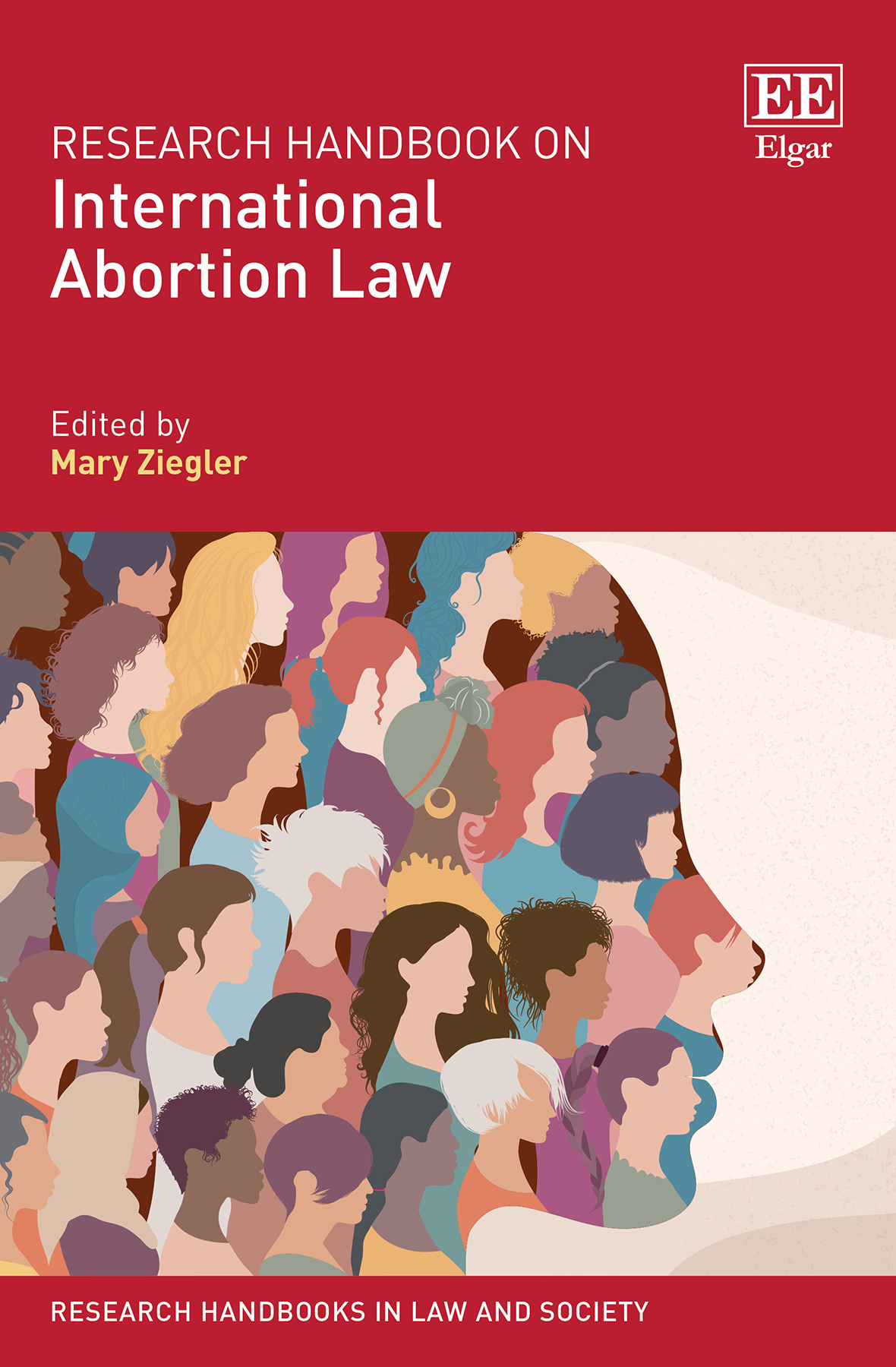
Book review: Research Handbook on International Abortion Law (Cheltenham: Edward Elgar Publishing, 2023)
Written by Mayela Celis
Undoubtedly, Abortion is a hot topic. It is discussed in the news media and is the subject of heated political debate. Indeed, just when one thinks the matter is settled, it comes up again. In 2023, Elgar published the book entitled “Research Handbook on International Abortion Law”, ed. Mary Ziegler (Cheltenham: Edward Elgar Publishing Limited, 2023). For more information, click here. Although under a somewhat misleading name as it refers to international abortion law, this book provides a wonderful comparative overview of national abortion laws as regulated by States from all the four corners of the world and internal practices, as well as an analysis of human rights law.
This book does not deal with the conflict of laws that may arise under this topic. For a more detailed discussion, please refer to the post Singer on Conflict of Abortion Laws (in the U.S.) published on the blog of the European Association of Private International Law.
In this book review, I will briefly summarise 6 parts of this book (excluding the introduction) and will provide my views at the end.
PIL and (De)coloniality: For a Case-by-Case Approach of the Application of Postcolonial Law in European States
Written by Sandrine Brachotte who obtained a PhD. in Law at Sciences Po, Paris and is a Guest Lecturer at UCLouvain (Saint-Louis, Brussels).
1. PIL and (De)coloniality in Europe
This post follows Susanne Gössl’s blog post series on ‘Colonialism and German PIL’ (especially s. 3 of post (1)) and offers a French perspective of the issue of PIL and (de)coloniality – not especially focused on French PIL but based on a francophone article to be published soon in the law and anthropology journal Droit et Culture. This article, called ‘For a decolonisation of law in the global era: analysis of the application of postcolonial law in European states’, is addressed to non-PIL-specialist scholars but builds on a European debate about PIL and (de)coloniality that has been nourished by scholars like Ralf Michaels, Horatia Muir Watt, Veronica Ruiz Abou-Nigm, as well as by Maria Ochoa, Roxana Banu, and Nicole Štýbnarová, notably at the occasion of the 2022 Edinburgh conference (reported about on this blog, where I had the chance the share a panel with them in relation to my PhD dissertation (see a short presentation on the EAPIL blog)).
News
HCCH Vacancy: Legal Officer
The Permanent Bureau of the HCCH welcomes applications for the position of Legal Officer, based at its headquarters in The Hague, Netherlands.
The successful candidate will work in the field of international commercial, digital and financial law, under the responsibility of the Deputy Secretary General. In addition to work in relation to the operation of the 1985 Trusts Convention, the 2006 Securities Convention, and the 2015 Choice of Law Principles, duties will include general assistance in relation to the projects on Central Bank Digital Currencies (CBDCs), Carbon Markets, Digital Tokens, and the Digital Economy. Depending on the work programme established by CGAP, the successful candidate may be called upon to carry out work in other areas, and will respond to requests for information, assist with comparative law research, the preparation of research papers and other documentation, the organisation and preparation of materials for publication, the preparation of, and participation in, conferences, seminars and training programmes.
The successful candidate will also support the work of the office of the Deputy Secretary General, and may be called to take on such other work as may be required by the Secretary General from time to time.
Applications should be submitted by 1 November 2025 (5.00 p.m. CET). For more information, please visit the Recruitment section of the HCCH website.
This post is published by the Permanent Bureau of the Hague Conference of Private International Law (HCCH).
[Out Now!] Teramura on Cambodian Private International Law (Hart, 2025)
After Indonesia, China, Japan, India and recently Hong Kong, the prestigious Hart series “Studies in Private International Law – Asia” has released a new volume on Cambodian Private International Law, authored by Nobumichi Teramura (Associate Professor, Keio University Law School; Affiliate, Centre for Asian and Pacific Law in the University of Sydney).
This book is the 14th volume in this outstanding series, which, in only six years of existence, has successfully manages to transform the “little attention” once paid to developments in private international law in Asia into an explosion of Asian scholarship and a growing and dynamic field of study. Read more
HCCH Monthly Update: September 2025
HCCH Monthly Update: September 2025
Conventions & Instruments
On 18 September 2025, Argentina deposited its instrument of ratification of the 1996 Child Protection Convention. With the ratification of Argentina, the Convention now has 58 Contracting Parties. It will enter into force for Argentina on 1 January 2026.More information is available here.
Meetings & Events
On 11 and 12 September 2025, the Permanent Bureau of the HCCH hosted a Roundtable and Training on the application of the 1980 Child Abduction and 1996 Child Protection Conventions, in particular concerning the children of Ukraine. More information is available here.
From 17 to 19 September 2025, the Experts’ Group (EG) on Central Bank Digital Currencies (CBDCs) held its fourth working meeting. Pursuant to its mandate, the EG made further progress on the study of the applicable law and jurisdiction issues raised by the cross-border use and transfers of CBDCs. More information is available here.
On 25 and 26 September, the Permanent Bureau of the HCCH hosted training on the HCCH’s core family law Conventions and projects for a group of judges and court officials from 16 States. The training was organised in cooperation with the European Judicial Training Network. More information is available here.
On 26 September 2025, the second meeting of the Working Group (WG) established to finalise the Model Forms pertaining to Chapter II of the 1970 Evidence Convention was held online.
Upcoming Events
Registration is now open to the public for online participation in the “HCCH-IDLO Dialogue on Digitalisation of Public Services and Justice”. The event will be held on Friday 10 October 2025, from 10.00 to 11.30 a.m. (CEST). Interested persons should register no later than Tuesday 7?October 2025 via this registration form. More information is available here.
Vacancies
Applications are now open for the position of Legal Officer. The deadline for the submission of applications is 1 November 2025. More information is available here.
Applications are now open for the position of Finance / Human Resources Assistant. The deadline for the submission of applications is 11 October 2025. More information is available here.
These monthly updates are published by the Permanent Bureau of the Hague Conference on Private International Law (HCCH), providing an overview of the latest developments. More information and materials are available on the HCCH website.