


Views
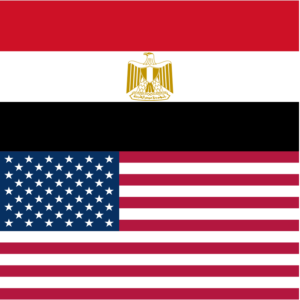
Refusal to Enforce in Egypt of a Californian (U.S.) Judgment for Lack of Reciprocity: What Has Gotten into the Egyptian Supreme Court?
I. Introduction
Sometimes, reading court decisions leaves a strange sense of confusion, especially when the decision rendered not only contradicts a well-established line of case law, but also when the court, in the very same decision, reveals internal contradictions. Several months ago, I critically discussed on this blog a rather unusual decision of the Egyptian Supreme Court (محكمة النقض/maḥkamat an-naqḍ), in which the enforcement of a Canadian judgment was denied on the ground that reciprocity had not been established with Canada. In my comments on that decision, I expressed “significant concerns” regarding the incoherent manner in which reciprocity was addressed by the Supreme Court.
PRC Double Interest neither Double nor Penal: Australian Courts Clear Its Name When Enforcing Chinese Judgments

This post was kindly prepared by Dr. Meng Yu, lecturer at China University of Political Science and Law, and co-founder of China Justice Observer.
[ABSTRACT]
Recent Australian case law clarifies that the “double interest” mechanism in the People’s Republic of China (hereafter ‘PRC’) monetary judgments functions as a compensatory post-judgment interest framework rather than an unenforceable penalty. This consolidates Australia’s position as a highly attractive and creditor-friendly forum for enforcing Chinese judgments. See Zhengzhou Lvdu Real Estate Group Co v Shu [2024] NSWSC 58 (6 February 2024), Fu v Pang [2025] VSC 597 (16 September 2025), and Shanghai Chenggong Industrial Co Ltd v Zhihua Chen [2025] NSWSC 1112 (27 October 2025).
The AIFC Court, Gazprom v Naftogaz and the Emergence of a New Conduit Jurisdiction Debate
This post is written by Dr. Nicolás Zambrana-Tévar LLM(LSE) PhD(Navarra), Associate Professor School of Law KIMEP
Introduction
In May 2026, the Court of First Instance of the Astana International Financial Centre (AIFC) recognised and enforced a Swiss ICC arbitral award rendered in favour of Naftogaz against Gazprom. The award arose out of the disputes between the parties concerning the transit of Russian gas through Ukraine after the start of the war.
News
【Out Now – Open Access】Commercial Private International Law in Southern Africa: Comparative and International Perspectives: Essays in Honour of Professor Christopher F Forsyth KC

Professor Christopher F. Forsyth is undoubtedly one of the leading figures in private international law in Africa, particularly in Southern Africa, where his scholarship has had a profound and lasting influence. His seminal work, Private International Law – The Modern Roman-Dutch Law Including the Jurisdiction of the High Courts (5th ed., Juta, 2012), is not only an indispensable reference for scholars and researchers, but also an authoritative work before Southern African courts, where it is frequently cited with approval.
Registration Open for Bonn Conference on “International Filiation Law in the EU”, 24 / 25 September 2026
Registration is now open for the already announced conference on “International Filiation Law in the EU” dealing with questions of filiation law resulting from the EU Parenthood Proposal. More information and the registration link can be accessed at the website of the conference. Registration is esp. important for the conference dinner as spots are limited and will be provided on a first come basis.

CoL.net: New Editors
We are delighted to welcome two new editors to the Blog’s Editorial Board.
Janaína Albuquerque Azevedo Gomes is an attorney admitted in Brazil and Portugal focusing on international family law. She has experience across numerous countries and sectors, including the Brazilian government and the Hague Conference on Private International Law (HCCH).
Gustavo Ferraz de Campos Monaco is professor of private international law at the University of São Paulo, where he works at the intersection of private international law and general legal theory.
We are looking forward to their contributions.