


Views

From Deference to Objectivity: How Courts Are Rewriting the Commercial Reservation
By Taimoor Raza Sultan, Stockholm University
Introduction
The 1958 New York Convention (‘NYC’) is widely regarded as international arbitration’s most significant achievement. Having been ratified by over 160 states, , establishing a credible system of enforcement for arbitral awards. Yet the commercial reservation under Article 1(3), which allows the reserving state to limit the application of the ‘Convention only to differences …. considered as commercial’ under its own national law, risks jeopardizing the uniformity of the convention. By domesticating the definition of commerciality, the reservation invites forum shopping and inconsistent enforcement. Read more
Online Symposium on Recent Developments in African PIL (II) – The Recognition and Enforcement of Foreign Judgments within the CEMAC Zone

As part of the second online symposium on recent developments in African private international law, we are pleased to present the second contribution, kindly prepared by Boris Awa (Kigali Independent University, Rwanda), on The Recognition and Enforcement of Foreign Judgments within the CEMAC Zone.
Article V(1)(e) of the 1958 New York Convention in Light of a Decision of the Turkish Court of Cassation
Posted on behalf of Erdem Küçüker, an attorney-at-law registered at the Istanbul Bar Association and a private law LL.M student at Koç University. Mr. Küçüker specializes in commercial arbitration, arbitration-related litigation and commercial litigation, and acts as secretary to arbitral tribunals.
Article V of the 1958 New York Convention (“NYC”) lists the grounds of non-enforcement of a foreign arbitral award. Accordingly, Article V(1)(e) provides that when “[t]he award has not yet become binding on the parties, or has been set aside or suspended by a competent authority of the country in which, or under the law of which, that award was made” the award’s enforcement may be refused.
In 2024, the Turkish Court of Cassation quashed the lower courts’ decision that declared an International Centre for Dispute Resolution of the American Arbitration Association (“ICDR”) award as enforceable, stating that the courts should have further investigated whether the award is final, enforceable and binding (Court of Cassation, 11th Civil Chamber, Docket No: E. 2022/5986, Decision No: K. 2024/2257, Date: 20.03.2024). This article explains the decision of the Turkish Court of Cassation and comments on the final, enforceable and binding character of an arbitral award in relation to Article V(1)(e) of the NYC. Read more
News
African Review of International Law – Inaugural Issue & Call for Contributions
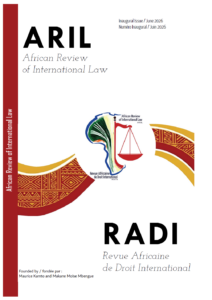
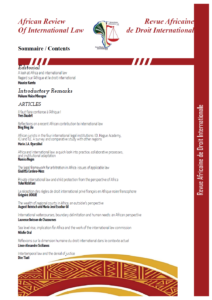
Many thanks to Boris Awa (Kigali Independent University ULK, Kigali, Rwanda) for the tip-off
The birth of a new academic journal is always good news, especially when its stated aim is “to become one of the leading scientific publications on international law” and when it is “primarily intended as a forum for African international lawyers’ reflection and research on issues of interest to Africa.” This is precisely the ambition pursued by the newly launched African Review of International Law (ARIL) / Revue africaine de droit international (RADI), published by the African Society of International Law (AfSIL).
European Civil Procedure Seminar, Leuven, 25 and 26 June 2026
The European Civil Justice Centre is pleased to announce a European Civil Procedure Seminar, which will take place on 25 and 26 June 2026 at the Faculty of Law and Criminology of KU Leuven.
The seminar is organised on the occasion of the publication of European Civil Procedure, edited by Xandra Kramer, Stefaan Voet and Adriani Dori, and published by de Gruyter in 2026. The book offers a comprehensive overview of the main developments shaping civil justice, including EU instruments on jurisdiction, recognition and enforcement, service of documents, taking of evidence, and collective redress.
Enforcing Indian Judgments Abroad: The Hidden Costs of Révision au Fond
A recent article in the latest issue of the Asian Journal of Comparative Law revisits a feature of Indian private international law that often sits in the background of transactional and disputes practice but can decisively shape outcomes: the continued presence of révision au fond in India’s law on the recognition and enforcement of foreign judgments (REFJ).