


Views
Enforceability of foreign judgments for punitive damages under English law and South African law
This post is posted on behalf of Jason Mitchell, barrister at Maitland Chambers in London and Group 621 in Johannesburg.
In Motorola Solutions v Hytera Communications Corporation, the Court of Appeal held that a judgment that includes a punitive damages component is unenforceable in its entirety (the judgment is available here). The punitive component cannot be severed so that the judgment creditor can enforce non-punitive components.
Motorola sued Hytera in the U.S. One of its causes of action was under the Defend Trade Secrets Act, a federal statute that allows for punitive damages of up to double any compensatory damages. On that cause of action, the U.S. court awarded Motorola compensatory damages of $135 million and punitive damages of $270 million. Motorola tried to enforce the U.S. judgment in England. Read more
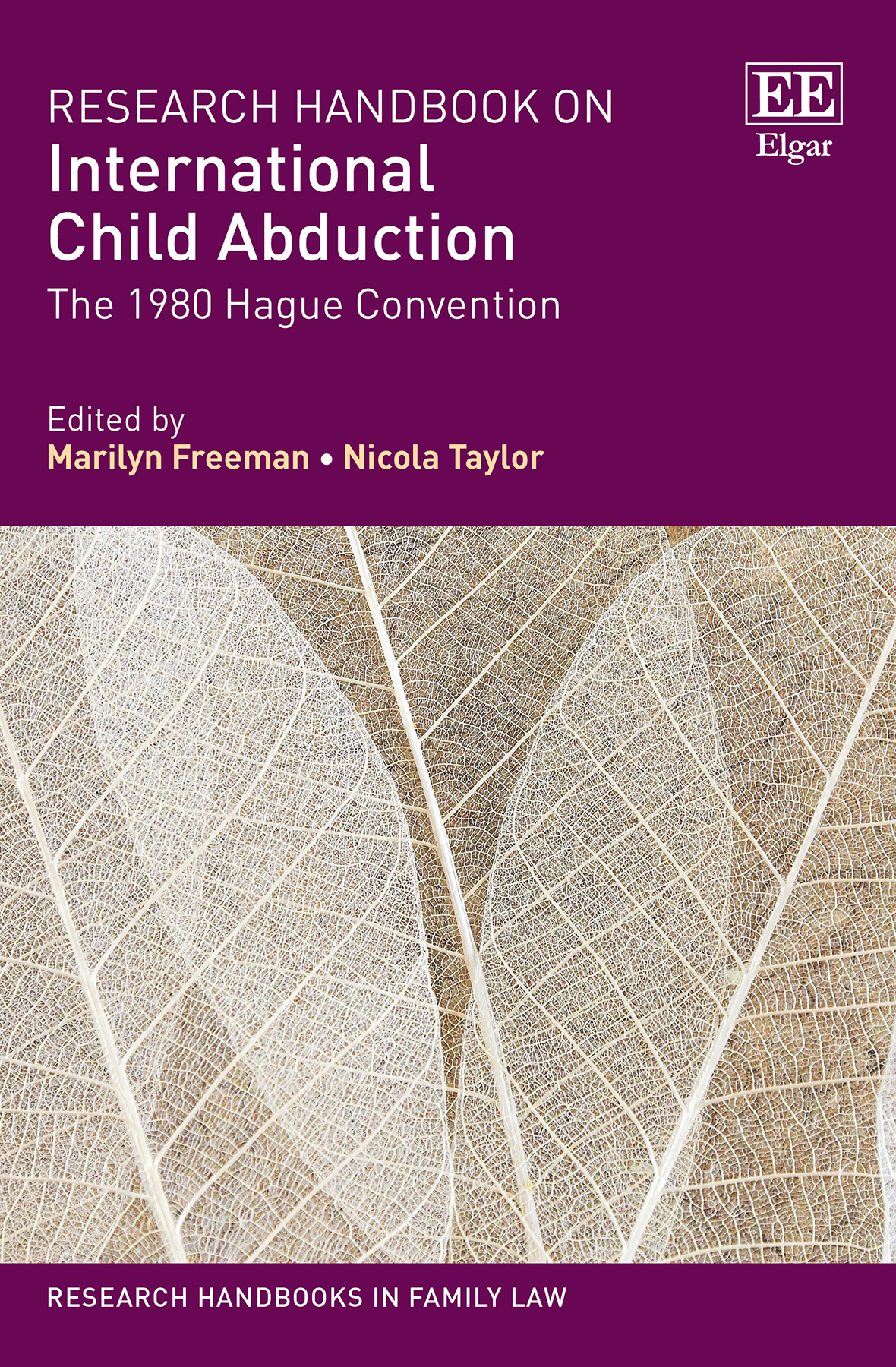
Book review: Research Handbook on International Child Abduction: The 1980 Hague Convention (Edward Elgar Publishing, 2023) – Part I
Written by Mayela Celis, Maastricht University
International child abduction is a topic that has given rise to an ever-increasing number of publications (our latest blog post attests to this trend). It easily sparks emotions among experts, sometimes triggering divergent views. However, from a global perspective, there is consensus on the basic principle: States should combat international child abductions and a child should be returned to the State of habitual residence, unless an exception is made out. In 2023, Elgar published the book entitled “Research Handbook on International Child Abduction: the 1980 Hague Convention”, eds. Marilyn Freeman and Nicola Taylor (Edward Elgar Publishing Limited, 2023). Although published a couple of years ago, it remains poignantly relevant.
This book brings together an adult who was abducted as a child, practitioners, judges, academics, NGO officials and central authority personnel. Many of the authors are at the forefront of this field and their contributions have left a long-lasting legacy in this area of law. While some topics are considered from an academic perspective, others have a more practical focus, striking the right balance between academia and practice. Read more
XLK v XLJ: Comity Beyond the Child Abduction Convention
By Haoxiang Ruan, PhD candidate at Hitotsubashi University (Tokyo, Japan). Haoxiang Ruan consistently maintains an interest in international family law, which led him to undertake the 2024-2025 academic stay at Kyoto University (Kyoto, Japan).
From the perspective of state participation, the Convention of 25 October 1980 on the Civil Aspects of International Child Abduction (the “Child Abduction Convention”) stands as one of the most successful instruments of the Hague Conference on Private International Law (HCCH), boasting 103 Contracting Parties to date. This widespread adherence is largely driven by the pervasive—and increasingly difficult-to-ignore—problem of international child abduction, which affects even non-Contracting States. China, a populous country deeply engaged in globalization, exemplifies this reality. A recent custody ruling in Singapore concerned a child who had been brought to the country by his father in breach of an order issued by a Chinese court—an incident underscoring how cross-border family disputes transcend the formal boundaries of the Convention.
News
Call for Papers: Frankfurt Law Review Special Edition on Digital Transformation
The Frankfurt Law Review is currently looking for submissions for a special edition dedicated to the topic of Digital Transformation.
Submissions can be drafted specifically for the review but may also be based on seminar papers or other academic assignments; they are accepted until 31 May 2026.
The full call for papers can be found here.
HCCH Monthly Update: April 2026
Meetings & Events
From 30 March to 1 April, the Experts’ Group (EG) on Central Bank Digital Currencies (CBDCs) held its fifth meeting. Pursuant to its mandate, the EG continued to make progress in its study of the jurisdiction and applicable law issues raised by the cross-border use and transfers of CBDCs, including the desirability and feasibility of a possible future instrument on these issues, with particular attention to their use in payments with a cross-border or international element. More information is available here.
Consensual Justice in Focus: Reflections from the First ASGiC National Congress
 On 16–17 April 2026, the elegant setting of Villa Ruspoli in Florence hosted the First National Congress of ASGiC – the Society for the Study of Consensual Justice, titled Giustizia e cooperazione: il valore del consenso (Justice and Cooperation: The Value of Consent). Marked by a large and engaged participation, the event offered a valuable opportunity for both the Society’s members and a wider community of scholars and practitioners to reflect on the role of consent in contemporary conceptions of justice.
The Congress opened with introductory remarks by the Society’s President, Silvana Dalla Bontà, who set out the themes and objectives guiding the initiative. Against this backdrop, the keynote lectures delivered by Tommaso Greco, Andrea Simoncini, and Filippo Danovi developed a first, coherent reflection on consensual justice, identifying a variety of core concepts – trust, consent, justice, solidarity, Constitution, language, and dialogue – that are likely to orient the Society’s future research and activities.