


Views
Opening Pandora’s Box – The interaction between human rights and private international law: the specific case of the European Court of Human Rights and the HCCH Child Abduction Convention
Written by Mayela Celis
It is undeniable that there is an increasing interaction between human rights and private international law (and other areas of law). This of course adds an additional layer of complexity to private international law cases, whether we like it or not. Indeed, States can be sanctioned if they do not fulfill specific criteria specified by the European Court of Human Rights (ECtHR). Importantly, the European Convention on Human Rights has been considered to be an instrument of European public order (ordre public), to which 47 States are currently parties.
I have recently published an article entitled “The controversial role of the ECtHR in the interpretation of the Hague Convention of 25 October 1980 on the Civil Aspects of International Child Abduction, with special reference to Neulinger and Shuruk v. Switzerland and X v. Latvia” (in Spanish only but with abstracts in English and Portuguese in the Anuario Colombiano de Derecho Internacional). To view it, click on “Ver artículo” and then click on “Descargar el archivo PDF”, currently pre-print version, published online in March 2020.
Below I include briefly a few highlights and comments.
As its name suggests, this article explores the controversial role of the ECtHR in the interpretation of the HCCH Child Abduction Convention. It analyses two judgments rendered by the Grand Chamber: Neulinger and Shuruk v. Switzerland (Application no. 41615/07) and X v. Latvia (Application no. 27853/09). And then it goes on to analyse three more recent judgments and in particular, whether or not they are in line with X v Latvia.
The article seeks to clarify the applicable standard that should be applied in child abduction cases as there has been some confusion as to the extent to which Neulinger applies and the impact of X v. Latvia. Indeed Neulinger seemed to suggest that courts should conduct a full examination of the best interests of the child during child abduction proceedings, which is blatantly wrong. X v. Latvia clarifies Neulinger and provides a detailed and thoughtful standard to avoid conducting “an in-depth examination of the entire family situation and of a whole series of factors…” but at the same time upholds the human rights of the persons involved and strikes, in my view and as noted by the Court, a fair balance between the competing interests at stake – those of the child, of the two parents, and of public order.
The article then examines three recent judgments rendered by several chambers of the ECtHR (not the Grand Chamber): K.J. v. Poland (Application no. 30813/14), Vladimir Ushakov v. Russia (Application no. 15122/17), and M.K. v. Grèce (Requête n° 51312/16). M.K. v. Grèce, which was rendered in 2018, has put the ECtHR in the spotlight again. Surprisingly, this precedent has ignored the standard established in X v. Latvia and has followed only Neulinger. The precedents of the Grand Chamber of the ECtHR are binding on the chambers so it is stupefying that this could happen. Nevertheless, I have concluded that the outcome of the case is correct.
By way of conclusion, the legal community seems to be divided as to whether or not X v Latvia sets a good precedent. Human rights lawyers seem to regard this precedent favourably, whereas private international law lawyers seem to be more cautious. This article concludes that X v. Latvia was correctly decided for several reasons based on Article 13(1)(b), Article 3 of the HCCH Child Abduction Convention and the need to provide for measures of protection. Both human rights and private international law can interact harmoniously and complement each other. The efforts of the human rights community to understand the Child Abduction Convention are evident in the change of direction in X v. Latvia. Both human rights lawyers and private international law lawyers should make an effort to understand each other as we have a common goal and objective: the protection of the rights of the child.
Cross-border Corona mass litigation against the Austrian Federal State of Tyrol and local tourist businesses?
While the Corona Crisis is still alarmingly growing globally, first movers are apparently preparing for mass litigation of ski tourists from all over Europe and beyond against the Austrian Federal State of Tyrol and local businesses. The Austrian Consumer Protection Association (Österreichischer Verbraucherschutzverein, VSV, https://www.verbraucherschutzverein.at/) is inviting tourists damaged from infections with the Corona virus after passing their ski holidays in Tyrol, in particular in and around the Corona super-hotspot of Ischgl, to enrol for collective redress against Tyrol, its Governor, local authorities as well as against private operators of ski lifts, hotels, bars etc., see https://www.verbraucherschutzverein.at/Corona-Virus-Tirol/.
In Austria, no real “class action” is available. Rather, the individual claimants need to assign their claims to a lead claimant, often a special purpose vehicle (in this case the Association) which then institutes joint proceedings for all the claims. For foreign claimants who consider assigning their claims to the Association, the Rome I Regulation will be of relevance.
According to Article 14 (1) Rome I Regulation the relationship between assignor and assignee shall be governed by the law that applies to the contract between the assignor and assignee under the Regulation. So far, however, there seem to be only pre-contractual relationships between the Austrian Association inviting “European Citizens only” (see website) to register for updates by newsletters. These pre-contractual relationships will be governed by Article 12 (1) Rome II Regulation. “[T]he contract” in the sense of that provision will be the one between the Association and the claimant on the latter’s participation in the collective action which may, but does not necessarily, include the contract on the assignment of the claim and its modalities. It is the Association that is the “service provider” in the sense of Article 4 (1) lit. b Rome I Regulation. Its habitual residence is obviously in Austria, therefore the prospective contract as well as the pre-contractual relations to this contract will be governed (all but surprisingly) by Austrian law. Art. 6 does not come into play, since the service is to be supplied to the consumer exclusively in Austria, Article 6 (4) lit. a Rome I Regulation.
According to Article 14 (2) Rome I Regulation, the law governing the assigned claim shall determine its assignability, the relationship between the assignee and the debtor, the conditions under which the assignment can be invoked against the debtor and whether the debtor’s obligations have been discharged. As far as the Rome II Regulation is applicable ratione materiae, i.e. for claims against the businesses, its Article 4 will select (again all but surprisingly) Austrian law – no “distance delict” as the potentially delictual act and its harmful effects on the claimant’s health both took place in Austria. Follow-up damages in other states are irrelevant for the law-selecting process.
In respect to delictual claims against Tyrol and its public entities and authorities, Recital 9 of the Rome II Regulation reminds us that, with a view to Article 1 (1) Sentence 2 of the Regulation (no applicability to “acta iure imperii”), “[c]laims arising out of acta iure imperii should include claims against officials who act on behalf of the State and liability for acts of public authorities, including liability of publicly appointed office-holders. Therefore, these matters should be excluded from the scope of this Regulation.” Rather, an autonomous rule of choice of law for liability of Austrian public entities will apply, and this rule will certainly select Austrian law.
There are certain advantages in bundling a multitude of claims in the “Austrian” way: First, the high amount of damages from the collection of claims allows seeking third-party funding. Second, costs for both the court and the lawyers are structured on a diminishing scale. While the collective proceedings are pending, prescription periods do not proceed in respect to claims participating in the joint action. And of course, the “class” of these active claimants has much more weight for negiations than an individual would have.
On the other hand, the jurisdiction at the consumer’s domicile under Art. 18 Brussels Ibis Regulation will no longer be available, once the consumer has assigned his or her claim to another, e.g. a lead claimant. However, this is only relevant in respect to the contractual claims of consumers and only as long as the conditions for directing one’s business at the consumer’s domicile under Article 17 (1) lit. c Brussels Ibis Regulation are fulfilled. The claims in question here mainly ground in non-contractual claims against public entities and private businesses, and they seem to be envisaged as independent civil follow-on proceeding after successful criminal proceedings – if these should ever result in convictions.
The allegation is that the respective public agencies and officers did not shut down the area immediately despite having gained knowledge about first Corona infections in the region, in order to let the tourism businesses go on undisturbed. These allegations are extended to local businesses such as ski lifts, hotels and bars etc., once they gained knowledge about the Corona risk. It will be an interesting question (of the applicable Austrian law of public and private liability for torts) amongst many others (such as those on causality) in this setting to what extent there is a responsibility of the tourist to independently react adequately to the risk, of course depending on the time of getting him/herself knowledge about the Corona risk. If there is such responsibility on the part of the damaged, the next question will be whether this could affect or reduce any tortious liability on the part of the potential defendants. Overall, all of that appears to be an uphill battle for the claimants.
Speaking of responsibilities, a more pressing concern these days is certainly how the European states, in particular the EU Member States and the EU itself, might organise a more effective mutual support and solidarity for those regions and states that are most strongly affected by the Corona Pandemic, in particular in Italy, Spain and France, these days. Humanitarian and moral reasons compel us to help, both medically and financially. Some EU Member States have started taking over patients from neighbouring countries while they are still disposing of capacities in their hospitals, but there could perhaps be more support (and there could have perhaps been quicker support). The EU has a number of tools and has already taken some measures such as the Pandemic Epidemic Purchase Programme (PEPP) by the European Central Bank (ECB). The European Stability Mechanism (ESM) could make (better?) use of its precautionary financial assistance via a Precautionary Conditioned Credit Line (PCCL) or via an Enhanced Conditions Credit Line (ECCL). Further, the means of Article 122 TFEU should be explored, likewise the possibilities for ad hoc-funds under Article 175 (3) TFEU. The European Commission should think about loosening restrictions for state aids.
All of these considerations go beyond Conflict of Laws, and this is why they are not mine but were kindly provided (all mistakes and misunderstandings remain my own) in a quick email by my colleague and expert on European monetary law, Associate Professor Dr. René Repasi, Erasmus University of Rotterdam, https://www.eur.nl/people/rene-repasi (thanks!).
However, cross-border solidarity is a concern for all of us, perhaps in particular for CoL experts and readers. Otherwise, a “European Union” does not make sense and will have no future.
Opinion of Advocate General Tanchev in the case C-249/19, JE: Application of the law of the forum under Article 10 of the Rome III Regulation
|
In his Opinion delivered today, Advocate General Tanchev presents his take on Article 10 of the Regulation No 1259/2010 implementing enhanced cooperation in the area of the law applicable to divorce and legal separation (commonly referred to as Rome III Regulation), under which ‘[w]here the law applicable pursuant to Article 5 or Article 8 makes no provision for divorce or does not grant one of the spouses equal access to divorce or legal separation on grounds of their sex, the law of the forum shall apply’. |
News
Geneva Executive Training – Module 4: Practice of Child Protection Stakeholders: Focus on Inter-agency Co-operation in Context
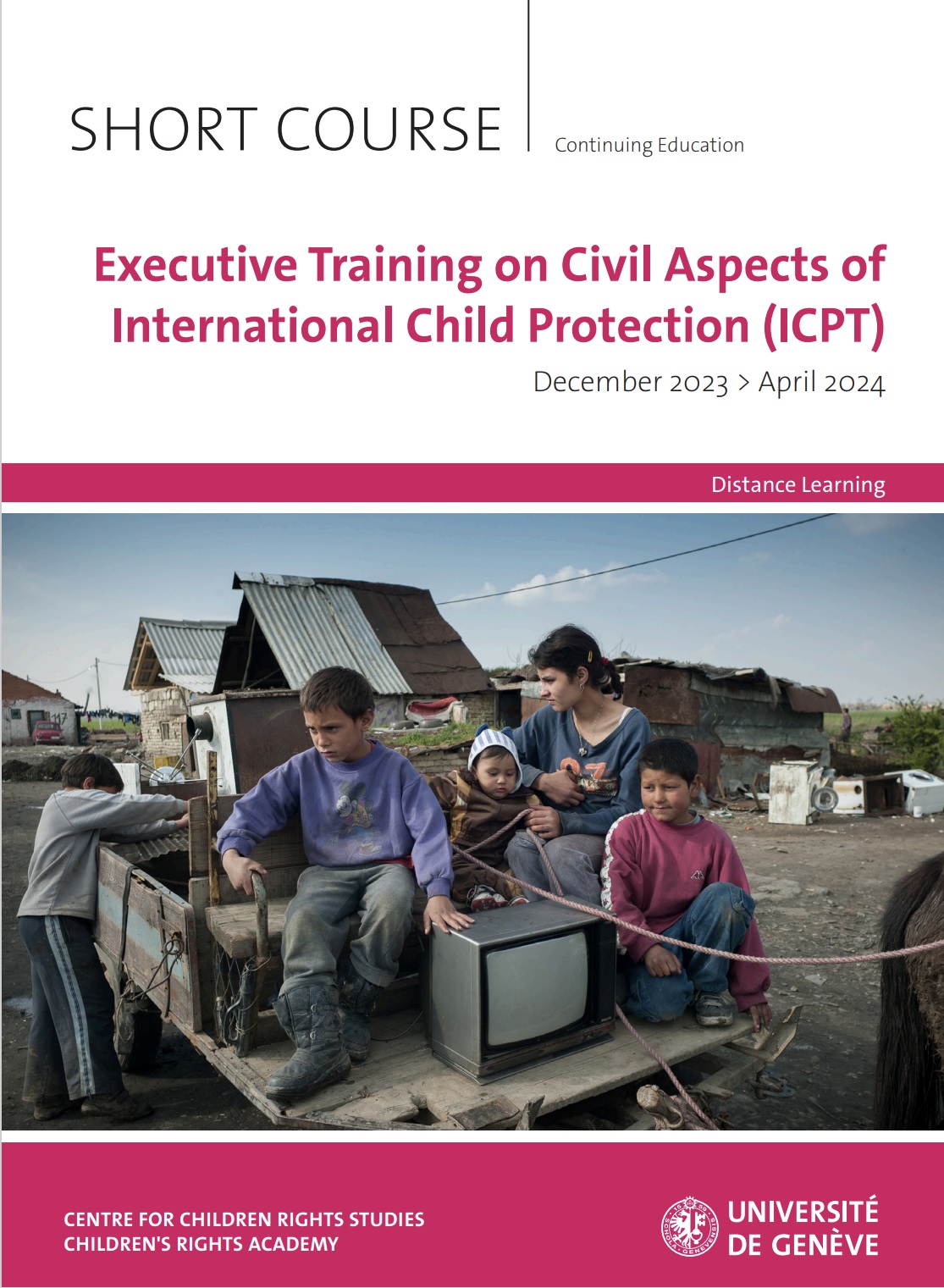
Registrations are still open for Module n°4, which is taking place on April 18th, 2024.
The speakers are the following:
- Dr Nicolas Nord, Secretary General, CIEC, “The ICCS Activities and Good Practices in the field of International Child Protection”
- Ms Joëlle Schickel-Küng, Deputy Head of Division, Co-Head of Unit, Swiss OFJ, “Cooperation in the area of international child abduction under the 1980 Hague Convention”
- Mr Jean Ayoub, Secretary General, International Social Service, “ISS – Bridging support to vulnerable children on the move”
Price per module registration fee: 200 CHF. More information is available here.
ARBITRATION: International Commercial – Domestic – Investment
The author is Dr. Faidon Varesis, Attorney at Law
Teaching Fellow, National and Kapodistrian University of Athens
PhD (University of Cambridge); MJur (University of Oxford); LLM, LLB (University of Athens).
In an era where the resolution of disputes is increasingly moving away from traditional court systems towards alternative methods, the comprehensive collective work in Greek with Professor Charalampos (Haris) P. Pamboukis as editor emerges as both a timely and seminal contribution to the field of arbitration, both nationally within Greece and on an international scale. This book review seeks to delve into the multifaceted contributions of the book, examining its scope, its pioneering contributors, its evolution within Greek law, and its broader implications for dispute resolution globally.
The book begins by exploring the flourishing landscape of arbitration across various domains such as commercial, investment, construction, maritime, and energy disputes, alongside other alternative dispute resolution (ADR) methods. The interest in these mechanisms reflects a societal shift towards less adversarial, more cosmopolitan forms of dispute resolution, aimed at alleviating the burdens on state judiciary systems characterized by procedural rigidity and often excessive delays. The prologue set the stage by discussing the significant legislative and jurisprudential developments in domestic and international arbitration within Greece, highlighting the transformative impact of laws passed from 1999 through to the latest reforms in 2023. Such legislative milestones not only signify Greece’s evolving arbitration framework but also illustrate the dynamic interplay between law, scholarly research, and practical application in shaping effective dispute resolution practices. Furthermore, the book weaves through the theoretical underpinnings and the practical aspects of arbitration agreements, the composition of arbitral tribunals, and the procedural norms governing arbitration proceedings, offering a holistic view of the arbitration landscape.
Central to the book’s discourse is the collaborative effort of esteemed scholars, academics, and practitioners who contribute their insights across various themes. This collective approach not only enriches the book’s content with a diversity of perspectives but also underscores the collaborative spirit within the arbitration community. The inclusion of introductory developments on increasingly significant areas such as investment arbitration and mediation, alongside a critical overview of international arbitration consent and the arbitral process, reflects a comprehensive and forward-looking examination of the field.
The book does not shy away from discussing the inherent challenges within arbitration and the diverse methodological approaches adopted by different contributors. However, these aspects are presented as enriching the scientific pluralism and intellectual rigor of the work rather than detracting from its cohesion.
In addition to its substantive chapters, the book is augmented with appendices that include key legislative and regulatory texts relevant to arbitration and mediation. This practical inclusion underlines the book’s aim to serve as a useful tool for both practitioners and scholars.
In conclusion, this collective work stands as a testament to the evolving and vibrant field of arbitration within Greece and its broader implications on the international stage. It encapsulates the intellectual legacy, the legislative advancements, and the practical insights of a diverse group of contributors, offering a comprehensive resource for understanding and navigating the complexities of arbitration. As such, it represents an invaluable contribution to the legal scholarship and practice of arbitration, both within Greece and beyond, fostering a deeper appreciation for alternative dispute resolution mechanisms in the pursuit of justice and societal harmony.