


Views
The Supreme Administrative Court of Bulgaria’s final decision in the Pancharevo case: Bulgaria is not obliged to issue identity documents for baby S.D.K.A. as she is not Bulgarian (but presumably Spanish)
This post was written bij Helga Luku, PhD researcher at the University of Antwerp.
On 1 March 2023, the Supreme Administrative Court of the Republic of Bulgaria issued its final decision no. 2185, 01.03.2023 (see here an English translation by Nadia Rusinova) in the Pancharevo case. After an appeal from the mayor of the Pancharevo district, the Supreme Administrative Court of Bulgaria ruled that the decision of the court of first instance, following the judgment of the Court of Justice of the European Union (CJEU) in this case, is “valid and admissible, but incorrect”. It stated that the child is not Bulgarian due to the lack of maternal ties between the child and the Bulgarian mother, and thus there is no obligation for the Bulgarian authorities to issue a birth certificate. Hereafter, I will examine the legal reasoning behind its ruling.
UK Supreme Court in Jalla v Shell: the claim in Bonga spill is time barred
The UK Supreme Court ruled that the cause of action in the aftermath of the 2011 Bonga offshore oil spill accrued at the moment when the oil reached the shore. This was a one-off event and not a continuing nuisance. The Nigerian landowners’ claim against Shell was thus barred by the limitation periods under applicable Nigerian law (Jalla and another v Shell International Trading and Shipping Company and another [2023] UKSC 16, on appeal from [2021] EWCA Civ 63).
On 10 May 2023, the UK Supreme Court has ruled in one of the cases in the series of legal battles started against Shell in the English courts in the aftermath of the Bonga spill. The relevant facts are summarized by the UK Supreme Court as follows at [6] and [7]:
Data on Choice-of-Court Clause Enforcement in US
The United States legal system is immensely complex. There are state courts and federal courts, state statutes and federal statutes, state common law and federal common law. When I imagine a foreign lawyer trying to explain this system to a foreign client, my heart fills with pity.
This feeling of pity is compounded when I imagine this same lawyer trying to advise her client as to whether a choice-of-court clause will be enforced by a court in the United States. The law on this subject is complicated. It is, moreover, not easy to determine how it is applied in practice. Are there differences in clause enforcement rates across the states? Across federal circuits? Do state courts enforce these clauses at the same rate as federal courts? Until recently, there was no data that would allow a foreign lawyer – or a U.S. lawyer, for that matter – to answer any of these questions.
Over the past several years, I have authored or co-authored several empirical articles that seek to answer the questions posed above. This post provides a summary of the data gathered for these articles. All of the cases referenced involve outbound choice-of-court clauses, i.e. clauses that select a jurisdiction other than the one where the suit was filed. Readers interested in the data collection process, the caveats to which the data is subject, or other methodological issues should consult the articles and their appendices. This post first describes state court practice. It then describes federal court practice. It concludes with a brief discussion comparing the two.
News
Judgment of the Hellenic Supreme Court Part 2: Relatives’ rights to compensation for emotional distress in fatal car accidents under the Rome II Regulation
Following a judgment by the Supreme Court of Greece in 2023, the issue of direct damages was once again brought before Areios Pagos. In a decision that diverged from the ruling of the Court of Justice of the European Union (CJEU) in the Lazar case, the Supreme Court reaffirmed its position. However, one member of the court expressed a dissenting opinion, emphasizing the obligation of national courts to submit a preliminary reference. This judge provided rationale for the Supreme Court’s departure from established case law, highlighting the importance of adhering to the CJEU’s precedents in the context of European legal integration.
Out Now: The 50th anniversary of the first Inter-American specialized conference on private international law. The future of private international law in the Americas by Dante Mauricio Negro Alvarado
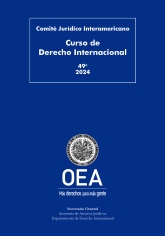
The Department of International Law (Secretariat for Legal Affairs) of the Organization of American States (OAS) has just published in essay form the lectures delivered during the 49th Course on International Law, which was held on 5 -16 August 2024. For more information, click here.
The book features the following piece: The 50th anniversary of the first Inter-American specialized conference on private international law. The future of private international law in the Americas by Dante Mauricio Negro Alvarado (in English, p. 295-335). This is a must-read for Private International Law academics and lawyers from the region and beyond. Read more
Call for Abstracts – Emerging Voices in Private International Law (Asser Institute)
Post prepared by Eduardo Silva de Freitas, PhD researcher Erasmus University Rotterdam and junior researcher at the Asser Institute
As part of its 60th anniversary celebrations, the T.M.C. Asser Institute invites abstracts for the panel “Emerging Voices in Private International Law”, to be held on 24 October 2025 in The Hague, at the conference Adapting Private International Law in an Era of Uncertainty.
The panel will feature two early-career scholars (PhD candidates or postdoctoral researchers) presenting original work in the field. Selected participants will also contribute to a forthcoming volume in the Short Studies in Private International Law series.
To apply, please submit a 400-word abstract and brief personal details by 15 August 2025 (24:00 CET) to: e.silva.de.freitas@asser.nl
Full call for abstracts: https://www.asser.nl/media/797989/call-for-abstracts_pil_asser.pdf