


Views
The Supreme Administrative Court of Bulgaria’s final decision in the Pancharevo case: Bulgaria is not obliged to issue identity documents for baby S.D.K.A. as she is not Bulgarian (but presumably Spanish)
This post was written bij Helga Luku, PhD researcher at the University of Antwerp.
On 1 March 2023, the Supreme Administrative Court of the Republic of Bulgaria issued its final decision no. 2185, 01.03.2023 (see here an English translation by Nadia Rusinova) in the Pancharevo case. After an appeal from the mayor of the Pancharevo district, the Supreme Administrative Court of Bulgaria ruled that the decision of the court of first instance, following the judgment of the Court of Justice of the European Union (CJEU) in this case, is “valid and admissible, but incorrect”. It stated that the child is not Bulgarian due to the lack of maternal ties between the child and the Bulgarian mother, and thus there is no obligation for the Bulgarian authorities to issue a birth certificate. Hereafter, I will examine the legal reasoning behind its ruling.
UK Supreme Court in Jalla v Shell: the claim in Bonga spill is time barred
The UK Supreme Court ruled that the cause of action in the aftermath of the 2011 Bonga offshore oil spill accrued at the moment when the oil reached the shore. This was a one-off event and not a continuing nuisance. The Nigerian landowners’ claim against Shell was thus barred by the limitation periods under applicable Nigerian law (Jalla and another v Shell International Trading and Shipping Company and another [2023] UKSC 16, on appeal from [2021] EWCA Civ 63).
On 10 May 2023, the UK Supreme Court has ruled in one of the cases in the series of legal battles started against Shell in the English courts in the aftermath of the Bonga spill. The relevant facts are summarized by the UK Supreme Court as follows at [6] and [7]:
Data on Choice-of-Court Clause Enforcement in US
The United States legal system is immensely complex. There are state courts and federal courts, state statutes and federal statutes, state common law and federal common law. When I imagine a foreign lawyer trying to explain this system to a foreign client, my heart fills with pity.
This feeling of pity is compounded when I imagine this same lawyer trying to advise her client as to whether a choice-of-court clause will be enforced by a court in the United States. The law on this subject is complicated. It is, moreover, not easy to determine how it is applied in practice. Are there differences in clause enforcement rates across the states? Across federal circuits? Do state courts enforce these clauses at the same rate as federal courts? Until recently, there was no data that would allow a foreign lawyer – or a U.S. lawyer, for that matter – to answer any of these questions.
Over the past several years, I have authored or co-authored several empirical articles that seek to answer the questions posed above. This post provides a summary of the data gathered for these articles. All of the cases referenced involve outbound choice-of-court clauses, i.e. clauses that select a jurisdiction other than the one where the suit was filed. Readers interested in the data collection process, the caveats to which the data is subject, or other methodological issues should consult the articles and their appendices. This post first describes state court practice. It then describes federal court practice. It concludes with a brief discussion comparing the two.
News
New Book and Seminar Heroes of the Judicial Periphery
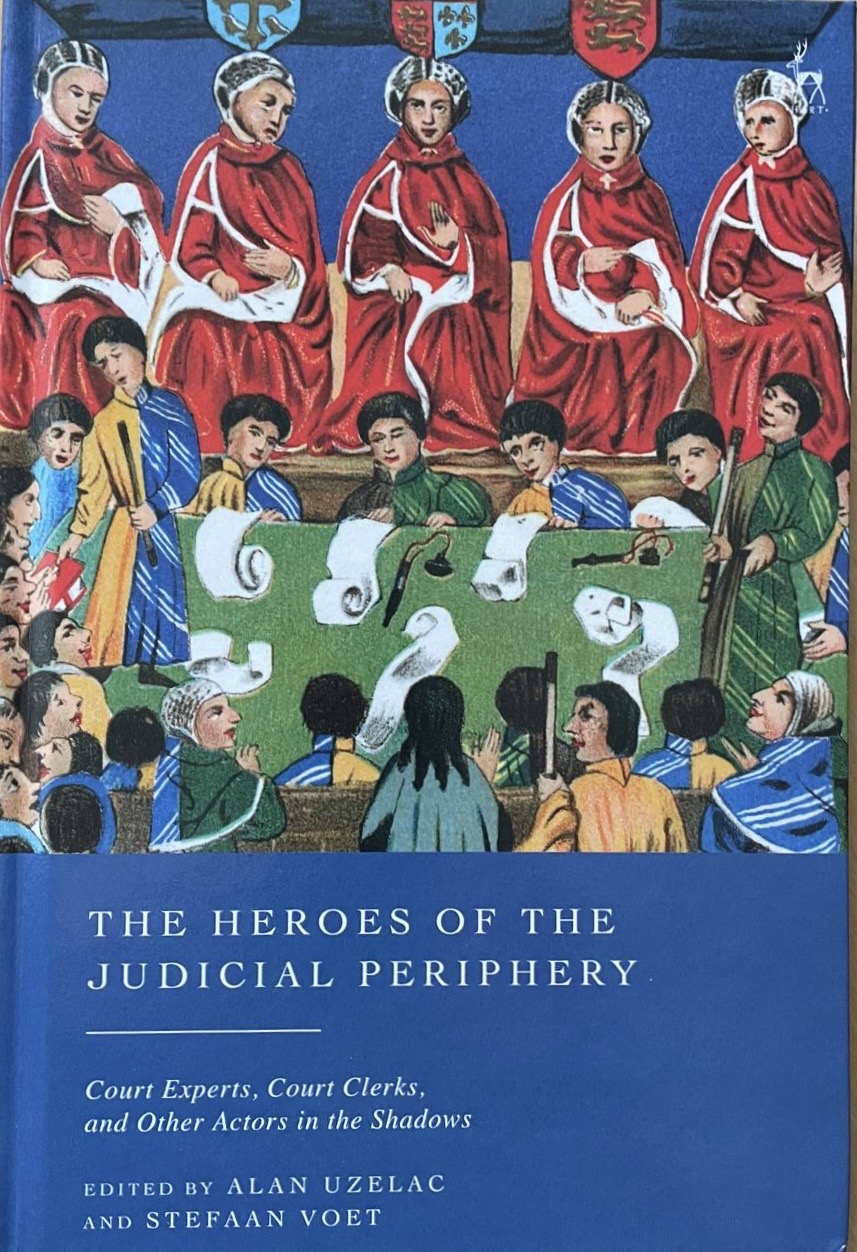 Last month the book The Heroes of the Judicial Periphery: Court Experts, Court Clerks, and Other Actors in the Shadows, edited by Alan Uzelac and Stefaan Voet (Hart/Bloomsbury Publising, 2025) was published. The book highlights the role of perhaps less prominent, but nevertheless important actors in (international) judicial procedures from a national, comparative and/or international perspective.
The European Civil Justice Centre (Erasmus School of Law) hosts a seminar in collaboration with the editors to launch the book on 4th July 2025 from 10-12 CEST.
Discussions on civil justice mostly focus on procedural rules, and the role of courts, parties and lawyers. This book addresses other actors that are often overlooked in academic and policy debates. It assesses the role of court experts, court clerks and court staff, and other actors on the ‘judicial periphery’ who play an important role and often co-determine the pace, outcome, and tone of the judicial process.
The knowledge and skills of experts may be indispensable at times, but it is among the most expensive, complicated and time-consuming means of evidence. The judges adjudicate, but where experts are involved in the process, they have a decisive impact on the outcome of litigation. Therefore, a principal focus of the book is on experts and how they are appointed, managed, and remunerated across Europe and the world.
The editors will discuss topical issues highlighting these ‘actors in the shadows’ and key experts will present their ideas based on the key findings of the book chapters, followed by discussion.
Registration for free here (hosted through Eventbrite)
Speakers & program:
10.00 Opening and welcome: Xandra Kramer
10.05 Alan Uzelac & Stefaan Voet – Heroes of the Judicial Periphery
10.15 Juraj Brozovic – The Case of Judicial Advisors in Croatia
10.30 Camilla Bernt – Expert Evidence in Custody Disputes and Child Protection Cases
10.50 Discussion
11.05 Michael Stürner – Experts on Foreign Law in German Civil Procedure
11.30 Adriani Dori & Xandra Kramer – The Role of Third-Party Funders in the Shadow of the Procedure
11.45 Discussion
Book on The New Relationship between the United Kingdom and the European Union
A book on The New Relationship between the United Kingdom and the European Union was recently published. The book is edited by Dr. Emmanuel Guinchard (Liverpool John Moores University) and Prof. Carlo Panara (University of Leicester) and may be accessed here.
Overview
- Covers the whole spectrum of the new relationship between the UK and the EU
- Contains original discussion and evaluations of the impact of Brexit on UK sovereignty
- Includes both topics covered in the recent agreements and topics that have been left in a grey area
Commission Report and Staff Working Document on Brussels I recast
Today the European Commission published its eagerly awaited Commission Report on the application of the Brussels Ia Regulation (also referred to as Brussels I-bis), No 1215/2012 on jurisdiction and the recognition and enforcement of judgments in civil and commercial matters (recast). The Report is accompanied by a Staff Working Document, detailing a number of selected topics addressed in the Report. The documents rely in particular on the extensive Evaluation Study that was published in January 2023 as well as the findings of the JUDGTRUST project and the resulting book. Read more