


Views
United Kingdom Supreme Court confirms that consequential loss satisfies the tort gateway for service out of the jurisdiction
This post is written by Joshua Folkard, Barrister at Twenty Essex.
In FS Cairo (Nile Plaza) LLC v Lady Brownlie [2021] UKSC 45 (“Brownlie II”), the Supreme Court held as a matter of ratio by a 4:1 majority that consequential loss satisfies the ‘tort gateway’ in Practice Direction (“PD”) 6B, para. 3.1(9)(a).
Background
PD 6B, para. 3.1(9)(a) provides that tort claims can be served out of the jurisdiction of England & Wales where “damage was sustained, or will be sustained, within the jurisdiction”. Brownlie concerned a car accident during a family holiday to Egypt, which tragically claimed the lives of Sir Ian Brownlie (Chichele Professor of Public International Law at the University of Oxford) and his daughter Rebecca: at [1], [10] & [91]. On her return to England, however, Lady Brownlie suffered consequential losses including bereavement and loss of dependency in this jurisdiction: at [83].
The question whether mere consequential loss satisfies the tort gateway had been considered before by the Supreme Court in the very same case: Brownlie v Four Seasons [2017] UKSC 80; [2018] 2 All ER 91 (“Brownlie I”). By a 3:2 majority expressed “entirely obiter” (Brownlie II, at [45]) the Court had answered affirmatively: [48]-[55] (Baroness Hale), [56] (Lord Wilson) & [68]-[69] (Lord Clarke). However, the obiter nature of that holding combined with a forceful dissent from Lord Sumption (see [23]-[31]) had served to prolong uncertainty on this point.
Majority’s reasoning
When asked the same question again, however, a differently-constituted majority of the same Court gave the same answer. Lord Lloyd-Jones (with whom Lords Reed, Briggs, and Burrows agreed: see [5] & [7])) concluded that there was “no justification in principle or in practice, for limiting ‘damage’ in paragraph 3.1(9)(a) to damage which is necessary to complete a cause of action in tort or, indeed, for according any special significance to a place simply because it was where the cause of action was completed”: at [49]. The ‘consequential’ losses suffered in England were accordingly sufficient to ground English jurisdiction for the tort claims.
Three main reasons were given. First, Lord Lloyd-Jones held that there had been no “assimilation” of the tests at common law and under the Brussels Convention/Regulation, which would have been “totally inappropriate” given the “fundamental differences between the two systems”: at [54]-[55]. Second, his Lordship pointed to what he described as an “impressive and coherent line” of (mostly first-instance) authority to the same effect: at [64]. Third, it was said that the “safety valve” of forum conveniens meant that there was “no need to adopt an unnaturally restrictive reading of the domestic gateways”: at [77].
Economic torts?
What is now the position as regards pure economic loss cases? Although Lord Lloyd-Jones concluded that the term “damage” in PD 6B, para. 3.1(9)(a) “simply refers to actionable harm, direct or indirect, caused by the wrongful act alleged” (at [81]), his Lordship expressly stated that:
- “I would certainly not disagree with the proposition, supported by the economic loss cases, that to hold that the mere fact of any economic loss, however remote, felt by a claimant where he or she lives or, if a corporation, where it has its business seat would be an unsatisfactory basis for the exercise of jurisdiction”: at [76].
- “The nature of pure economic loss creates a need for constraints on the legal consequences of remote effects and can give rise to complex and difficult issues as to where the damage was suffered, calling for a careful analysis of transactions. As a result, the more remote economic repercussions of the causative event will not found jurisdiction”: at [75].
The status of previous decisions on the meaning of PD 6B, para. 3.1(9)(a) in economic tort cases appears to have been called into doubt by Brownlie II because (as noted by Lord Leggatt, dissenting: at [189]) those decisions had relied upon an “inference” that PD 6B, para. 3.1(9)(a) should be interpreted consistently with the Brussels Convention/Regulation. That approach was, however, rejected by both the majority and minority of the Supreme Court: at [74] & [189]. It therefore appears likely that the application of Brownlie II to economic torts will be the subject of significant future litigation.
Which law governs disputes involving corporations?
Guest post by Dr Sagi Peari, Senior Lecturer/Associate Professor at the University of Western Australia
When it comes to the question of the applicable law that governs disputes involving corporations: one must make a sharp distinction between two principal matters: (1) matters relating to external interactions of corporation (such as disputes between a corporation and other external actors, such as other business entities or individuals); and (2) matters relating to the internal interactions of a corporation (such as disputes within the corporate structure or litigation between a corporation and its directors). A claim of a corporation against another in relation to a breach of contract between the two is an example of a dispute related to external affairs of a corporation. A claim of a corporate shareholder against a director in the firm is an example of a dispute concerning corporate internal affairs.
The division between external and internal affairs of corporation is an important one for the question of applicable law. A review of the case law suggests a strong tendency of the courts to apply the same choice-of-law rules applicable to private individuals. Thus, the general rule of the place of tort applies equally to corporations and private individuals.[1] In similar, the advancing principle of party autonomy[2] does not distinguish between corporations and other litigants on its operational level. The very fact that litigation involves a corporation does not seem prima facie to affect the identity of the applicable law rules.
The situation becomes dramatically different in cases concerning the internal affairs of a corporation. These are the situations involving claims between the corporate actors (i.e. executives, shareholders and directors) and claims between those actors and the corporation itself. Here, different considerations seem to apply. First, internal affairs of corporations tend to be excluded by the various international statutes aiming to harmonise the applicable law rules.[3] Second, there is a clear tendency of the rules to adhere to a single connecting factor (such as the place of incorporation or corporate headquarters with some further constitutional implications[4]) to determine the question of the applicable law. Thirdly, there is a clear tendency of rejecting the party autonomy principle in this sphere according to which corporate actors are not free to determine the applicable law to govern their dispute.[5]
One of the neglected frameworks for addressing the external/internal affairs distinction relates to the classical corporate law theory on the nature of corporations and the relationships within the corporate structure. Thus, the classical vision of corporations perceives a corporation as an artificial entity that places the state at the very centre of the corporate creation, existence and activity.[6] Another, perhaps contradictory vision, challenges the artificial nature of corporation. It views corporation as an independent moral actor what dissects its existence from the originating act of incorporation.[7] Lastly, the third vision of corporation evaluates the corporate existence from the internal point of view by focusing on the bundle/nexus of contracts within the corporate structure.[8]
One could argue that an exercise of tackling the various theories of corporations could provide an invaluable tool for a better understanding of the internal/external division and subsequently shed light on the question of applicable law rules. Thus, for example, the traditional insistence of choice-of-law to equalise between corporations and private individuals seems to correlate with the ‘personality’ vision of corporation. On a related note, the insistence of the choice-of-law doctrine on a single connecting factor that denies party autonomy seems to be at odds with the nexus-contract theory and aligns with the traditional artificial entity theory of the corporation.
From this perspective, placing this question within the conceptual framework of corporate law could enable us to grasp the paradigmatic nature of the division and contemplate on whether the various suggestions for reform in the area of choice-of-law rules applicable to corporations do not just correlate with the underlying concerns and rationales of private international law/conflict of laws, but also those of corporate law.
I have tackled these (and other) matters in my recent article published in the 45 (3) Delaware Journal of Corporate Law 469-530 (2021) https://papers.ssrn.com/sol3/papers.cfm?abstract_id=3905751.
[1] See eg Regulation 864/2007, on the Law Applicable to Non-Contractual Obligations (Rome II), 2007 O.J. (L 199) 40 (EC), art 4 (1).
[2] See eg Hague Principles on Choice of Law in International Commercial Contracts, 2015.
[3] See eg Regulation 864/2007, on the Law Applicable to Non-Contractual Obligations (Rome II), 2007 O.J. (L 199) 40 (EC), art 1 (2) (f).
[4] See eg Case C-212/97, Centros Ltd. v. Erhvervs-og Selskabsstyrelsen, 1999 E.C.R. I-1459, 2 C.M.L.R. 551 (1999).
[5] See eg Hague Principles, Commentaries, 1.27-1.29.
[6] See eg Dartmauth College v Woodward 17 U.S. 518, 636 (1819)
[7] See eg Peter A French, ‘Responsibility and the Moral Role of Corporate Entities’, in Business as Humanity (Thomas J Donaldson and RE Freeman eds, 1994) 90.
[8] Of course, the distinction between the above-mentioned three theories is not sharp and variations and overlaps have been suggested over the years in the corporate law literature.
Forum Selection Clauses, Afghanistan, and the United States
One Afghanistan-based company sues another in commercial court in Afghanistan. The plaintiff wins at trial. The Afghanistan Supreme Court reverses. It orders the parties to resolve their dispute in the United States. The plaintiff files suit in the United States. Chaos ensues.
This may sound like an unlikely scenario. It is, however, a concise description of the facts presented in Nawai Wardak Transportation Co. v. RMA Grp. Afghanistan Ltd, No. 350393 (Mich. Ct. App. 2021). This case is noteworthy for a number of reasons. It offers insights into best drafting practices for choice-of-court clauses. It illustrates how U.S. courts decide whether these clauses should be enforced. And it suggests that the Afghanistan Supreme Court takes the principle of party autonomy pretty seriously.
In July 2012, the United States Agency for International Development (“USAID”) contracted with Aircraft Charter Solutions (“ACS”) to perform aircraft flight operations out of Kabul International Airport in Afghanistan. ACS entered into a contract with RMA Afghanistan (“RMA”), an Afghanistan-based company, to supply fuel to locations throughout Afghanistan. RMA, in turn, entered into a contract with Nawai Wardak Transportation Company (“NWTC”), another Afghanistan-based company, to supply fuel in support of the contract between USAID and ACS. The contract between RMA and NWTC contained the following provision:
The parties irrevocably agree that the courts of the United States of America shall have exclusive jurisdiction to settle any dispute or claim that arises out of or in connection with this Agreement or its subject matter or formation (including non-contractual disputes or claims).
Roughly a year after the RMA-NWTC contract was signed, a dispute arose. NWTC demanded payment. RMA refused. NWTC brought a suit against RMA in commercial court in Afghanistan and won a judgment. The Supreme Court of Afghanistan reversed the judgment of the lower court. It concluded that the case should have been dismissed because the parties had previously agreed in their choice-of-court clause to litigate all disputes in the United States.
Undeterred, NWTC filed suit against RMA in state court in Michigan. RMA immediately moved to dismiss the Michigan lawsuit on the grounds that the state court lacked personal jurisdiction over it. It argued that it had only consented to suit in federal court via the choice-of-court clause. It pointed out that that clause referred to the courts “of” the United States of America. It then argued that this language necessarily excluded state courts because these courts were only “of” the State of Michigan. They were not courts of the United States as a whole.
NWTC responded to this argument by pointing out that the case could not be heard in federal court because those courts lacked subject-matter jurisdiction on the facts presented. If the clause were interpreted the manner suggested by RMA, the plaintiff contended, then the choice-of-court clause would be rendered a nullity because no court in the United States could hear the claim and it would be deprived of a remedy altogether.
The state trial court in Michigan ruled in favor of RMA and dismissed the case. This decision was then appealed to the Court of Appeals of Michigan. That court acknowledged that “the dictionary definition of ‘of’ supports that, while Michigan courts may be in the United States, they are not of the United States.” The court then went on to conclude, however, that dictionary definitions are not conclusive:
We are not constrained to follow dictionary definitions when interpreting a contract, and the effect of interpreting the forum-selection clause to refer exclusively to federal courts is to deprive both parties of a forum in which to resolve their contract disputes. In other words, for either party to have had a legal remedy for the other party’s failure to perform under the subcontract, the parties must have intended “courts of the United States of America” as a geographical designation encompassing both federal and state courts. Any other reading of the forum-selection clause would render it nugatory, which is to be avoided when interpreting contracts.
The court of appeals then considered the defendant’s argument that if the clause was interpreted to refer to any state court in the United States, it would become so “overbroad and so lacking in specificity” that “enforcing it would be unreasonable and unjust.” The court held that this argument had not been fully developed in the proceedings below. Accordingly, it remanded the case for further consideration by the lower court.
This case presents a number of interesting issues relating to choice-of-court clauses. The first has to do with contract drafting. As a matter of best practice, it is better to name a specific U.S. state in which a suit must be brought rather than the United States as a whole. If the clause selects the nation as a whole, however, it is better to select the courts “in” in the United States rather than courts “of” the United States to make clear that the suit may be brought in either state or federal court.
The second issue relates to clause enforcement. U.S. courts routinely decline to give effect to choice-of-court clauses selecting courts that lack subject-matter jurisdiction to hear the dispute. If the chosen forum lacks the power to resolve the case, these courts reason, the parties may sue wherever they want. The Court of Appeals of Michigan recognized this fact and rightly rejected the defendant’s arguments that would have produced a contrary result.
The third issue relates to the need for specificity in identifying the chosen forum. Under ordinary circumstances, a clause selecting the courts of “any” U.S. state would not be enforceable because it does not clearly identify where the suit may proceed. In the unique facts presented in the case described above, however, the lack-of-specificity argument is unlikely to carry the day because, if accepted, it would result in no court being able to hear the dispute.
Finally, it is important to note that the State of Michigan has adopted a statute that clearly spells out when its courts should and should not give effect to choice-of-court clauses. This is unusual. Only three other U.S. states—Nebraska, New Hampshire, and North Dakota—have adopted similar statutes based on the Model Choice of Forum Act. Judges in the remaining U.S. states apply judge-made common law to decide the issue of enforceability. The Michigan approach has a lot of recommend to it because it provides a clear, concise, and unchanging set of factors for the courts to consider when analyzing this issue.
News
Workshop on Addressing Conflict of Laws and Facilitating Digital Product Passports
UN/CEFACT would like to invite you to attend: The 5th Working Group Meeting on Addressing Conflict of Laws and Facilitating Digital Product Passports in Cross-Border Value Chain: –19 Mar 7-8:00 pm (Sydney Time), Dr. Fabian Sack, Sydney University (Zoom): Life cycle assessment For the zoom link and previous meeting minutes, please refer to the project […]
The Elgar Companion to UNIDROIT: Virtual Book launch
Co-edited by Ben Köhler, Rishi Gulati and Thomas John, the Elgar Companion to UNCITRAL is now out. This is the third and final in the trilogy of books on the three key international institutions mandated to work on private international and international private law. The Elgar Companions to the HCCH and to UNCITRAL have already been published in 2020 and 2023 respectively.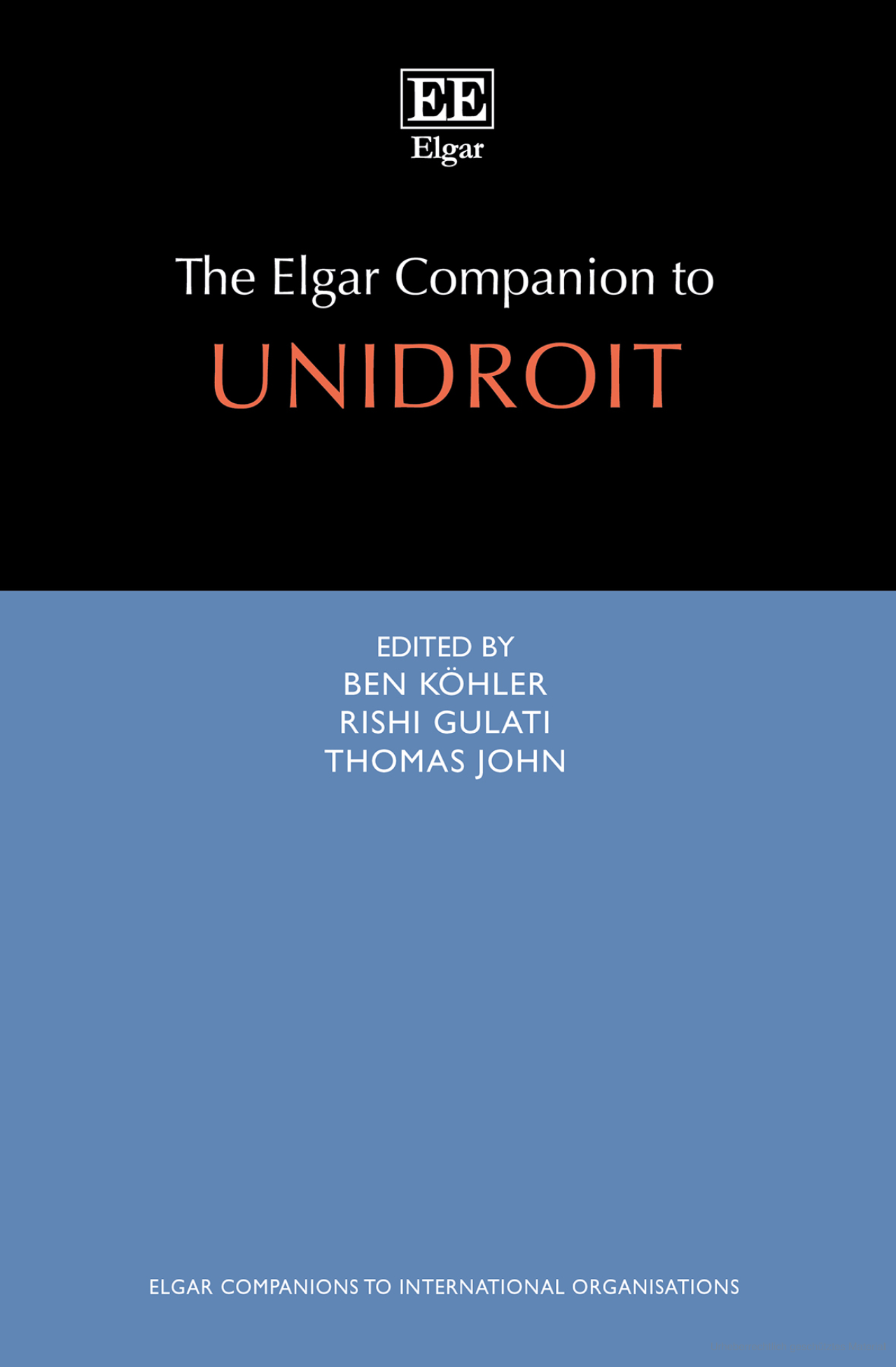
The Elgar Companion to UNIDROIT brings together a diverse selection of contributors from a variety of legal backgrounds to present the past, present and future prospects of UNIDROIT’s instruments (for more information: link).
The book will be virtually launched by the President of UNIDROIT, Professor Dr. Maria Chiara Malaguti, on 17 January 2025 at 13:00 CET. The launch event will also include a presentation by Professor Dr. Dr. h.c. Dr. h.c. Herbert Kronke, who will speak on the topic of “UNIDROIT and the EU”. The event will be held via zoom.
To register, please send an email to ben.koehler@uni-bayreuth.de
Netherlands Commercial Court updates its rules of procedure
 The Netherlands Commercial Court (NCC) has recently updated its rules of procedure. The updated version has come into force on January 1, 2025.