


Jurisdiction over Meta Inc. in Kenyan Courts – Three Ongoing Lawsuits
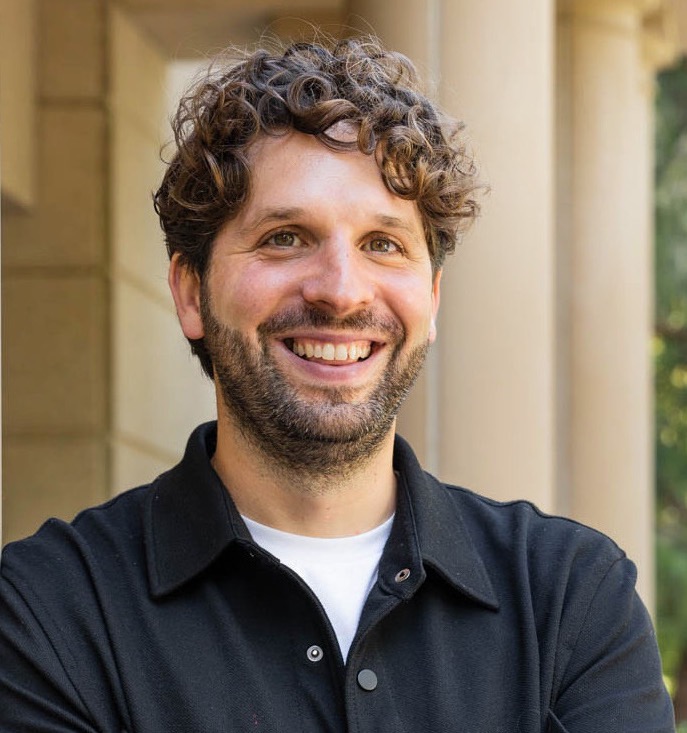 by Toussaint Nothias, NYU
This post provides a brief overview of three lawsuits currently ongoing in Kenya against Meta Inc. It is based on remarks delivered during the Decolonial+Digital Law conference at the University of Montreal (26 March 2026).
The whistleblower case (Motaung v Samasource Kenya EPZ Limited t/a Sama & 2 others)
The first lawsuit is brought by the South African Daniel Motaung – a former content moderator for a company called Sama, which Meta had sub-contracted to establish its first content review center in sub-Saharan Africa in Nairobi, Kenya. The lawsuit alleges human trafficking and unreasonable work conditions, including irregular pay, inadequate mental health support, union busting, and violations of workers’ privacy and dignity. With the support of a legal team in Kenya – Nzili and Sumbi Advocates – and a UK-based nonprofit specializing in Big Tech accountability – Foxglove –, Motaung filed the lawsuit in May 2022 against Meta and its subcontractor Sama.
In a court hearing one month later, lawyers for Facebook and Sama called for a gag order on Motaung, arguing that his speaking to the press risked prejudicing the case. In response, Motaung received the support of some 80 nonprofit organizations, including anchor organizations in the human rights and digital rights space.
At the heart of the grievances is a call for much more robust mental health support for content moderators. Practically, this would imply providing similar support to Kenyan employees as Facebook offers employees in other countries.
The first step for the Kenyan Employment and Labour Relations court was to rule on whether Facebook could be sued in Kenya. In its submission to the court, the company argued that being incorporated in the US and Ireland, it falls outside the court’s jurisdiction. However, in February 2023, Justice Jacob Gakeri ruled against removing Meta Platforms Inc (US) and Meta Platforms Ireland LTD from the case. Part of the argument used by Motaung’s legal team that convinced the judge was that Meta has extensive operations in Kenya: “they have offered their products (Facebook, Instagram, WhatsApp, Market place, Facebook pay) to the public for commercial gain within the jurisdiction of this court,” and they “draw revenue from use of their products in Kenya from advertising on the various platforms”.[1] The employment contract may have been primarily between Motaung and Samasource. However, since Samasource is a subcontractor to Meta, Motaung’s team successfully argued that Meta was a party to the employment contract.
Meta challenged this ruling, arguing that the company was not carrying business in Kenya. This statement obviously contradicts the experiences of millions of Meta product users in Kenya. Nevertheless, this argument reveals how the lack of formal registration in a country allows tech companies to dematerialize themselves, being both fully present and strategically absent. One of the main goals of Meta challenging this decision was essentially to stall, leadingto a year-long process of technical legal exchanges around the admissibility status and notarization processes. In January 2024, Justice Gakeri came out with a response to Meta’s challenge: “The petitioner has demonstrated that this is a proper case for the grant of leave for service out of Kenya”[2]. In other words, this decision allowed Motaung and his team to serve Meta in the US and Ireland.
The content moderators case (Motaung v Samasource Kenya Epz Ltd t/a Sama & 2 others)
While Motaung’s lawsuit progressed, Meta decided in January 2023 to close its East African content moderation hub, run by Sama, resulting in the loss of over 200 staff positions and leaving many employees without work permits. In March 2023, 183 content moderators filed a lawsuit alleging unfair dismissal and discriminatory hiring practices. The workers argued that Meta had directed their new subcontractor for content moderation, Majorel, not to hire former Sama content moderators. The lawsuit was supported by the same team, comprising the UK-based Foxglove and the Kenyan law firm Nzili and Sumbi Advocates.
Again, Meta argued that it could not be sued because it was not based in Kenya and because Meta does not directly employ its moderators. And again, a judge from the Employment and Labor Relations court ruled against this, holding Meta to be the “true employer” of the content moderators, in part because the moderators used proprietary Facebook software to review content.
As the case progressed, the court ruled that Sama should continue to pay moderators and stop redundancies and that Facebook should provide “medical, psychiatric, and psychological care for Facebook content moderators”.[3] Under both legal and public pressure, Meta agreed in August 2023 to enter mediation to settle the dispute with the moderators confidentially, with Kenya’s former Chief Justice, Willy Mutunga, slated to mediate the process. Meta had 21 days to settle, but the mediation failed. According to lead attorney Mercy Mutemi, this proved to be yet another way to stall. She stated: “The respondents were buying time and not being genuine. We kept waiting for them to participate…only for them to keep asking for an extension of time and then come back every time to refuse to take accountability”. The case went back to the court. The plaintiffs asked the court to hold Meta in contempt, a request that, in December 2023, the court refused to grant.[4]
In September 2024, the Kenyan Court of Appeal dealt a significant blow to Meta on both the whistleblower and content moderators cases. The appellate judges turned down Meta’s appeal to prevent the moderators from pursuing their claim against the company. The judges found “it was proper and within the jurisdiction of the Employment and Labor Relations Court (ELRC) to intervene”. In other words, both cases had jurisdiction to continue to trial in Kenya.
The hateful content victims case (Arendse & 182 others v Meta Platforms, Inc & 3 others)
In the third lawsuit, the plaintiffs argued that Facebook actively fueled ethnic violence in Ethiopia’s civil war by amplifying hateful and dangerous content, then not moderating that content fast enough, or sometimes at all.
Whereas the first two lawsuits were filed in Kenya’s Employment and Labor Relations Court, this lawsuit was filed in Kenya’s High Court. This court has jurisdiction over fundamental rights and freedom. The petitioners include a Kenyan human rights group (Katiba Institute) and two Ethiopian researchers, Abraham Meare and Fisseha Tekle. Fisseha previously worked as a researcher for Amnesty International; he received death threats on Facebook after authoring an independent report on violence committed by all sides during the Tigray conflict. In addition to these petitioners, the case also listed major human rights organizations as interested parties, including Amnesty International, Article 19, the Kenyan Human Rights Commission, and Global Witness.
The lawyer leading the case was, again, Mercy Mutemi from Nzili and Sumbi advocates with support from Foxglove. Their request, so to speak, is for Facebook to prevent and demote viral hateful content, employ sufficient competent content moderators with the necessary linguistic skills and socio-cultural understanding, and, most importantly, create a restitution fund of 1.6 billion for the victims of hateful online content. This lawsuit was filed in December 2022, a few months after Motaung filed his and a few months before the content moderators. In April 2023, unable to determine a location in Kenya for Meta, the Kenyan court allowed the petitioners to serve the company in California.
As the case progressed in the Kenyan court, several publications came out, providing further support for the core grievances at the heart of the case. In September 2023, the United Nations Human Rights Council expressed concerns over the prevalence of incitement to violence on social media, though without mentioning Facebook specifically. In October 2023, Amnesty International published a report titled “Meta’s Contribution to Human Rights Abuses in Northern Ethiopia”, which called on the company to compensate victims of Ethiopia’s Tigray conflict. That same month, the internal Facebook documents leaked by whistleblower Frances Haugen became publicly available through the website fbarchive.org. In her testimony to the US Congress two years earlier, Haugen stated that “Facebook is fueling ethnic violence in Ethiopia’s civil war” and argued that her documents revealed that the company did little to stop the spread of the violence. Unsurprisingly, Meta reiterated its argument that the case couldn’t be heard in Kenya. In April 2025, the Kenyan High Court rejected this argument. Like the two other cases, the case can now proceed to trial in Kenya.
[1] Motaung v Samasource Kenya EPZ Limited t/a Sama & 2 others (Petition E071 of 2022) [2023] KEELRC 320 (KLR) (6 February 2023) (Ruling)
[2] Motaung v Samasource Kenya Epz Ltd t/a Sama & 2 others; Kenya National Human Rights and Equality Commission & 9 others (Interested Parties) (Petition E071 of 2022) [2024] KEELRC 7 (KLR) (23 January 2024) (Ruling)
[3] June 2, 2023 interim orders by Justice Byram Ongaya.
[4] Arendse & 182 others v Meta Platforms, Inc & 3 others; Kenya Human Rights Commission & 8 others
(Interested Parties) (Constitutional Petition E052 of 2023) [2023] KEELRC 3381 (KLR) (7 December 2023) (Ruling)