
European Parliament Legislative Resolution on Rome II


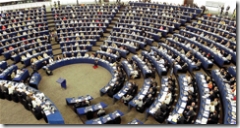 As we reported recently, the Committee on Legal Affairs’ Recommendation (see our summary here) for the European Parliament’s second reading of the proposed regulation on the law applicable to non-contractual obligations (“Rome II“) was due for adoption in plenary session today.
And adopt it they did. Most of the (controversial) amendments recommended by JURI in their draft report have been approved by the European Parliament. Here is a short summary of the European Parliament’s key amendments to the Council’s Common Position:
- the rules on violations of privacy and rights relating to the personality (Recital 25a and Article 7a) have been retained, which identifies the country where the most significant element(s) occur as:
the country to which the publication or broadcasting service is principally directed or, if this is not apparent, the country in which editorial control is exercised, and that country’s law should be applicable. The country to which a publication or broadcast is directed should be determined in particular by the language of the publication or broadcast or by sales or audience size in a given country as a proportion of total sales or audience size or by a combination of those factors. Similar considerations should apply in respect of publication via the Internet or other electronic networks.
- Recital 29(a) and Article 21a, on quantifying damages, are retained:
It is appropriate to make it clear that, in quantifying damages in personal injury cases, the court seised should apply the principle of restitutio in integrum having regard to the victim’s actual circumstances in his country of habitual residence. This should include, in particular, the actual cost of after-care and medical attention.
- Article 6, on unfair competition and acts restricting free competition, is deleted
- the seemingly procedural rules on the pleading and proof of foreign law have been kept, albeit in slightly more flexible form:
Any litigant making a claim or counterclaim before a national court or tribunal which falls within the scope of this Regulation may give consideration to any issues of applicable law raised by his claim or counterclaim and accordingly where appropriate notify the court or tribunal and any other parties of the law or laws which that litigant maintains are applicable to all or any parts of his claim (Recital 29b).
As in the Rome Convention, the principle of ‘iura novit curia’ applies. The court itself should of its own motion establish the foreign law. For the purposes of establishing the foreign law the parties should be permitted to assist the court and the court should also be able to ask the parties to provide assistance (Recital 30a).
The accompanying articles from the original draft report, however, have been removed (Articles 15a and 15b), and it is therefore somewhat unclear what the inclusion of the recitals only is meant to signify. Numerous minor amendments suggested by JURI were, in the event, rejected by the European Parliament. Details of the votes in plenary session, amendment by amendment, can be found here. You can find all of the proposed amendments to the Common Position of the Council by the European Parliament in this document, on pages 45-53.
A new draft of Rome II, based upon the results of today’s discussion and votes, will almost certainly make its way to a Conciliation Committee. That Committee, it would seem, have an awful lot of work to do if Rome II is going to be acceptable to the Council and, ultimately, the Member States.
Update: Diana Wallis MEP, Rapporteur for Rome II, has posted this on her website:
The European Parliament adopted the second reading report with an overwhelming majority on Thursday 18 January. MEPs have decided again to underline their support for the original first reading position, again putting back in the Articles relating to defamation and road traffic accidents which had been excluded in the Member States Common Position. There will almost certainly have to be a conciliation process to iron out the final difficulties between the European law-making institutions.
Many thanks to Giorgio Buono, University of Rome “La Sapienza”, for his initial tip-off and for hunting down some of the documents referred to above.