


Views
A few takeaways from the Conclusions & Decisions of the HCCH governing body (CGAP – 2026 meeting): parentage/surrogacy, jurisdiction project, cross-border recognition and enforcement of protection orders and a Note on the Trusts Convention
This week the Conclusions & Decisions (C&D) of the HCCH governing body, the Council on General Affairs and Policy (CGAP or Council), were published. Click the links below for the relevant language versions (English, French and Spanish).
Although a wide range of topics were discussed, I would like to focus on four items: parentage/surrogacy project, the cross-border recognition and enforcement of protection orders, the jurisdiction project and a Note on the Trusts Convention.
In my view, the C&D are significant for two reasons. First, the work related to a possible new instrument of a long-standing topic at the HCCH has been concluded (without a Convention) and secondly, a “new” topic has been inserted into the agenda of the HCCH. For more information, see below. Read more
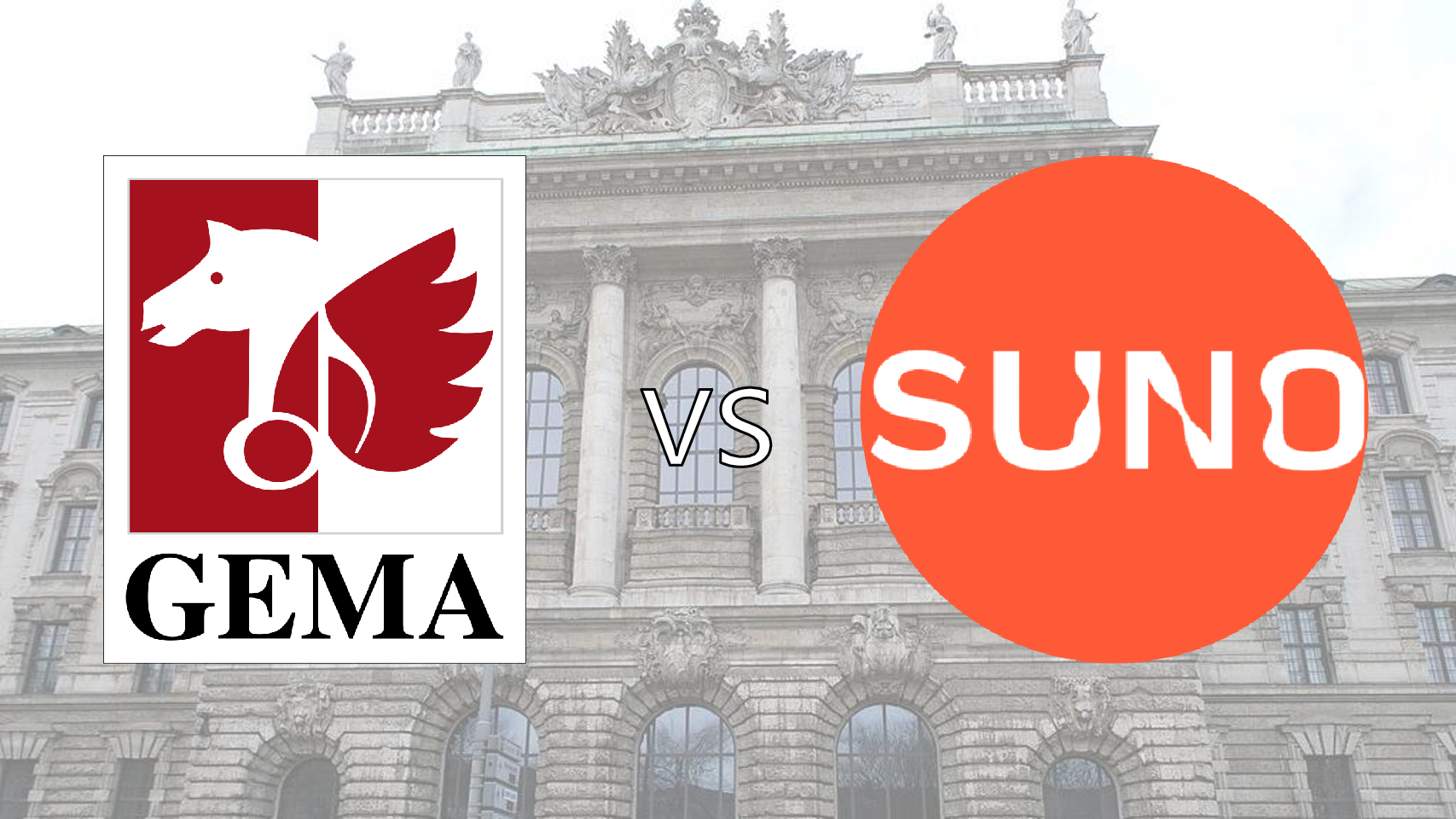
Muscles from Munich? How German Courts Might Stop US Companies from Violating Copyright through AI Training
Yesterday, the Regional Court of Munich (Landgericht München I) held a highly interesting oral hearing in a dispute brought by GEMA, a German collecting society representing composers, and Suno, a generative music AI company based in Cambridge, MA. The hearing was noteworthy, first, because it gave the public an opportunity to listen to numerous international hits, from Alphaville’s Forever Young to Lou Bega’s Mambo No. 5 (and their alleged copies created by Suno) in a courtroom; and secondly, because the dispute raises some interesting questions of private international law.
After GEMA had already scored a famous victory against OpenAI in November 2025, when the same chamber of the Munich Court had held that the company had been violating the copyrights of several artists and composers by reproducing their song texts, the present proceedings differed not just in scope (focusing on the musical arrangement rather than texts) but also in its international dimension. For the first time, the claimant explicitly included the use of the protected works for training that had happened (according to both parties) exclusively in the US.
German Federal Court of Justice on the Pegasus-Software Scandal: States do not have a general right of personality
This case note is kindly provided by Dr. Samuel Vuattoux-Bock, LL.M. (Kiel), Freiburg University (Germany)
On February 24, 2026, the German Federal Court of Justice ruled on the Kingdom of Morocco’s claim against the German news portal “Zeit Online” (Case no. VI ZR 415/23). In 2021, the journal alleged that Morocco had spied on several lawyers, journalists, and high-ranking politicians, including French President Emmanuel Macron, using the surveillance software “Pegasus”. Morocco denied the allegations and sued the publication for damages, claiming an infringement of its general right of personality. The Federal Court of Justice of Germany, the highest court for civil and criminal matters, rejected Morocco’s claim, arguing that states do not have such a right. This decision is interesting because it lies at the intersection of private international law, national tort law, and public international law. The following article aims to present the main points of this decision in terms of both its international and substantive aspects.
News
Praxis des Internationalen Privat- und Verfahrensrechts (IPRax) 4/2026: Abstracts
The latest issue of the „Praxis des Internationalen Privat- und Verfahrensrechts“ (IPRax) features the following articles:
Virtual Workshop (in English) on July 7, 2026: Christopher Whytock on “Conflict of Laws Through a Human Rights Lens”

On Tuesday, July 7, 2026, the Hamburg Max Planck Institute will host its monthly virtual workshop Current Research in Private International Law at 03:30 p.m. – 05:00 p.m. (CEST).
Christopher Whytock (University of California) will speak, in English, about the topic
“Conflict of Laws Through a Human Rights Lens”
The relationship between human rights and conflict of laws (private international law) is the subject of extensive scholarship in Europe, but almost entirely neglected in the United States. Inspired by European scholarship, this project attempts to extend human rights-oriented analysis to conflict of laws in the United States. It proposes a conceptual framework for understanding the relationship between human rights and conflict of laws in the abstract, applies the framework to conflict of laws in the United States, and offers comparative insights.
The presentation will be followed by open discussion. All are welcome. More information and sign-up here.
If you want to be invited to these events in the future, please write to veranstaltungen@mpipriv.de.
JLMI – Call for papers – Issue no. 2/2027
The following call for papers has kindly been shared with us by the editors of The Journal of Law, Market & Innovation (JLMI).
The Journal of Law, Market & Innovation (JLMI) welcomes submissions for its second issue of 2027.
The Call for Papers for this second issue is devoted to European Regulatory and Supervisory Bodies in the Digital Realm.
You can find the call with all the details at the following link:
A NEW CONSTELLATION OF EU STATE REGULATORY AND SUPERVISORY BODIES IN THE DIGITAL REALM
Prospective articles should be submitted in the form of full papers to submissions.jlmi@iuse.it within 1 December 2026. The publication of the issue is set for the end of July 2027.
For further information, or for consultation on a potential submission, you can contact us by email at editors.jlmi@iuse.it.
Visit our website to read the full announcement.