


Views
Declaration of the Institute of International Law on aggression in Ukraine
Yesterday (1 March 2022) the Institute of International Law approved a declaration on the aggression in Ukraine. The declaration is available by clicking the following links:
Declaration of the Institute of International Law on Aggression in Ukraine – 1 March 2022 (EN)-1
Déclaration de l’Institut de Droit international sur l’agression en Ukraine – 1 mars 2022 (FR)
The current developments in Ukraine and the measures and sanctions currently in place have undoubtedly an impact across all areas, including private international law. See for example the measures adopted by the European Union here.
I include an excerpt of the declaration below:
The Institute recalls that the ongoing military operations call ipso facto for the application of international humanitarian law, including the rules relating to occupation, as well as all the other rules applicable in times of armed conflict. It recalls also that persons responsible for international crimes as defined by international law may be prosecuted and sentenced in accordance with the law in force.
Faithful to its mission, the Institute remains convinced that, while international law alone cannot prevent the outbreak of violence, it must remain the compass by which States are guided, and it is more than ever determined to strengthen its work to promote “the progress of international law”. The Institute adds its voice to that of other actors in the international community, including the learned societies acting in defense of the rule of law, who call for an end to the war in Ukraine and the settlement in good faith of disputes between the States concerned through all appropriate means of peaceful settlement.
The Characterization and Applicable Law of Cultural Objects in Conflicts of Laws: Is a Mummy a Person or a Property?
by Zhen Chen, PhD researcher in the Department of Private International Law, University of Groningen, the Netherlands (ORCID ID: https://orcid.org/0000-0001-5323-4271)[1]
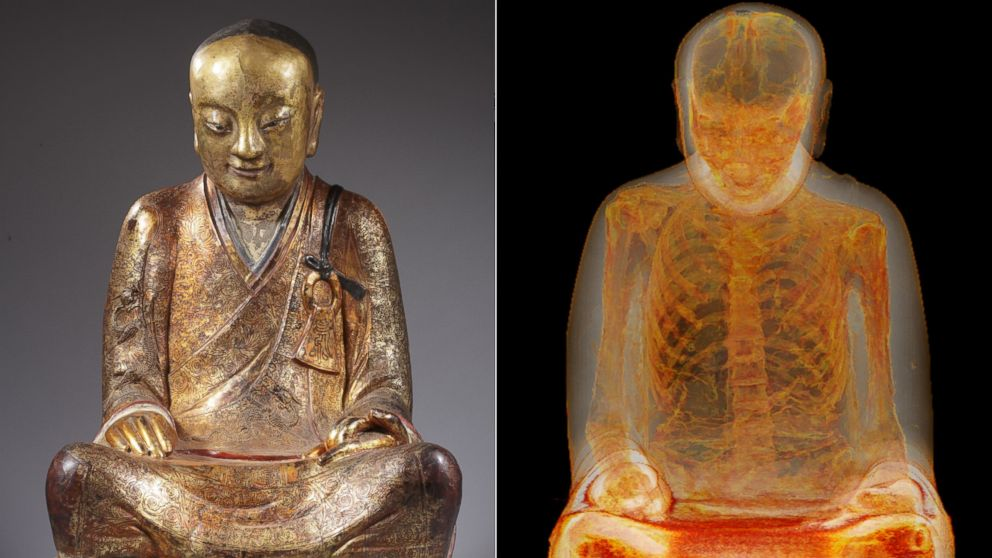
In Buddha Mummy Statue case, the Chinese village committees sued the Dutch defendants for the return of a stolen golden statue which contains a 1000-year old mummified buddhist. The parties had different opinions on the legal nature of the mummy contained in the statue. The Chinese court classified the statue as a cultural property and applied the choice of law over movable properties provided in Article 37 of Chinese Private International Law (lex rei sitae). Based on a comparative study, this article argues that a mummy does not fall within the traditional dichotomy between a person and a property. Instead, a mummy should be classified as a transitional existence between a person and a property. If the classification of a mummy has to be confined to the traditional dichotomy, a mummy can be regarded as a quasi-person, or a special kind of property. Following this new classification, a new choice of law rule should be established. In this regard, the Belgian Private International Law Act, which adopts the lex originis rule supplement by the lex rei sitae, is a forerunner. This article advocates that the adoption of the lex originis rule may help to stop the vicious circle of illegal possession and to facilitate the return of stolen cultural objects, especially those containing human remains, to their country of origin.
1. Gold or God?
As to the legal nature of the Buddha Mummy Statue in dispute, from the Chinese villagers’ perspective, the mummy contained in the golden statute is a person or God, instead of a property. Specifically, the mummified buddhist Master Zhanggong was their ancestor, who used to live in their village and has been worshipped as their spiritual and religious God for over 1000 years. Master Zhanggong was preserved in a statue moulded with gold to prevent decomposition and to maintain his immortality. The villagers celebrated Master Zhanggong’s birthday every year with feast, music and dance performance, which has become their collective memory and shared belief.
In contrast, from the Dutch art collector’ perspective, the golden statute containing a mummy is a property not a person. It is merely a cultural property with great economic value and worthy of collection or investment. Thus, it is not surprising that the Dutch collector asked for a compensation of 20 million Euro, of which the Chinese villagers whose annual income was around 1000 Euro could not afford it.
The Chinese village committees sued the Dutch art collector both in China and in the Netherlands. The Chinese village committees asserted that the mummified Master Zhanggong contained in the statue was a corpse within the meaning of the Dutch Liability Decree, and the ownership thereof was excluded under the Dutch law.[2] The claimants as the trustees or the agents had the right of disposal.[3] The Dutch art collector argued that the mummified monk contained in the golden statue was not a corpse, as the organs of the monk were missing. The Dutch court did not touch upon the issue of classification of the Buddha Mummy Statue, as the case was dismissed on the basis that the Chinese village committees had no legal standing nor legal personality in the legal proceedings.[4]
2. The lex situs under Article 37 Chinese Private International Law Act
The Chinese court classified the Buddha Mummy Statue as a cultural property and applied the law of the country where the theft occurred, namely Chinese law, by virtue of Article 37 Chinese Private International Law Act. Such classification is not satisfactory, as the mummy in dispute was essentially considered as a property. Chinese law was applied because the place of theft was in China and the lex situs was construed by the Chinese court as the lex furti. However, what if the mummy was stolen in a third country during the transportation or an exhibition? The lex furti does not necessarily happen to be the lex originis in all cases involving stolen cultural objects.
Moreover, cultural objects containing human remains are special in comparison with other cultural objects without, as human remains contain biological information of a person. The application of the traditional lex rei sitae rule to all cultural objects, including those containing human remains, is far from satisfactory. In general, the law on dead human bodies precedes over the sale of corpses, and no person, including a good faith purchaser can own somebody else’s corpse both in civil law and common law systems.[5] A corpse must not be downgraded to the status of a property.[6] The characterization of human remains as properties objectifies human remains and thus may violate human dignity.[7] Therefore, it is necessary to distinguish cultural objects containing human remains from other types of cultural objects. The question is how to draw a distinction and what is the legal nature of a cultural object containing human remains, such as a mummy. If a mummy does not fall within the scope of traditional category of a person nor a property, does it mean a new category need to be created? In this regard, the classification of the legal nature of a fertilized embryo in Shen v. Liu may be relevant,[8] since the judge addressed the issue by thinking out of the box and provided a new solution.
3. Is a Fertilized Embryo a Property or a Person?
Shen v. Liu was the first case in China that involved the ownership of frozen embryos. Specifically, Shen and Liu, who got married in 2010 and died in 2013 in a car accident, left four frozen fertilized embryos in a local hospital. The parents of Shen (Mr and Mrs Shen), sued the parents of Liu (Mr and Mrs Liu), who also lost their only child, claiming the inheritance of the four frozen fertilized embryos of the deceased young couple.[9] The local hospital where the embryos were preserved was a third party in this case.
3.1 A property, a special property, or ‘a transitional existence between person and property’?
The third party Gulou Hospital argued that the frozen embryos do not have the nature of a property. Since Mr. and Mrs. Shen had passed away, the expired embryos should be discarded. Neither the plaintiffs nor the defendants should inherit the embryos.[10] The first-instance court held that fertilized embryos had the potential to develop into life, and thus are special properties that contain biological characteristics of a future life. Unlike normal properties, fertilized embryos can not be the subject of succession, nor be bought or sold.[11]
Nevertheless, the appellate court took the view that embryos were ‘a transitional existence between people and properties’. Therefore, embryos have a higher moral status than non-living properties and deserve special respect and protection. The embryo ethically contains the genetic information of the two families and is closely related to the parents of the deceased couple. Emotionally speaking, the embryo carries personal rights and interests, such as the grief and spiritual comfort for the elderly. The court held that the supervision and disposal of the embryos by the parents from these two families was in line with human ethics and can also relieve the pain of bereavement for both parties.[12] Clearly, the court did not classify the fertilized embryos as people or properties. Instead, the embargo was considered as ‘a transitional existence between a person and a property’, since it is not biotic nor abiotic but a third type in-between.
3.2 A mummy as ‘a continuum between a person and a property’
With regard to the distinction between a person and a property, the judgment of Shen v. Liu shows that the Chinese court was not confined to the traditional dichotomy between a person and a property. The same should be applicable to mummies. Embryos and mummies have something in common, as they are two different kinds of life forms. Whereas the embryo in Shen v. Liu is the form of life which exists before the birth of a human being, the mummy in Buddha Mummy Statue case is another form of life which exists after the death of a human being.
Embryos and mummies, as the pre-birth transition and after-death extension of life forms of a human being, involve morality and ‘human dignity’.[13] Such transitional existence or continuum of life forms contains personal rights and interests for related parties, which may justify the adoption of a new classification. As a special form of life, embryos and mummies should not be considered as merely a property nor a person. The strict distinction between people and properties does not apply well in embryos and mummies. Instead, they should be regarded as ‘a transitional existence between a person and a property’ or ‘a continuum between a person and a property’. If it is not plausible to create a third type for the purpose of classification, they should be regarded, at least, as a quasi-person, or a special property with personal rights and interests. An embryo and a mummy cannot be owned by someone as a property. Rather, a person can be a custodian of an embryo and a mummy. This is also the reason why cultural objects containing human remains should be treated differently.
4. A New Classification Requires a New Choice of Law Rule
In order to distinguish cultural objects containing human remains from other cultural objects, or more generally to distinguish cultural properties from other properties in the field of private international law, a new choice of law rule needs to be established. In this regard, the 2004 Belgian Private International Law Act might be the forerunner and serve as a model for not only other EU countries but also non-EU countries.[14]
4.1 The lex originis overrides the lex situs
The traditional lex situs rule is based on the location of a property and does not take cultural property protection into consideration. Courts resolving cultural object disputes consistently fail to swiftly and fairly administer justice, and much of the blame can be put on the predominant lex situs rule.[15] The lex situs rule allows parties to choose more favorable countries and strongly weakens attempts to protect cultural objects.[16]
In Belgium, as a general rule, the restitution of illicitly-exported cultural objects is subject to the lex originis, rather than the lex rei sitae. Article 90 of 2004 Belgian Private International Law Act stipulated that if one object that has been recorded in a national list of cultural heritage is delivered outside this country in a way that against its law, the lawsuit filed in this country for the return of that particular object shall apply the law of the requesting country. This provision designates the law of the country of origin, also known as the lex originis rule. In comparison with the lex rei sitae or the lex furti rule, the lex originis rule is more favorable to the original owners
4.2 Facilitating the return of human remains to their country of origin
The establishment of a new choice of law rule for cultural relics containing human remains or cultural objects in general is in line with the national and international efforts of facilitating the return of stolen or illicitly cultural objects to their country of origin. Mummies exist not only in China, but also in many other countries, such as as Japan, Egypt, Germany, Hungary, USA, Russia, and Italy. The adoption of the lex originis rule could facilitate the return of stolen or illicitly exported cultural objects which contain human remains to their country of origin or culturally-affiliated place. This objective is shared in many international conventions and national legislations.
5. Concluding remarks
The mummy Master Zhanggong has not been returned to the Chinese village committees yet, since the Dutch defendants have lodged an appeal. This article argues that, in the light of the classification of frozen embryos in Shen v. Liu, mummies should be classified as ‘a transitional existence between a person and a property’. A new classification calls for a new choice of law rule. In this regard, the 2004 Belgian Private International Law Act might serve as a model, according to which the lex originis rule prevails over the traditional lex situs rule, unless the original owner chooses the application of the traditional lex situs or the lex originis rule does not provide protection to the good faith purchaser. The Chinese Private International Law should embrace such approach, since the application of the lex originis may facilitate the return of cultural relics, including but not limited to those containing human remains such as mummies, to their culturally affiliated community, ethnic or religious groups.
—
[1] This is a shortened version of the article published in the Chinese Journal of Comparative Law with open access https://doi.org/10.1093/cjcl/cxac006. Related blogposts are Buddha Mummy Statue case and Conflict of Laws of Cultural Property.
[2] Chinese Village Committees v. Oscar Van Overeem, ECLI:NL:RBAMS:2018:8919, point 3.1.
[3] Ibid.
[4] Ibid., point 4.2.5.
[5] J. Huang, ‘Protecting Non-indigenous Human Remains under Cultural Heritage Law’, 14 Chinese Journal of International Law 2015, p. 724.
[6] E.H. Ayau and H. Keeler, Injustice, Human Rights, and Intellectual Savagery, in Human Remains in Museums and Collections, DOI: https://doi.org/10.18452/19383, p. 91.
[7] Ibid.
[8] Mr and Mrs Shen v. Mr and Mrs Liu, Jiangsu Province Yixing Municipality People’s Court, (2013) Yi Min Chu Zi No 2729; Jiangsu Province Wuxi Municipality Intermediate People’s Court, (2014) Xi Min Zhong Zi No 01235.
[9] Ibid.
[10] Ibid. The third party also stated that after the embryos are taken out, the only way to keep the embryos alive is surrogacy, which is illegal in China, thus both parties have no right to dispose the embryos.
[11] Ibid. Since the first-instance court held that embryos cannot be transferred or inherited, the case was dismissed in accordance with Article 5 of the General Principle of Civil Law and Article 3 of the Inheritance Law of the PRC.
[12] Ibid. The appellate court analyzed that after the death of Shen and Liu, their parents were the only subjects and most-related parties that care about the fate of embryos. Thus, it was appropriate to rule that the parents of Shen and Liu have the right to supervise and dispose the embryos. However, such supervision and disposal should abide by the law, and must not violate public order and good morals nor infringe the interests of other people.
[13] While birth means a definite initiation into human society, death indicates a final termination of a natural person, which both involve the dignity of an individual human or even humankind. H.G. Koch, ‘The Legal Status of the Human Embryo’, in E. Hildt and D. Mieth (eds.), Vitro Fertilisation in the 1990s, Routledge 1998, p. 3.
[14] T. Szabados, ‘In Search of the Holy Grail of the Conflict of Laws of Cultural Property: Recent Trends in European Private International Law Codifications’, 27 International Journal of Cultural Property 2020, p. 335.
[15] D. Fincham, ‘How Adopting the Lex Originis Rule Can Impede the Flow of Illicit Cultural Property’, 32 Columbia Journal of Law & the Arts 2008, p.116.
[16] Ibid, p.130.
Pilar Jiménez Blanco on Cross-Border Matrimonial Property Regimes
Written by Pilar Jiménez Blanco about her book:
Pilar Jiménez Blanco, Regímenes económicos matrimoniales transfronterizos [Un estudio del Reglamento (UE) nº 2016/1103], Tirant lo Blanch, 2021, 407 p., ISBN 978-84-1355-876-9
The Regulation (EU) No 2016/1103 is the reference Regulation in matters of cross-border matrimonial property regimes. This book carries out an exhaustive analysis of the Regulation, overcoming its complexity and technical difficulties.
The book is divided in two parts. The first is related to the applicable law, including the legal matrimonial regime and the matrimonial property agreement and the scope of the applicable law. The second part is related to litigation, including the rules of jurisdiction and the system for the recognition of decisions. The study of the jurisdiction rules is ordered according to the type of litigation and the moment in which it arises, depending on whether the marriage is in force or has been dissolved by divorce or death. Three guiding principles of the Regulation are identified: 1) The need of coordination with the EU Regulations on family matters (divorce and maintenance) and succession. This coordination can be achieved through the choice of law by the spouses to ensure the application of the same law to divorce, to the liquidation of the matrimonial regime, to maintenance and even to agreements as to succession. In addition, a broad interpretation of “maintenance” that includes figures such as compensatory pension (known, for example, in Spanish law) allows that one of the spouses objects to the application of the law of the habitual residence of the creditor and the law of another State has a closer connection with the marriage, based on art. 5 of the 2007 Hague Protocol. In such a case, the governing law of the matrimonial property regime could be considered as the closest law.
In the field of international jurisdiction, the coordination between EU Regulations is intended to be ensured with exclusive jurisdiction by ancillary linked to succession proceedings or linked to matrimonial proceedings pending before the courts of other Member States. Although the ancillary jurisdiction of the proceedings on the matrimonial property regime with respect to maintenance claims is not foreseen, the possibility of accumulation of these claims is possible through a choice of court to the competent court to matrimonial matters.
2) The unitary treatment of the matrimonial property regime. The general rule is that only one law is applicable and only one court is competent to matrimonial property regimes, regardless of the location of the assets. The exceptions derived from the registry rules of the real estate situation and the effect to third parties are analysed.
3) The legal certainty and predictability. The general criterion is the immutability and stability of the matrimonial property regime, so that the connections are fixed at the beginning of married life and mobile conflict does not operate, as a rule. The changes allowed will always be without opposition from any spouse and safe from the rights of third parties. The commitment to legal certainty and predictability of the matrimonial property regime governing law prevails over the proximity current relationship of the spouses with another State law.
Related to applicable law, the following contents can be highlighted:
-The importance of choosing the governing law of the matrimonial property regime. The choice of law has undoubted advantages for the spouses to coordinate the law applicable to the matrimonial property regime with the competent courts and with the governing law of related issues related to divorce, maintenance and succession law. The choice of law is especially recommended if matrimonial property agreements are granted in case of spouses’ different nationalities and different habitual residence, since it avoids uncertainty in determining the law of the closest connection established in art. 26.1.c). Of particular importance is the question of form and consent in the choice of law, given the ambiguity of the Regulation on the need for this consent to be express.
-The interest in conclude matrimonial property agreements and, specially, the prenuptial agreements. Its initial validity requires checking the content of each agreement to verify which is the applicable law and which is included within the scope of the Regulation (EU) No 2016/1103. The enforceability of these agreements poses problems when new unforeseeable circumstances have appeared for the spouses, which will require an assessment of the effectiveness of the agreements in a global manner – not fragmented according to each agreement – to verify the minimum necessary protection of each spouse.
-The singularities of the scope of application of the governing matrimonial property regime law. The issues included in the governing law require prior consultation with said law to identify any specialty in the matrimonial property regime relations between the spouses or in relation to third parties. This has consequences related to special capacity rules to conclude matrimonial property agreements, limitations to dispose of certain assets, limitations for contracts between spouses or with respect to third parties or the relationship between the matrimonial property regimes and the civil liability of the spouses. Of particular importance is the regime of the family home, which is analysed from the perspective of the limitations for its disposal and from the perspective of the rules of assignment of use to one of the spouses.
-The balance between the protection of spouses and the protection of third parties. From art. 28 of the Regulation, derives the recommendation for the spouses to register their matrimonial property regime, whenever possible, in the registry of their residence and in the property registry of the real estate situation. The recommendation for third parties is to consult the matrimonial property regime in the registries of their residence and real estate. As an alternative, it is recommended to choose – as the governing law of the contract – the same law that governs the matrimonial property regime.
– The effects on the registries law. Although the registration of rights falls outside the scope of the Regulation, for the purposes of guaranteeing correct publicity in the registry of the matrimonial property regimes of foreign spouses, it would be advisable to eventually adapt the registry law of the Member States to the Regulation (EU) No 2016/1103. A solution consistent with the Regulation would be to allow the matrimonial property regime registry access when the first habitual residence of the couple is established in that State.
Related to jurisdiction, the following contents can be highlighted:
-The keys of the rules of jurisdiction. The rules of jurisdiction only regulate international jurisdiction, respecting the organization of jurisdiction among the “courts” within each State. It will be the procedural rules of the Member States that determine the type of intervening authority (judicial or notarial), as well as the territorial and functional jurisdiction.
The rules of jurisdiction are classified into two groups: 1) litigation with a marriage in force, referred to in the general forums of arts. 6 et seq.); 2) litigation in case of dissolution of the marriage, due to death or marital crisis. These are subject to two types of rules: if the link (spatial, temporal and material) with the divorce or succession court is fulfilled, this court has exclusive jurisdiction, in accordance with arts. 4 and 5; failing that, it goes back to the general forums of the Regulation.
Jurisdiction related to succession proceedings (based on art. 4) poses a problem of lack of proximity of the court with the surviving spouse, especially when the criterion of jurisdiction for the succession established by Regulation (EU) No 650/2012 has little connection with that State. This will be the case especially when the jurisdiction for succession is based on the location of an asset in that State (art. 10.2) or on the forum necessitatis (art. 11).
Jurisdiction related to matrimonial proceedings (based on art. 5) poses some problems such as the one derived from a lack of temporary fixation of the incidental nature. The problem is to determine how long this court has jurisdiction.
-The interest of the choice of court. The choice of court is especially useful to reinforce the choice of law. Submission may also be convenient, especially to the State of the celebration, for marriages that are at risk of not being recognized in any Member State by virtue of art. 9 (for example, same-sex marriages).
The inclusion of a submission in a prenuptial agreement or in a matrimonial property agreement does not avoid the uncertainty of the competent court. There is a clear preference for the concentration of the jurisdiction of arts. 4 and 5 apart from the pact of submission made between the spouses. In any case, the choice of court can be operative if the proceedings on the matrimonial issue has been raised before courts with the minimum connection referred to in art. 5.2.
Problems arise due to the dependence of the jurisdiction on the applicable law established in art. 22 of the Regulation, since it requires anticipating the determination of the law applicable to the matrimonial property regime in order to control international jurisdiction.
Related to recognition, the following contents can be highlighted:
-The delimitation between court decision and authentic instrument does not depend on the intervening authority – judicial or notarial –, but on the exercise of the jurisdictional function, which implies the exercise of a decision-making activity by the intervening authority. This allows notarial divorces to be included and notoriety acts of the matrimonial property regime to be excluded.
The recognition system follows the classic model of the European Regulations, taking as a reference the Regulation (EU) No 650/2012 on succession. Therefore, the need for exequatur to enforceability of court decisions is maintained.
The obligation to apply the grounds for refusal of recognition with respect to the fundamental rights recognised in the EU Charter and, in particular, in art. 21 thereof on the principle of non-discrimination. This supposes an express incorporation of the European public policy to the normative body of a Regulation. Specially, the prohibition of discrimination based on sexual orientation means the impossibility of using the public policy ground to deny recognition of a decision issued by the courts of another Member State relative to the matrimonial property regime of a marriage between spouses of the same sex.
The study merges the rigorous interpretation of EU rules with practical reality and includes case examples for each problem area. The book is completed with many references on comparative law, which show the different systems for dealing with matters of the matrimonial property regime applied in the Member States. It is, therefore, an essential reference book for judges, notaries, lawyers or any other professional who performs legal advice in matrimonial affairs.
News
Call for Participants: Quo Vadis Preferential Law Approach? A Survey on the Interpretation of Article 6(2) Rome I Regulation Across EU Member States
Benedikt Schmitz (University of Groningen) has shared the following call for participants with us:
Quo Vadis Preferential Law Approach? A Survey on the Interpretation of Article 6(2) Rome I Regulation Across EU Member States
Project description:
The Rome I Regulation plays a crucial role in determining the applicable law in cross-border consumer contracts within the European Union. Article 6(2) Rome I Regulation allows parties to choose the governing law while ensuring that consumers do not lose the protection granted by mandatory provisions of the law that would apply in the absence of such a choice. Despite its significance, the interpretation of this provision varies across Member States, leading to questions about its practical coherence and effectiveness. Read more
Call for Papers: Contributions on Regulatory Initiatives on Ecodesign and Sustainable Products to the Journal of Law, Market & Innovation (JMLI)
We are happy to share the following call for papers by the Journal of Law, Market & Innovation (JMLI):
The JLMI invites contributions on the subject of “Regulatory Initiatives on Ecodesign and Sustainable Products”, to explore the legal frameworks, challenges, and opportunities related to ecodesign, with the goal of fostering an in-depth understanding of how it can influence economic growth and how it will be integrated in the current legal framework. This Special Section invites scholarly contributions examining the role of emerging sustainability initiatives, introducing new sustainability requirements and responsibilities, particularly in the EU regulatory framework. Read more
Out Now: Mazza, ‘Il foro dell’obbligazione nata in internet’
An impressive Italian monograph of more than 400 pages on jurisdiction in internet cases (‘Il foro dell’obbligazione nata in internet’) has just been published.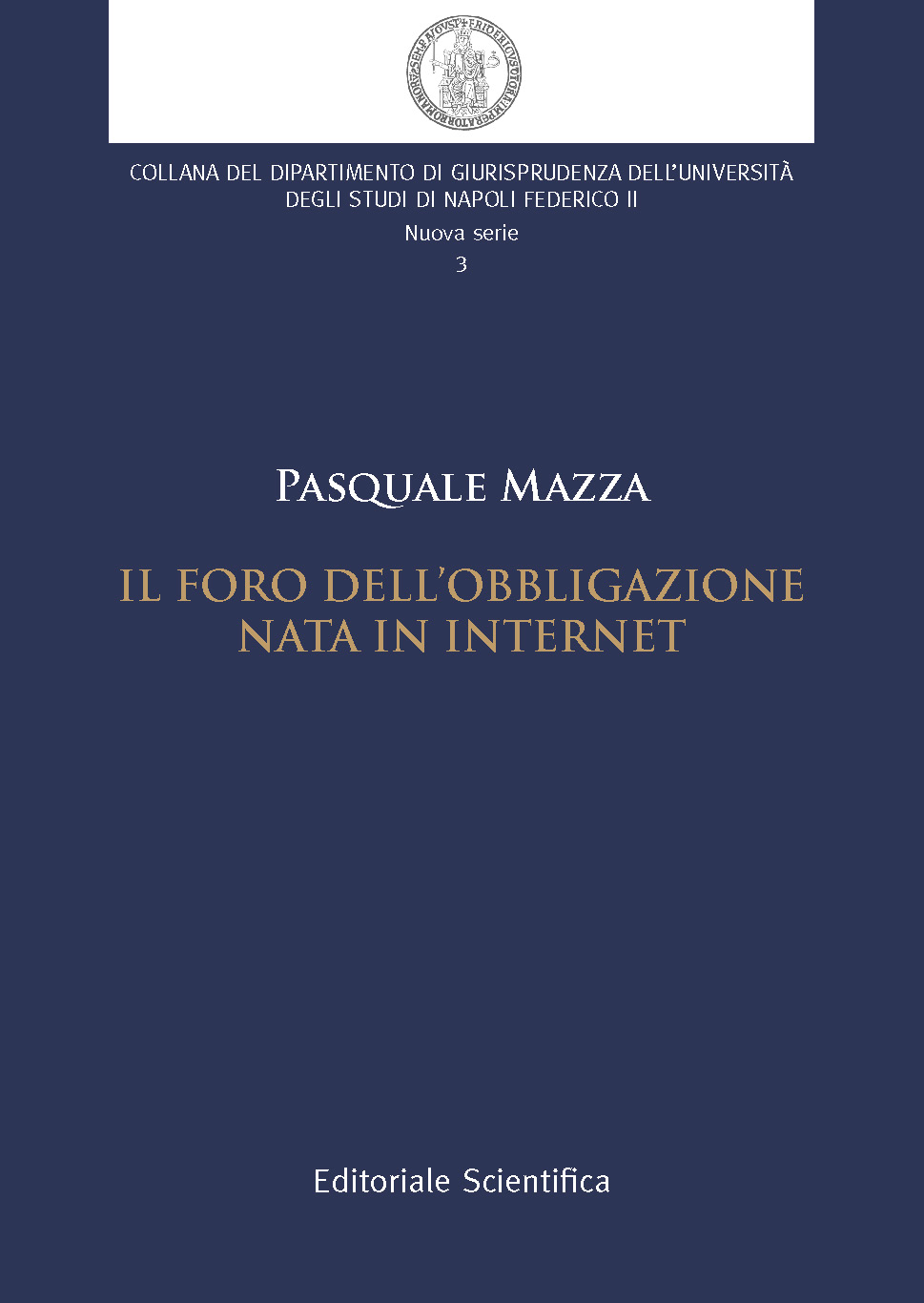
The author has kindly provided the following summary:
The book addresses the topic of civil jurisdiction over disputes arising on the Internet, observing it from different perspectives. In the first chapter the Author delves into the United States case law on the so-called “Internet torts”, reaching the conclusion that solutions based on the targeting test could be usefully employed to draft an international convention with the aim of establishing rules in the current confusing scenario. In the second and third chapters the doctrine of forum non conveniens and the phenomenon of libel tourism are explored in-depth. The fourth chapter examines the main decisions issued by the CJEU concerning jurisdiction over contractual and extracontractual liability (including cases such as eDate, Bolagsupplysningen, Pammer, etc.), while the fifth chapter is focused solely on Italian procedural rules and case law. In the last two chapters, starting from the assumed need to ensure the effectiveness of judicial remedies, the problems of the extraterritorial scope of online content removal orders as well as important EU Regulations (mostly the Digital Services Act and the GDPR) are examined, with finally a part on the “Schrems saga” and the EU-US agreements on the transfer of personal data (including the EU-US Data Privacy Framework).