
Trial Supervision System No Longer Impediment in Hong Kong’s Recognition and Enforcement of Chinese Mainland Judgments


1. Introduction
For more than 20 years after the handover, Hong Kong courts had regularly noted difficulties with the ‘trial supervision system’  (also known as ‘retrial procedure’
 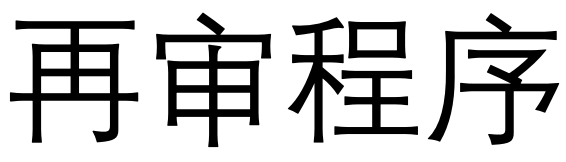 ) in the Chinese Mainland when attempting to recognise and enforce Mainland judgments under the common law, as the trial supervision system was thought to mean that these judgments fail to meet the ‘final and conclusive’ requirement. Such thinking was criticised by scholars as problematic.[1] To address the issue, statutory regimes on the reciprocal recognition and enforcement of judgments between the Chinese Mainland and Hong Kong have been implemented. More recent studies documented changes in the judicial attitude of Hong Kong courts,[2] but there was a lack of definitive rulings to clarify the legal position. This article focuses on the most recent Hong Kong cases which confirmed that the trial supervision system in the Chinese Mainland has no automatic impact on the recognition and enforcement of Mainland judgments in Hong Kong. A party alleging that the trial supervision system has affected the finality and conclusiveness of a Mainland judgment must prove the likelihood of a retrial being ordered through factual and/or expert evidence.
2. Early Cases
This vexed issue was first considered in Chiyu Banking Corp Ltd v Chan Tin Kwun, where Cheung J held that a Mainland judgment was not final and conclusive as it was not ‘unalterable in the court which pronounced it’ due to the trial supervision system.[3] This approach was seemingly affirmed in Lam Chit Man v Lam Chi To, but the Court of Appeal did not conclusively decide on the matter, as both parties did not adduce expert evidence on PRC law regarding the effect of the trial supervision system.[4]
Subsequently, in Lee Yau Wing v Lee Shui Kwan, the Court of Appeal was faced with a challenge against a Hong Kong summary judgment predicated on a Mainland judgment. The majority of the Court did not rule directly on the effect of the trial supervision system.[5] However, Chung J’s dissenting judgment raised the point that the trial supervision system was similar to the grounds of appeal in Hong Kong, and hence should not bar the finding that a Mainland judgment was final and conclusive.[6] This view, although not binding at that time, paved the way for later attempts in distinguishing Chiyu Banking.[7]
With no further cases directly addressing the issue or overruling the Chiyu Banking approach, the trial supervision system proved to be an obstacle for enforcing Mainland judgments under the common law for nearly two decades. The change in judicial attitude was hinted in the 2016 Court of First Instance decision of Bank of China Ltd v Yang Fan.[8] In that case, To J found himself bound by the earlier Court of Appeal decisions, but expressed in obiter that the trial supervision system in the Chinese Mainland had undergone significant changes since 2013 and it was ‘more like an appellate regime’; as such, the mere possibility of the trial supervision system being applicable did not preclude a Mainland judgment from being final and conclusive.[9] Further cases also expressed similar views in obiter.[10] Despite this change in attitude, the law at that time was still ambiguous, and clarifications did not come until much more recently.
3. Recent Cases
Several recent cases in late 2025 and 2026 have substantially clarified the law. It is now evident that under both the common law and statutory regimes in Hong Kong, the existence of the trial supervision system is no longer accepted as a ground to challenge a Mainland judgment as not ‘final and conclusive’ if there is no relevant supporting evidence.
3.1 Common Law Regime
In Sunsco International Holdings Ltd v Lin Chunrong,[11] one of the disputed issues was whether the trial supervision system would render a Mainland judgment unenforceable for not being final and conclusive under the common law regime. After reviewing the relevant authorities (at [11.1]–[11.25]), DHCJ Jonathan Wong made the following clarifications (at [12.1]–[12.6] and [13.1]–[13.2]):
- Chiyu Banking cannot be read as authority for the proposition that the trial supervision system per se renders a Mainland judgment not final and conclusive. With reference to Lee Yau Wing (which Cheung J decided the case as Cheung JA), it was emphasised that the line of cases stemming from Chiyu Banking had not authoritatively determined the issue.[12]
- The correct proposition is this: it is only when a retrial has been ordered that any order made in the original trial ceases to be res judicata between the parties. The possibility of a retrial would not by itself render an original judgment as not res judicata.[13]
- The trial supervision system per se does not render a Mainland judgment not final or not conclusive. A Mainland judgment will likely satisfy the ‘final and conclusive’ requirement as set out in Nouvion v Freeman:[14]
- In the Mainland proceedings, there is no limit as to what arguments can be raised and advanced;
- The trial supervision system is considered to be akin to an appeal, especially considering the fact that the judgments are enforceable in the Mainland unless and until a retrial is ordered;
- A litigant has no right to re-litigate a matter which has been determined by a Mainland judgment, and their avenues to challenge a first instance ruling is by way of appeal or an application for a retrial;
- Parties to a Mainland judgment do not have a unilateral right for retrial, and the potential retrial is conditioned upon the exercise of discretion by an external organ, premised on some error or violation by a judicial officer;
- An analogy can be drawn with foreign default judgments, which, despite being liable to be varied or set aside by the court granting it, may nevertheless be final and conclusive for the purpose of common law enforcement unless and until it is set aside; and
- The absence of any time limit on the Mainland court and the procuratorate to invoke the trial supervision system does not affect the foregoing analysis, as the mere possibility of an appeal does not preclude a judgment from being final and conclusive under common law.
- The paramount consideration when considering whether a Mainland judgment is final and conclusive, is the likelihood of a retrial being ordered under the trial supervision system. This is a matter to be demonstrated by factual evidence or expert evidence, or a combination of both. Some relevant considerations include:
- The cogency of the Mainland judgment being challenged;
- Whether the conditions leading to the invocation of the trial supervision system are satisfied;
- Whether the party has made an application under the trial supervision system; and if so, whether the application has been decided and the outcome of the application, or if not, the reasons for not applying; and
- If the party has not made or is no longer able to make an application under the trial supervision system, what is the likelihood of the Mainland court or the procuratorate initiating the Retrial Procedure on their own motion.
Sunsco International Holdings Ltd clarified the applicability of previous authorities and definitively affirmed that the trial supervision system is in no way per se an impediment in finding Mainland judgments as final and conclusive under the common law. The mere theoretical possibility of the trial supervision system being invoked should not strip the judgment of finality; such possibility should instead be supported by evidence. In Tsoi Chung Tat Prince v Wei Zhongxia, DHCJ Gary CC Lam further suggested that the question should be determined by expert evidence (but not necessarily oral expert evidence), and the burden of proof is on the party relying on the Mainland judgment to prove that it is final and conclusive by adducing expert evidence on Mainland law.[15]
The principles in Sunsco International Holdings Ltd received support in Beijing Renji Real Estate Development Group Co Ltd v Zhu Min.[16] The plaintiff in that case sought to enforce a judgment made by the Beijing Higher People’s Court under the common law regime. The decision of DHCJ MK Liu (at [43]–[52]) provided a useful illustration of the application of the clarified common law position. The defendants contended that there were substantive grounds for a retrial as the original judgment lacked evidentiary support and that there might be new evidence not previously considered in the Mainland judgment. These contentions were rejected as flawed or fanciful, and the defendants failed to show an arguable case that there is a likelihood that a retrial would be ordered under the trial supervision system. The Mainland judgment was therefore held to be final and conclusive.
3.2 Statutory Regimes
The clarifications under the statutory regimes were provided in Huzhou Shenghua Financial Services Co Ltd v Hang Pin Living Technology Co Ltd.[17] In that case, the plaintiff was seeking to enforce a Mainland judgment handed down by the Huzhou Intermediate People’s Court. The issue was whether the judgment was final and conclusive under the Mainland Judgments (Reciprocal Enforcement) Ordinance (Cap 597) (‘MJREO’), which took effect in 2008.
In delivering the Court of Appeal’s judgment, G Lam JA held that subsections (a) to (d) of section 6(1) of the MJREO were meant to be disjunctive and exhaustive regarding the categories of judgments that fall under the MJREO. Specifically, G Lam JA explicitly mapped out the relationship between the relevant provisions of the MJREO and the trial supervision system (at [63]–[66]):
- Prior to the ‘Arrangement on Reciprocal Recognition and Enforcement of Judgments in Civil and Commercial Matters by the Courts of the Mainland and the Hong Kong Special Administrative Region Pursuant to Choice of Court Agreements between Parties Concerned’ signed in 2006 (‘the 2006 Arrangement’), it had already been noted that the trial supervision system had given rise to issues as to whether Mainland judgments are final and conclusive.[18] Accordingly, draft provisions were designed to address the common law requirements of finality. These provisions eventually made their way into Article 2 of the 2006 Arrangement.
- Further, in the Report of the Bills Committee on the Mainland Judgments (Reciprocal Enforcement) Bill, it was noted that the trial supervision system may give rise to finality issues, and ‘special procedures would be adopted in order to address the common law requirements of finality’.[19] As such, section 6(1) of the MJREO was specifically enacted to address the common law requirement that the judgment is final and conclusive.
Hence, it was held that under the statutory regime, potential issues on the ‘final and conclusive’ requirement relating to the trial supervision system were pre-emptively addressed by the enactment of section 6(1) of the MJREO. As long as the judgment falls under the categories listed under section 6(1), the judgment is deemed to be final and conclusive irrespective of the operation of the trial supervision system, and one should not be required to fall back on the common law. The same reasoning was explained by DHCJ KC Chan earlier in Re Shenzhen Qianhai Orient Ruichen Fund Management Co Ltd in early 2025.[20]
It is submitted that the foregoing principles are also very likely be applicable to the expanded statutory regime of the Mainland Judgments in Civil and Commercial Matters (Reciprocal Enforcement) Ordinance (Cap 645) (‘MJCCMREO’), which came into effect in 2024:
- The MJCCMREO sought to give effect to the ‘Arrangement on Reciprocal Recognition and Enforcement of Judgments in Civil and Commercial Matters by the Courts of the Mainland and of the Hong Kong Special Administrative Region’ signed in 2019 (‘the 2019 Arrangement’). Similar to Article 2 of the 2006 Arrangement, Article 4 of the 2019 Arrangement includes provisions relating to the trial supervision system.
- Section 8 of the MJCCMREO stipulates a list of ‘effective’ Mainland judgments akin to section 6(1) of the MJREO. Thus, the foregoing reasoning by G Lam JA can be applied to section 8 of the MJCCMREO: the list should be treated as exhaustive, and as long as the Mainland judgment falls under any category explicitly stated under section 8, it is capable of being enforced regardless of the effect of the trial supervision system.[21]
- The MJCCMREO intends to provide a mechanism which is similar to the MJREO for a wider range of judgments in civil and commercial matters, not limited to judgments arising out of an exclusive choice of court agreement.[22] The two ordinances serve similar purposes; for consistency reasons, they should adhere to the same principles regarding the effect of the trial supervision system.[23]
4. Conclusion
These recent clarifications from the Hong Kong courts are much welcomed in resolving the effect of the trial supervision system that had befuddled the courts for almost 30 years. From the author’s perspective, this clarified view must also be correct. Under the common law regime, it is consistent with the modern viewpoint that a possible appeal avenue is not by itself an impediment to the recognition and enforcement of the trial judgment.[24] As for the statutory regimes, it is consistent with the provisions of the 2006 and 2019 Arrangements and the subsequent statutes enacted respectively, the MJREO and the MJCCMREO.
This article is written by Wilson Lui (Centre for Private Law, The University of Hong Kong; Melbourne Law School), with research assistance by Avery Cheung (The University of Hong Kong).
[1] See eg Philip St John Smart, ‘Finality and the Enforcement of Foreign Judgments under the Common Law in Hong Kong’ (2005) 5 Oxford University Commonwealth Law Journal 301; Weixia Gu, ‘A Conflict of Laws Study in Hong Kong–China Judgment Regionalism: Legal Challenges and Renewed Momentum’ (2020) 52 Cornell International Law Journal 592. See also Section II below.
[2] See eg Wilson Lui and Anselmo Reyes, Hong Kong Private International Law (Hart Publishing 2025) 279–80.
[3] Chiyu Banking Corp Ltd v Chan Tin Kwun [1996] 2 HKLR 395 (CFI) 399.
[4] Lam Chit Man v Lam Chi To [2001–2003] HKCLRT 141 (CA) [18]–[21].
[5] Lee Yau Wing v Lee Shui Kwan [2007] 2 HKLRD 749 (CA) [15]–[29], [34]–[38]. See also Wu Wei v Liu Yi Ping (unreported, CACV 32/2009, 27 March 2009).
[6] Lee Yau Wing (n 5) [55]. In coming to this conclusion, Chung J admitted that his views had changed from his earlier decision in Lam Chit Man v Cheung Shun Lin [2001–2003] HKCLRT 243 (CA).
[8] Bank of China Ltd v Yang Fan [2016] 3 HKLRD 7 (CFI).
[9] Bank of China Ltd (n 8) [51]–[54].
[10] Jiang Xi An Fa Da Wine Co Ltd v Zhan King [2019] HKCFI 2411 [85]–[90]; Beijing Renji Real Estate Development Group Co Ltd v Zhu Min [2022] 4 HKC 116, [2022] HKCFI 1027 [65]–[66]; Poon Sing Wah v Poon Sing Nam [2025] HKCFI 720 [117(a)].
[11] Sunsco International Holdings Ltd v Lin Chunrong [2025] HKCFI 5238.
[12] Lee Yau Wing (n 5) [15]; Sunsco International Holdings Ltd (n 11) [12.2].
[13] Bobolas v Economist Newspaper Ltd [1987] 1 WLR 1101 (CA).
[14] Nouvion v Freeman (1889) 15 App Cas 1.
[15] Tsoi Chung Tat Prince v Wei Zhongxia [2026] HKCFI 716 [47].
[16] Beijing Renji Real Estate Development Group Co Ltd v Zhu Min [2026] HKCFI 197.
[17] Huzhou Shenghua Financial Services Co Ltd v Hang Pin Living Technology Company Ltd [2025] 3 HKLRD 447, [2025] HKCA 434.
[18] See also Huarong Overseas Chinese Asset Management Co Ltd v Li Xiaopeng (transliteration) [2025] HKCFI 6402 [54].
[19] Legislative Council of Hong Kong, ‘Report of the Bills Committee on the Mainland Judgments (Reciprocal Enforcement) Bill’ LC Paper No CB(2)1521/07-08 (10 April 2008) para 73.
[20] Re Shenzhen Qianhai Orient Ruichen Fund Management Co Ltd [2025] HKCFI 707 [24]–[30], cited in Huzhou Shenghua Financial Services Co Ltd (n 17) [67]–[69].
[21] The Court of Appeal observed the striking similarity between the two sections as well: Huzhou Shenghua Financial Services Co Ltd (n 17) [15].
[22] Legislative Council of Hong Kong, ‘Report of the Bills Committee on Mainland Judgments in Civil and Commercial Matters (Reciprocal Enforcement) Bill’ LC Paper No CB(4)871/2022 (12 October 2022).
[23] See eg Sunsco International Holdings Ltd (n 11) [11.25].
[24] Nouvion (n 14) 13; China NPL Holdings Pte Ltd v Mo Haidan [2021] 1 HKLRD 344, [2020] HKCA 1014 [54]–[57].


Courts in Hong Kong and the Mainland China as well as litigants must be heaving a long sigh of relief after almost three decades of uncertainty and ambiguity. Resolving the effect of the trial supervision system was indeed a challenge. The elaborate statutory regime of the Mainland Judgments in Civil and Commercial Matters (Reciprocal Enforcement) Ordinance (Cap 645) (‘MJCCMREO’), that came into effect in 2024 as well as the ‘Arrangement on Reciprocal Recognition and Enforcement of Judgments in Civil and Commercial Matters by the Courts of the Mainland and the Hong Kong Special Administrative Region Pursuant to Choice of Court Agreements between Parties Concerned’ signed in 2006 (‘the 2006 Arrangement’) along with the Mainland Judgments (Reciprocal Enforcement) Ordinance (Cap 597) (‘MJREO’), which took effect in 2008 were important developments in this journey. Judicial verdicts also played a crucial role in decisively determining these issues.