
Choice of law clauses are not promissory


 The recent Australian case of Ace Insurance Ltd v Moose Enterprise Pty Ltd [2009] NSWSC 724 discusses an important question of principle concerning contractual choice of law clauses: are they promissory terms of the contract or merely declaratory of the parties’ intention?
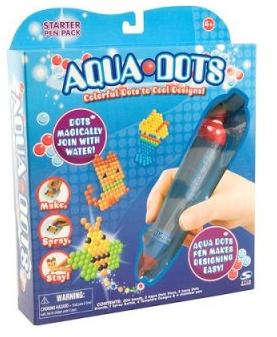
The case arose out of class action litigation presently pending in the United States. The class actions concern a toy developed by Moose, an Australian company, called “Aqua Dots”, which was distributed in the US but then recalled following allegations that it contains a toxic substance. 4.2 million Aqua Dots sets were recalled. Moose is insured for personal injury claims by Ace, an Australian insurer, pursuant to an insurance policy made in Australia, containing an express Australian choice of law clause and an express Australian jurisdiction clause. Ace at first funded and conducted the defence of the class actions on behalf of Moose but subsequently gave notice that it would cease to do so, on the basis that the policy did not cover the claims made in the class actions.
In December 2008, Moose commenced proceedings in California seeking a declaration that, as a result of the policy and Californian law, Ace is obliged to defend the actions. In January 2009, Ace commenced proceedings in New South Wales seeking an anti-suit injunction, restraining Moose from continuing the Californian proceedings.
Brereton J granted the anti-suit injunction. His Honour placed principal importance on the Australian jurisdiction clause in the policy, which he construed to be an exclusive jurisdiction clause though it did not use the word “exclusive”. The fact that the the policy and the parties were connected so strongly with Australia, such that Australia was the “natural forum” for disputes, suggested that the jurisdiction clause must have been intended to do more than be merely a submission to jurisdiction.
Of perhaps greater interest was the argument by Ace that by instituting Californian proceedings for the purposes of taking advantage of Californian law, Moose had contravened an implied contractual obligation arising from the Australian choice of law clause, and that an anti-suit injunction should be issued to restrain this contravention. This argument was founded upon the idea, developed in Adrian Briggs’ recent book, Agreements on Jurisdiction and Choice of Law (2006), at 431-464 [11.16]-[11.78], that a choice of law clause should ordinarily be considered promissory in effect. Brereton J rejected this contention. His Honour concluded (at [47], [51]):
No doubt a contractual provision could be framed which unambiguously contained a promise to do nothing that might result in some other system of law becoming applicable. However, in my opinion that is not ordinarily the effect of a choice of law clause, which is usually declaratory of the intent of the parties, rather than promissory. …
In our system of private international law, therefore, choice of law is about ascertaining the intention of the parties as to the legal system that is to govern their contract, not about covenants or promises that a particular legal system will apply. Where a choice of law is “inferred” rather than “express”, it is not conceivable that there would be an implied negative stipulation not to invoke the jurisdiction of a court, which would apply a law other than the chosen one. In my view, that supports the conclusion that where there is an express choice of law, there is similarly no implied obligation not to invoke the jurisdiction of a court, which will not apply the chosen law; the express choice of law is declaratory of the parties’ intention, not promissory. It may well be that the parties could frame a provision which was promissory in effect, but – given the conventional function of a choice of law clause – it would require very clear language to make it promissory rather than declaratory.
Given that the jurisdiction clause in question did not use the word “exclusive” and the amount of money likely to be at stake, it would not be surprising if Moose appeals to the Court of Appeal.
It’s a very professional judgment: if you think the injunction should be ordered, and can do it on entirely orthodox grounds, as the judge saw that he could, it would not have helped to venture the view that there was an unorthodox ground for it: Moose would have been off to the Court of Appeal before the ink was dry on the judgment. The judge did exactly as a judge should have done. As to the ‘no doubt…’ proposition that a choice of law may be drafted as a promissory term, the area of disagreement is simply one of how to construe the plain vanilla, or not so well drafted, choice of law. That seems a matter for legitimate debate, but seems also to suggest that paying gteater attention to the drafting is the beginning and the end of the issue. Hard to see much wrong with that.