


Views
How European is European Private International Law? – Impressions from Berlin
Written by Tobias Lutzi, DPhil Candidate and Stipendiary Lecturer at the University of Oxford
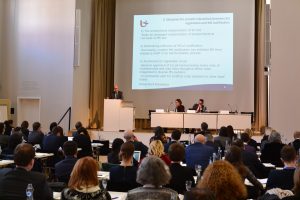 Last weekend, more than a hundred scholars of private international law followed the invitation of Jürgen Basedow, Jan von Hein, Eva-Maria Kieninger, and Giesela Rühl to discuss the ‘Europeanness’ of European private international law. Despite the adverse weather conditions, only a small number of participants from the UK – whose presence was missed all the more dearly – were unable to make it to Berlin. Thus, the Goethe-Saal of the Max Planck Society’s Harnack House was packed, and so was the conference programme, which spanned over two full days. Read more
This one is next: the Netherlands Commercial Court!
By Georgia Antonopoulou, Erlis Themeli, and Xandra Kramer, Erasmus University Rotterdam (PhD candidate, postdoc researcher and PI ERC project Building EU Civil Justice)
Following up on our previous post, asking which international commercial court would be established next, the adoption of the proposal for the Netherlands Commercial Court by the House of Representatives (Tweede Kamer) today answers the question. It will still have to pass the Senate (Eerste Kamer), but this should only be a matter of time. The Netherlands Commercial Court (NCC) is expected to open its doors on 1 July 2018 or shortly after. Read more
A European Law Reading of Achmea
Written by Prof. Burkhard Hess, Max Planck Institute Luxembourg.
An interesting perspective concerning the Achmea judgment of the ECJ[1] relates to the way how the Court addresses investment arbitration from the perspective of European Union law. This paper takes up the judgment from this perspective. There is no doubt that Achmea will disappoint many in the arbitration world who might read it paragraph by paragraph while looking for a comprehensive line of arguments. Obviously, some paragraphs of the judgment are short (maybe because they were shortened during the deliberations) and it is much more the outcome than the line of arguments that counts. However, as many judgments of the ECJ, it is important to read the decision in context. In this respect, there are several issues to be highlighted here: Read more
News
New issue alert: RabelsZ 87 (2023), Issue 3
 The latest issue of RabelsZ has just been released. It contans the following articles:
Horatia Muir Watt: Alterity in the Conflict of Laws. An Ontology of the In-Between
[18th Ernst Rabel Lecture, 2022] [OPEN ACCESS], 433–464, DOI: 10.1628/rabelsz-2023-0063
New Book Releases: “Private International Law and Competition Litigation in a Global Context” & “Third Party Funding in International Arbitration”
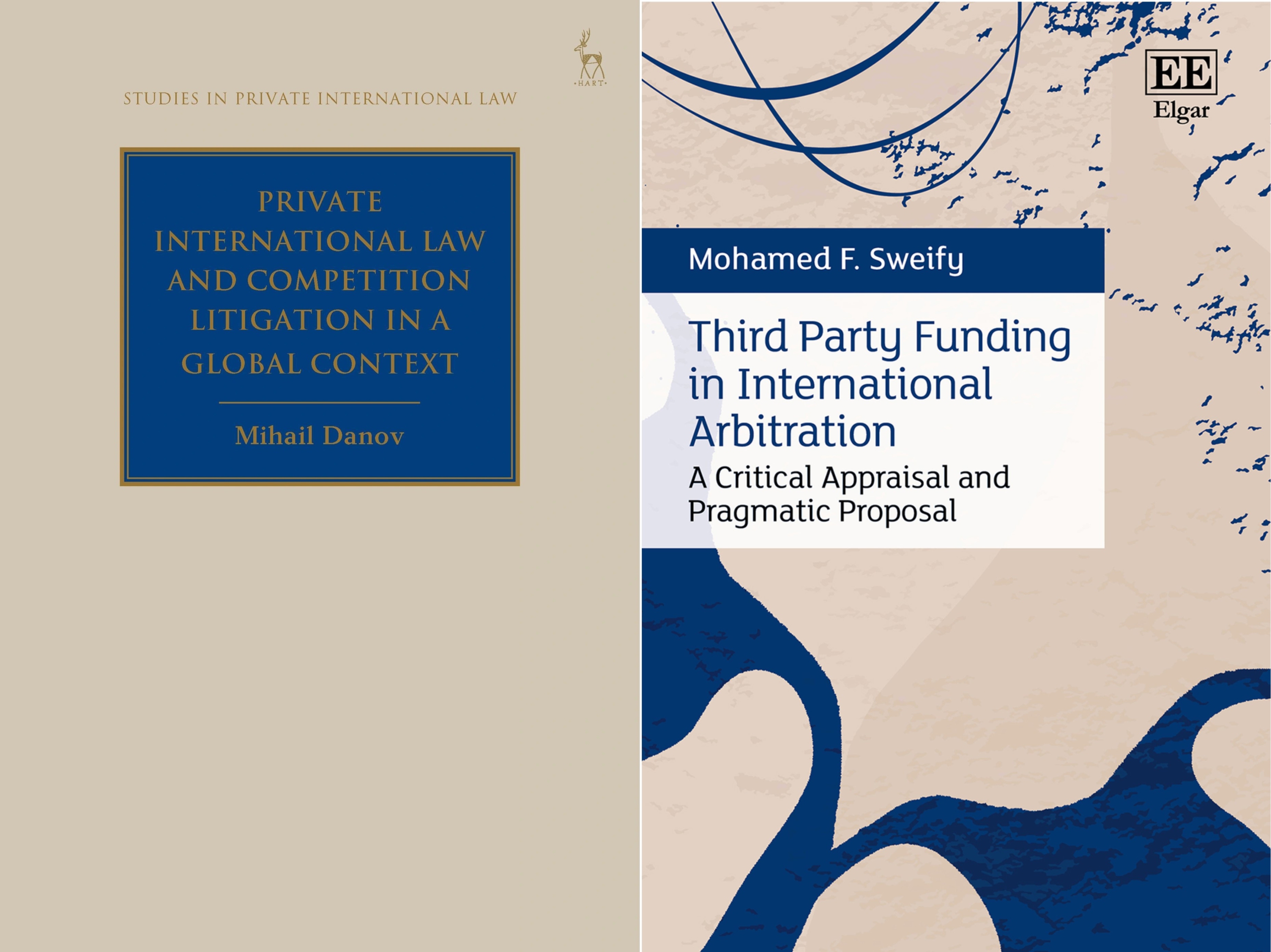
Two books on international litigation and arbitration have recently been published that might be of interest to the CoL Community and PIL research.
The first book by Mihail Danov (University of Exeter) is the latest contribution to Hart’s renowned “Studies in Private International Law” series (Volume 37) and examines the challenging interaction of “Private International Law and Competition Litigation in a Global Context“. The blurb reads as follows:
Journal du Droit International Clunet – issue 2023/3
The third issue of the Journal du Droit international-Clunet of 2023 was released in July. It contains three articles and many case notes.
The first article Regard québécois sur le projet de Code de droit international priv é français (A view from Quebec on the project of a french private international law Code) is authored by Prof. Sylvette Guillemard (Université Laval). The abstract reads as follows: