


Views
Ssangyong Engineering & Construction Co. Ltd. v. National Highways Authority of India (NHAI) 2019 SCC OnLine SC 677
By Mohak Kapoor
The recent decision of the apex court of Ssangyong Engineering & Construction Co. Ltd. v. NHAI, has led to three notable developments: (1) it clarifies the scope of the “public policy” ground for setting aside an award as amended by the Arbitration and Conciliation (Amendment) Act 2015, (2) affirms the prospective applicability of the act and (3) adopts a peculiar approach towards recognition of minority decisions. Read more
Work on possible future Private International Law instruments on legal parentage (incl. legal parentage established as a result of an international surrogacy arrangement) is making progress
Written by Mayela Celis
The sixth meeting of the Experts’ Group on Parentage / Surrogacy took place in late October & early November 2019 in The Hague, the Netherlands, and focused on proposing provisions for developing two HCCH instruments:
- a general private international law instrument (i.e. a Convention) on the recognition of foreign judicial decisions on legal parentage; and
- a separate protocol on the recognition of foreign judicial decisions on legal parentage rendered as a result of an international surrogacy arrangement.
As indicated in the HCCH news item, the Experts’ Group also discussed the feasibility of making provisions in relation to applicable law rules and public documents. Read more
The CJEU renders its first decision on the EAPO Regulation – Case C-555/18
Carlos Santaló Goris, Researcher at the Max Planck Institute Luxembourg for International, European and Regulatory Procedural Law, and Ph.D. candidate at the University of Luxembourg, offers a summary and an analysis of the CJEU Case C-555/18, K.H.K. v. B.A.C., E.E.K.
Introduction
On 7 November 2019, the CJEU released the very first decision on Regulation 655/2014 establishing a European Account Preservation Order (“EAPO Regulation”). From the perspective of European civil procedure, this instrument is threefold innovative. It is the first uniform provisional measure; it is also the very first ex parte piece of European civil procedure (and reverses the Denilauer doctrine); and the first one which, though indirectly, tackles civil enforcement of judicial decisions at European level. This preliminary reference made by a Bulgarian court gave the CJEU the opportunity to clarify certain aspects of the EAPO Regulation. Read more
News
Geneva Executive Training – Module 4: Practice of Child Protection Stakeholders: Focus on Inter-agency Co-operation in Context
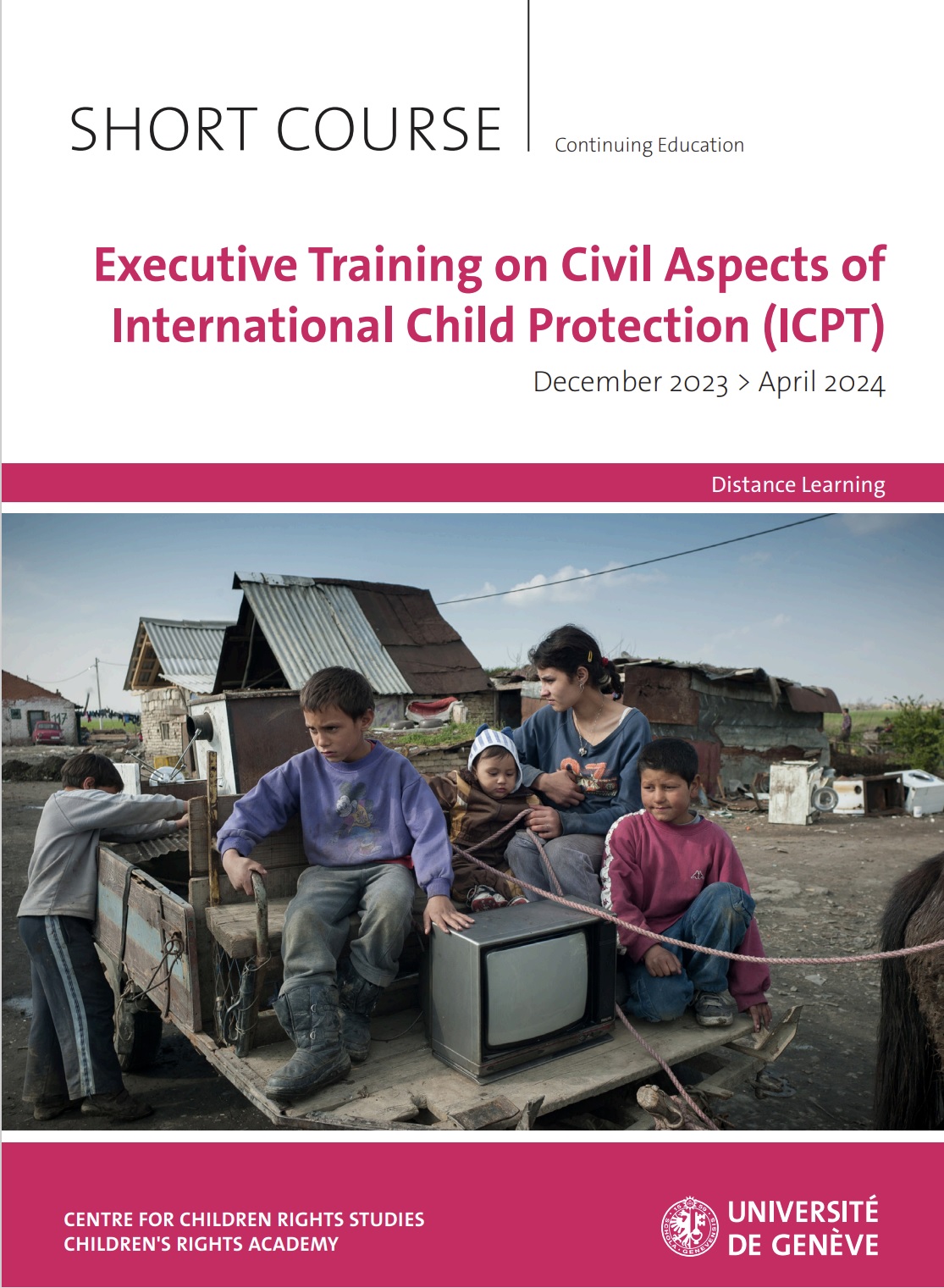
Registrations are still open for Module n°4, which is taking place on April 18th, 2024.
The speakers are the following:
- Dr Nicolas Nord, Secretary General, CIEC, “The ICCS Activities and Good Practices in the field of International Child Protection”
- Ms Joëlle Schickel-Küng, Deputy Head of Division, Co-Head of Unit, Swiss OFJ, “Cooperation in the area of international child abduction under the 1980 Hague Convention”
- Mr Jean Ayoub, Secretary General, International Social Service, “ISS – Bridging support to vulnerable children on the move”
Price per module registration fee: 200 CHF. More information is available here.
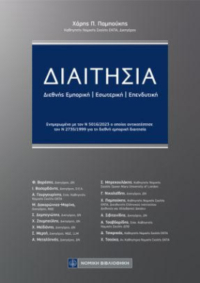
ARBITRATION: International Commercial – Domestic – Investment
The author is Dr. Faidon Varesis, Attorney at Law
Teaching Fellow, National and Kapodistrian University of Athens
PhD (University of Cambridge); MJur (University of Oxford); LLM, LLB (University of Athens).
In an era where the resolution of disputes is increasingly moving away from traditional court systems towards alternative methods, the comprehensive collective work in Greek with Professor Charalampos (Haris) P. Pamboukis as editor emerges as both a timely and seminal contribution to the field of arbitration, both nationally within Greece and on an international scale. This book review seeks to delve into the multifaceted contributions of the book, examining its scope, its pioneering contributors, its evolution within Greek law, and its broader implications for dispute resolution globally.
The book begins by exploring the flourishing landscape of arbitration across various domains such as commercial, investment, construction, maritime, and energy disputes, alongside other alternative dispute resolution (ADR) methods. The interest in these mechanisms reflects a societal shift towards less adversarial, more cosmopolitan forms of dispute resolution, aimed at alleviating the burdens on state judiciary systems characterized by procedural rigidity and often excessive delays. The prologue set the stage by discussing the significant legislative and jurisprudential developments in domestic and international arbitration within Greece, highlighting the transformative impact of laws passed from 1999 through to the latest reforms in 2023. Such legislative milestones not only signify Greece’s evolving arbitration framework but also illustrate the dynamic interplay between law, scholarly research, and practical application in shaping effective dispute resolution practices. Furthermore, the book weaves through the theoretical underpinnings and the practical aspects of arbitration agreements, the composition of arbitral tribunals, and the procedural norms governing arbitration proceedings, offering a holistic view of the arbitration landscape.
Central to the book’s discourse is the collaborative effort of esteemed scholars, academics, and practitioners who contribute their insights across various themes. This collective approach not only enriches the book’s content with a diversity of perspectives but also underscores the collaborative spirit within the arbitration community. The inclusion of introductory developments on increasingly significant areas such as investment arbitration and mediation, alongside a critical overview of international arbitration consent and the arbitral process, reflects a comprehensive and forward-looking examination of the field.
The book does not shy away from discussing the inherent challenges within arbitration and the diverse methodological approaches adopted by different contributors. However, these aspects are presented as enriching the scientific pluralism and intellectual rigor of the work rather than detracting from its cohesion.
In addition to its substantive chapters, the book is augmented with appendices that include key legislative and regulatory texts relevant to arbitration and mediation. This practical inclusion underlines the book’s aim to serve as a useful tool for both practitioners and scholars.
In conclusion, this collective work stands as a testament to the evolving and vibrant field of arbitration within Greece and its broader implications on the international stage. It encapsulates the intellectual legacy, the legislative advancements, and the practical insights of a diverse group of contributors, offering a comprehensive resource for understanding and navigating the complexities of arbitration. As such, it represents an invaluable contribution to the legal scholarship and practice of arbitration, both within Greece and beyond, fostering a deeper appreciation for alternative dispute resolution mechanisms in the pursuit of justice and societal harmony.