
Exxon, Punitive Damages and the Conflict of Laws


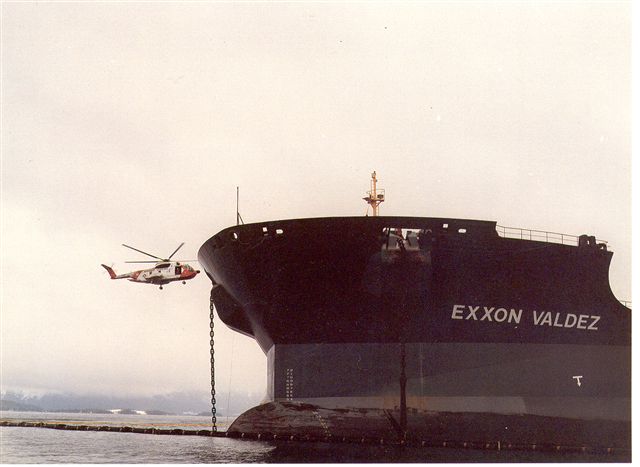 Yesterday, the U.S. Supreme Court delivered its decision in Exxon v. Baker. The central issue of the case was whether an award of punitive damages of US$ 2.5 billion (as reduced by the lower courts from an initial award of US$ 5 billion) was excessive as a matter of maritime common law. The Court held 5 to 3 (with Alito recused) that such awards should be limited by using a ratio of punitive to compensatory damages. The court held that, in maritime cases, a ratio of 1:1 is a fair upper limit. Thus, as the lower court had assessed the compensatory damages to US$ 507 million in that case, the Supreme Court held that punitive damages should be reduced to that amount as well.
This case comes after several decisions where the Supreme court has interpreted the Due Process Clause as setting limits to punitive damages awards. In those cases, it was held that a ratio superior to one digit (i.e. superior to 9:1) would rarely satisfy Due Process, and that when the award of compensatory damages was already substantial, it might be that only a ratio of 1:1 would satisfy the constitutional requirement.
There is therefore a clear trend in American law towards more reasonableness and predictability in the award of punitive damages.
To bolster its holding limiting punitive damages, the Court noted that the practice of other common law jurisdictions was different, but also that awards of punitive damages were often denied recognition abroad:
For further contrast with American practice, Canada and Australia allow exemplary damages for outrageous conduct, but awards are considered extraordinary and rarely issue. See … Noncompensatory damages are not part of the civil-code tradition and thus unavailable in such countries as France, Germany, Austria, and Switzerland. See … And some legal systems not only decline to recognize punitive damages themselves but refuse to enforce foreign punitive judgments as contrary to public policy. See, e.g., Gotanda, Charting Developments Concerning Punitive Damages: Is the Tide Changing? 45 Colum. J. Transnat’l L. 507, 514,518, 528 (2007) (noting refusals to enforce judgments by Japanese, Italian, and German courts, positing that such refusals may be on the decline, but concluding, “American parties should not anticipate smooth sailing when seeking to have a domestic punitive damages award recognizedand enforced in other countries”).
From a conflict perspective, the interesting question is whether such an evolution of American law would change anything. Would Japanese, Italian or German courts recognize lower awards? Is size the issue? Or is it just the punitive nature of such judgments, which makes them, for conflict purposes, criminal in nature?
Comments from all jurisdictions welcome!