
The FAMIMOVE project ends today – A summary of its achievements


Today (31-December 2024), FAMIMOVE 2.0. is coming to an end after having accomplished all of its goals and created a solid network of experts. The project’s full name is Families on the Move: The Coordination between international family law and migration law and is an international project co-funded by the European Commission under the JUST-2022-JCOO program. For more information, click here.
The project aimed to improve the protection of migrant children and families by bringing actual practice more in line with EU goals and values, such as the protection of fundamental rights and best interests of the child. It sought to provide more effectiveness to EU objectives through a better coordination of instruments in overlapping fields, such as Regulations in private international law in family law matters and migration law rules.
The project’s duration was 24 months, starting on 1 January 2023. Total Project Costs: €863,584.70, of which an EU contribution of €777,226.23. The consortium comprised the following universities: Maastricht University (the Netherlands – coordinator), University of Münster (Germany), University of Milano-Bicocca (Italy), University of Versailles Saint-Quentin-en-Yvelines (France), Lund University (Sweden), Eotvos Lorand University (Hungary) and Ghent University (Belgium).
The achievements of the project are the following (some of which are publicly available):
- Seven awareness raising seminars were held in each of the partners’ countries (in their official languages). These seminars brought together migration and child protection authorities, as well as private international law experts;
- Three transnational pilot projects / roundtables relating to key issues of international child protection in a migration context: cross border recognition of guardianship, kafala and child marriage. These roundtables were held in Milan, Paris and Münster and gathered experts from at least three countries each. See also the leaflets below for more information:
- The final conference took place in Brussels: some of the presentations are publicly available here. See also the blog post The role of judge: from compassion to rights
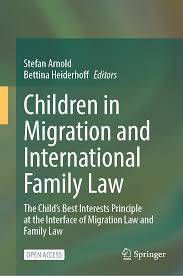
- A book: Children in Migration and International Family Law: The Child’s Best Interests Principle at the Interface of Migration Law and Family Law – open access available here. We have previously announced it on this blog here. The book has twenty chapters that have been divided into the following: Introduction, General Topics, Guardianship for Unaccompanied Minor Refugees, Early Marriage, Kafala and Additional Topics;
- Leaflets on the project and guidelines – Leaflets available in 6 languages can be downloaded here
- A FAMIMOVE website was created: https://famimove.unimib.it/. This website features a blog, which has approximately 40 entries, ranging from activities conducted under the project to the latest news on migration/refugee law as well as private international law. I would like to highlight the following entries:
Undoubtedly, FAMIMOVE 2.0 has contributed to a better alignment of migration law and private international law. This project’s legacy is well documented in the publications referred to above. It is to be hoped (at least in my view) that similar initiatives will emerge in the future, especially now that the application of the new Pact on Migration and Asylum is looming in the distance (scheduled for 2026), and which will certainly present new challenges and opportunities.
FAMIMOVE 2.0 is based on two insightful documents:
Children on the move: A private International Law Perspective
Private International Law in a Context of Increasing International Mobility
Views and opinions expressed in this project are however those of the authors only and do not necessarily reflect those of the European Union or the European Commission. Neither the European Union nor the granting authority can be held responsible for them.
