Judgment Mobility Rules in India’s Private International Law Regime: No place for a revision au fond?
This post was kindly prepared by Sai Ramani Garimella, Associate Professor, Faculty of Legal Studies, South Asian University.
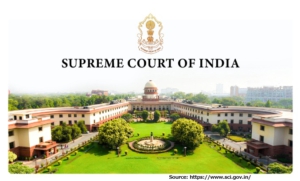
A judgment-creditor is often concerned about the enforcement of foreign court orders, and that concern is not completely misplaced in India. The Supreme Court’s decision in Messer Griesheim v Goyal MG Gases is a useful illustration of the law governing the enforcement of foreign court orders and of the discussion of their finality and binding nature. Twenty-three years after the underlying loan transaction, and after much litigation, the Court has finally closed the chapter, refusing to enforce a 2006 English court’s summary judgment for roughly USD 5.8 million. Along the way, it has also clarified two recurring questions that often come up whenever a foreign money decree is sought to be executed in India:
- (i) When does a summary or “leave to defend” judgment qualify as a judgment “on the merits” under Section 13(b) of the CPC, and
- (ii) What is the real effect of a conditional RBI/foreign-exchange approval on the enforceability of a decree?
A JV was contracted between a German company, Messer Griesheim GmbH (hereinafter, Messer Griesheim) and Goyal MG Gases (hereinafter, Goyal), an Indian company engaged in the industrial gases business, in 1995. To fund capital expenditure, Goyal arranged an External Commercial Borrowing (ECB) of USD 7 million from Citibank, London, with Messer Griesheim standing as guarantor. The Foreign Exchange Regulation Act, 1973 (FERA), required both the Government of India and the Reserve Bank of India (the Central Bank) to approve borrowing and guarantees. The RBI’s approval letter dated 3 September 1997 imposed conditions, amongst others, that “in case of invocation of guarantee, no liability whatsoever will extend to the Indian company.” When Goyal defaulted, Citibank invoked the guarantee in 2001, and Messer Greisheim paid USD 4.78 million. It then sought reimbursement from Goyal by way of contractual subrogation. Goyal refused, asserting that the payment had been adjusted against its own unrelated claims against Messer (arising from alleged breaches of the JV and non-compete arrangements), claims it said were worth roughly Rs. 500 crore. Unable to recover amicably, Messer Greisheim sued in England.
The English Court Proceedings
- 2003: Messer Greisheim obtained an ex parte default judgment after Goyal failed to appear.
- Ill-advised on the difficulty of enforcing such orders in India, Messer Greisheim applied to have it set aside and sought a summary judgment instead.
- Goyal responded that it had genuine defences, including three alleged oral side-agreements under which Messer Greisheim had supposedly agreed not to seek recourse against Goyal or to absorb the loan liability as part of a settlement.
- On 7 February 2006, the English Court rejected Goyal’s defences as lacking a “real prospect of success” and entered summary judgment for approximately USD 5.8 million, plus interest and costs. Goyal did not appeal.
The Indian Execution Proceedings
Messer Greisheim applied to the Indian court for execution of the said order under Section 44A of the Code of Civil Procedure, 1908. The journey through the Indian courts was itself convoluted:
- The Single Judge of the Delhi High Court (2013) held the judgment enforceable.
- The Division Bench (2014) of the DHC ruled against jurisdiction as per the requirements of Section 44A.
- The judgment-creditor appealed to the Supreme Court, which held that the DHC possessed jurisdiction in its original civil capacity and sent the matter back for a decision on the merits.
- On remand, the DHC’s Division Bench finally refused enforcement, holding that the English court’s order violated Section 13 of the CPC, both for failing to be a judgment “on the merits” and for disregarding the RBI’s conditional approval.
- On appeal, the Supreme Court agreed with the Division Bench of DHC (though for partly different reasons), bringing the saga to a close.
The Statutory Framework: Section 13 read with Section 44A, CPC
Under Section 44A CPC, an order from the competent court of a “reciprocating territory” (the UK is one such) can be applied for execution before a district court in India. However, such enforcement may be denied if it is hit by the exceptions listed in CPC, S 13: absence of jurisdiction, judgment not on merits, incorrect view of international law or refusal to recognise Indian law, violation of natural justice, fraud, or a claim founded on breach of Indian law.
The Supreme Court reaffirmed that these exceptions must be construed narrowly, in keeping with the principle of comity of courts; such a narrow construction may not be interpreted as against scrutiny at all.
Issue I: Was the English Summary Judgment “On the Merits”?
Pivoting upon jurisprudence from the Privy Council (Daniel Thomas Keymer v P. Viswanatham Reddi (AIR 1916 PC 121) and L. Oppenheim and Co. v. Hajee Mahomed Haneef Sahib (AIR 1922 PC 120)) as well as Indian decisions such as International Woollen Mills v Standard Wool (UK) Ltd, Middle East Bank v Rajendra Singh Sethia (AIR 1991 CAL 335), and K.M. Abdul Jabbar v Indo-Singapore Traders Pvt Ltd. (1980 SCC OnLine Mad 186) the Supreme Court held that a judgment entered merely because a defendant was refused leave to defend, without any real investigation into the rival contentions, cannot be treated as a judgment “on the merits” within Section 13(b).
Significantly, the Court did not treat “summary judgment” as a dirty word. It referred to the English law on summary judgment (Civil Procedure Rules 24.2, and the decisions in Easyair v Opal Telecom and Swain v Hillman). The Court noted that the English law required the defence to lead evidence of only a “realistic,” not a “fanciful,” prospect of success, and that a court should hesitate to finally decide a case without trial wherever a fuller investigation of the facts could affect the outcome. The point of the analysis was not that English procedure is somehow defective, but that this very test, properly applied to Goyal’s defences, should have led to a trial rather than summary disposal.
The Court found that Goyal’s defences were not fanciful:
- There were contemporaneous statutory documents, board-approved Balance Sheets for FY 2001-02 and FY 2002-03, and Minutes of Board Meetings recording that Goyal owed nothing to Messer and that the loan repayment had instead been adjusted against Goyal’s own claims. These were signed by Messer Greisheim’s own nominee director, Mr Winfrid Schmidt, who had also seconded the relevant resolutions. Under Sections 194, 210, 211, and 215 of the Companies Act, 1956, such board-approved financial statements carry presumptive evidentiary value.
- An e-mail dated 20 February 2003, in which Goyal disputed the claimed liability, did not appear to have been placed before or weighed by the English Court at the summary stage.
- Goyal’s defence rested on disputed oral agreements, exactly the kind of factual controversy that, in the Court’s view, calls for cross-examination and a full trial rather than summary adjudication.
Importantly, the Supreme Court was careful to state that it was not adjudicating the merits of these defences itself; it addressed only whether they crossed the threshold of being “triable.” Having found that they did, the Court held that denying Goyal leave to defend amounted to a denial of fair trial, attracting both Section 13(b) (not on merits) and Section 13(d) (violation of natural justice) of the CPC. This alone was sufficient to dismiss the appeal and refuse enforcement.
- […] The adjudication by way of summary judgment in the presence of bona fide triable issues renders the judgment one not delivered on merits within the meaning of Section 13(b).
The Court also revisited the Indian “leave to defend” jurisprudence under CPC, Order XXXVII (IDBI Trusteeship v Hubtown; B.L. Kashyap v JMS Steels), reiterating that denial of leave to defend is meant to be the exception, reserved for cases where the defence is frivolous or vexatious — not the default response to a contested claim.
Issue II: The FERA Angle; Adjudication vs Enforcement
- Section 47(1)/(2): A contract that evades FERA cannot be enforced, but a contract conditioned on obtaining RBI/Government permission is not itself invalid merely because permission is pending.
- Section 47(3): This provision states that nothing prevents legal proceedings from being brought in India to recover sums otherwise due; however, “no steps shall be taken for the purpose of enforcing any judgment or order” except to the extent permitted by the RBI/Central Government.
The Court interpreted Section 47 as creating a clear two-stage scheme:
- Stage 1-Adjudication: Courts may determine liability and order a decree without any prior RBI clearance. There is no bar on access to justice at this stage.
- Stage 2-Enforcement: Before the execution of such a decree under Order XXI CPC, the RBI/Government permission becomes a precondition.
The Court held that the 1997 RBI condition operated as a regulatory precondition to execution, not a substantive defence that extinguishes the underlying liability. To that limited extent, the Court reversed the Division Bench’s reasoning on this specific point of law.
The Takeaways from Messer Greisheim
- Summary and default judgments travel poorly across borders. A foreign judgment valid in its home jurisdiction could fail the Section 13(b) “merits” test in India only if the foreign court did not substantively engage with a defendant’s documented, triable defences. Foreign claimants strategising for default-to-summary judgments (switching from default judgment to summary judgment to improve enforceability) are alerted to the risk of failure. However, Messer Greisheim rejected the idea of inherent suspicion against summary judgments, the Court held that a 13(b) hit applies only when the record of the case establishes an unfair truncation of a legitimate dispute.
- At the same time, the jurisdiction to grant summary judgment is not intended to convert the proceeding into a “mini-trial”, but rather to enable cases where there is no real prospect of success to be disposed of summarily.
- Contemporaneous corporate records can defeat a foreign decree at the enforcement stage, even years later.
- Foreign exchange regulatory permissions regulate execution, not adjudication. The judgment offers welcome clarity that conditional RBI approvals do not operate as a permanent shield against liability. They instead govern the timing and quantum of actual remittance once a decree is to be executed, a sensible accommodation between access to justice and India’s exchange-control regime.
Conclusion
Does the Indian law appear to allow a merits examination, a revision au fond? Messer Greisheim answered that in the negative. It was observed that by relying strictly on a summary procedure to dismiss a genuinely triable defence, the English court bypassed a full trial on the merits. A reading of CPC, S 13, indicates that Indian courts are prohibited from conducting a revision au fond.
- The executing court cannot act as an appellate court.
- It cannot re-examine the substantive facts, reweigh the evidence, or substitute its own view on the merits for that of the foreign judge.
Messer Griesheim is ultimately a cautionary tale about procedure trumping substance. Messer Greisheim may have had a sound claim under the loan agreement’s subrogation clause. But by obtaining a summary judgment that bypassed Goyal’s triable defences instead of testing them at trial, it ended up with a decree that, twenty years and several rounds of litigation later, wasn’t enforceable in India. For foreign judgment creditors eyeing Indian assets, the lesson is unambiguous: a decree obtained without the Indian defendant being allowed a genuine opportunity to contest disputed facts is a fragile asset in the Indian execution courts, however efficiently it may have been obtained abroad. Section 13(b) thus speaks loud and clear – such summary judgment becomes suspect when it appears to have been entered solely to bypass a highly contested matter. Courts in India can review the record, as Messer Greisheim observed, only to identify whether the decision related to a summary procedure was indeed based upon sound reasons and wasn’t aimed at truncating an otherwise triable dispute.