Consensual Justice in Focus: Reflections from the First ASGiC National Congress
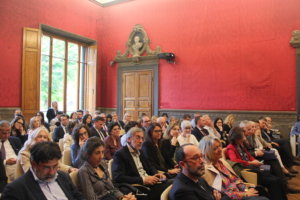 On 16–17 April 2026, the elegant setting of Villa Ruspoli in Florence hosted the First National Congress of ASGiC – the Society for the Study of Consensual Justice, titled Giustizia e cooperazione: il valore del consenso (Justice and Cooperation: The Value of Consent). Marked by a large and engaged participation, the event offered a valuable opportunity for both the Society’s members and a wider community of scholars and practitioners to reflect on the role of consent in contemporary conceptions of justice.
The Congress opened with introductory remarks by the Society’s President, Silvana Dalla Bontà, who set out the themes and objectives guiding the initiative. Against this backdrop, the keynote lectures delivered by Tommaso Greco, Andrea Simoncini, and Filippo Danovi developed a first, coherent reflection on consensual justice, identifying a variety of core concepts – trust, consent, justice, solidarity, Constitution, language, and dialogue – that are likely to orient the Society’s future research and activities.
This conceptual framework found further expression in the conferral of honorary membership upon Francesco Paolo Luiso, Marta Cartabia, Adolfo Ceretti, and Luciana Breggia. The laudationes underscored how, from different perspectives – civil procedure, constitutional adjudication, criminology, and judicial practice – their work has contributed to shaping approaches to justice grounded in participation, dialogue, and shared responsibility.
The discussion then broadened through the interdisciplinary roundtable moderated by Pierluigi Consorti. Contributions from Maurizio Biggeri, Marco Cadinu, Marianella Sclavi, Valeria Cantoni Mamiani, Stefano Rozzi, and Luca Toschi moved beyond strict legal analysis, engaging with insights from the social sciences and communication studies to explore more deeply the relationship between interpersonal dynamics and consent.
In her concluding remarks, Vice-President Paola Lucarelli drew together the main threads of the Congress, emphasising the importance of maintaining a close connection between theoretical reflection and practical application. The General Assembly that followed endorsed the Society’s programmatic lines, consolidating the directions that had emerged over the course of the two days.
Looking ahead, ASGiC announced its next steps: a Colloquium to be held in 2027 at the University of Trento and the Second National Congress in 2028 in Taormina, to be organised by founding members Marco Gradi and Antonio Cappuccio of the University of Messina.
In this perspective, the Florence Congress may be construed as the starting point of a broader and ongoing reflection on consensual justice – one that seeks to connect doctrinal inquiry with practice, and to contribute to current debates on more participatory and dialogical models of dispute resolution.
Further images from the event are available here.